Which Heavy Duty Hydraulic Cylinder Fits Your Project? A Scenario-Based Selection Guide
Published: 2026-09-07 · Read time: ~14 minutes
Choosing a heavy duty hydraulic cylinder is rarely about picking the strongest component on paper. Bore size, pressure rating, stroke length, mounting style, seal compatibility and duty cycle must all be matched to the machine and the working environment. A construction excavator, a mining feeder and an industrial press place completely different demands on the same cylinder design. This guide helps buyers translate real project conditions into a cylinder specification, using scenario-based decision rules and evidence from Shandong Tuoda Machinery Equipment Co., Ltd., a custom hydraulic cylinder manufacturer in Liaocheng, Shandong.
Why Project Matching Matters More Than Component Strength
Hydraulic cylinders fail faster when specified only by maximum pressure or maximum force. In real operation, side loads, shock loads, contamination, temperature swings and cycling frequency determine service life. A cylinder that is over-specified for one application may be under-specified for another, even when the nominal tonnage looks the same.
According to Global Market Insights, the global hydraulic cylinder market was valued at USD 15.7 billion in 2024 and is projected to reach USD 24.7 billion by 2034. Mobile hydraulics, including construction and mining equipment, accounted for more than 58% of the total hydraulics market in 2024, according to Grand View Research. Large bore cylinders above 150 mm held about 27.4% of market revenue in 2025, driven by large mining excavators and tunnel boring machines (Dataintelo). These figures point in the same direction: heavy duty cylinders are increasingly specified for demanding mobile and stationary applications that require deliberate engineering choices.
Step 1: Define the Working Condition, Not Just the Load
Project fit starts with the actual environment. Tuoda Machinery's application database groups heavy duty cylinder work into six broad areas: heavy machinery, hydraulic presses, marine hydraulic systems, specialized equipment, military equipment and high-pressure test benches. Each group has a characteristic set of conditions such as high temperature, dust, high humidity, marine exposure, outdoor operation, mining impact and slurry contamination.
Before approaching a manufacturer, document these conditions:
- Peak force and holding force required
- Operating pressure and pressure spikes
- Bore and stroke constraints inside the machine envelope
- Mounting style: clevis, flange, trunnion, foot, or custom
- Cycle rate and duty cycle
- Ambient temperature, humidity, dust or slurry exposure
- Required cylinder service life and maintenance intervals
For example, a straightening machine in a hot, dusty workshop may be more sensitive to seal wear than a press operating in a clean hall. A mining cylinder handling impact and slurry will need different material and sealing choices than a marine cylinder exposed to high humidity. The same nominal design cannot serve both without modification.
Step 2: Match the Cylinder Type to the Motion Path
Heavy duty hydraulic cylinders are not a single product family. Under the product type classification used by Tuoda Machinery, cylinders can be grouped as piston cylinders, plunger cylinders, telescopic multi-stage cylinders and rotary oscillating cylinders. Each type converts hydraulic energy into mechanical energy through linear reciprocating motion, but the internal architecture and application envelope differ.
- Piston cylinder – the most common type for bidirectional force and precise control.
- Plunger cylinder – often used where push force dominates and column stability is important.
- Telescopic multi-stage cylinder – used where a long stroke must fit into a short retracted length, typical for dump bodies and multi-stage lifting.
- Rotary oscillating cylinder – used for limited-angle rotary motion instead of linear motion.
Double-acting cylinders dominate the industry with roughly 70% market share (Global Market Insights), favored for precision-driven heavy duty construction applications. If your current machine uses a single-acting cylinder and you need both push and pull control, replacing it with a double-acting design is a common upgrade path. The material and mounting dimensions must be checked first, because the port configuration, head design and rod seal arrangement are different.
Step 3: Set Pressure, Bore and Stroke with System Constraints
Most heavy duty project specifications begin with three numbers: system pressure, required force and available stroke. The bore diameter is then derived from the pressure and force target. The stroke is set by the machine's linear travel requirement, but it also influences buckling and rod diameter selection.
Tuoda Machinery's high-pressure hydraulic cylinders cover the 31.5–63 MPa range for heavy duty equipment such as hydraulic excavators, crushers, four-column hydraulic presses, marine steering gear and anchor winches. Ultra-high-pressure cylinders above 63 MPa are designed for specialized equipment such as high-pressure water jet cutting machines, artillery recoil systems and material pressure-testing apparatus.
Key manufactured parameters for the hydraulic cylinder range include:
- Outer diameter range: 20–800 mm, customizable
- Wall thickness range: 3–50 mm, customizable
- Length range: up to 6 m, 5.8 m, 12 m or 6–12 m depending on configuration
- ISO hole diameter tolerances: H8/H9
- Arithmetic roughness of internal bore: Ra ≤ 0.4 μm
A large bore cylinder is not automatically a high-pressure cylinder. Bore and pressure must be considered together. A low-pressure system may require a larger bore to reach the same force, while a high-pressure system can use a smaller bore but demands thicker walls and stronger seals.
Step 4: Choose Materials and Sealing Technology for the Environment
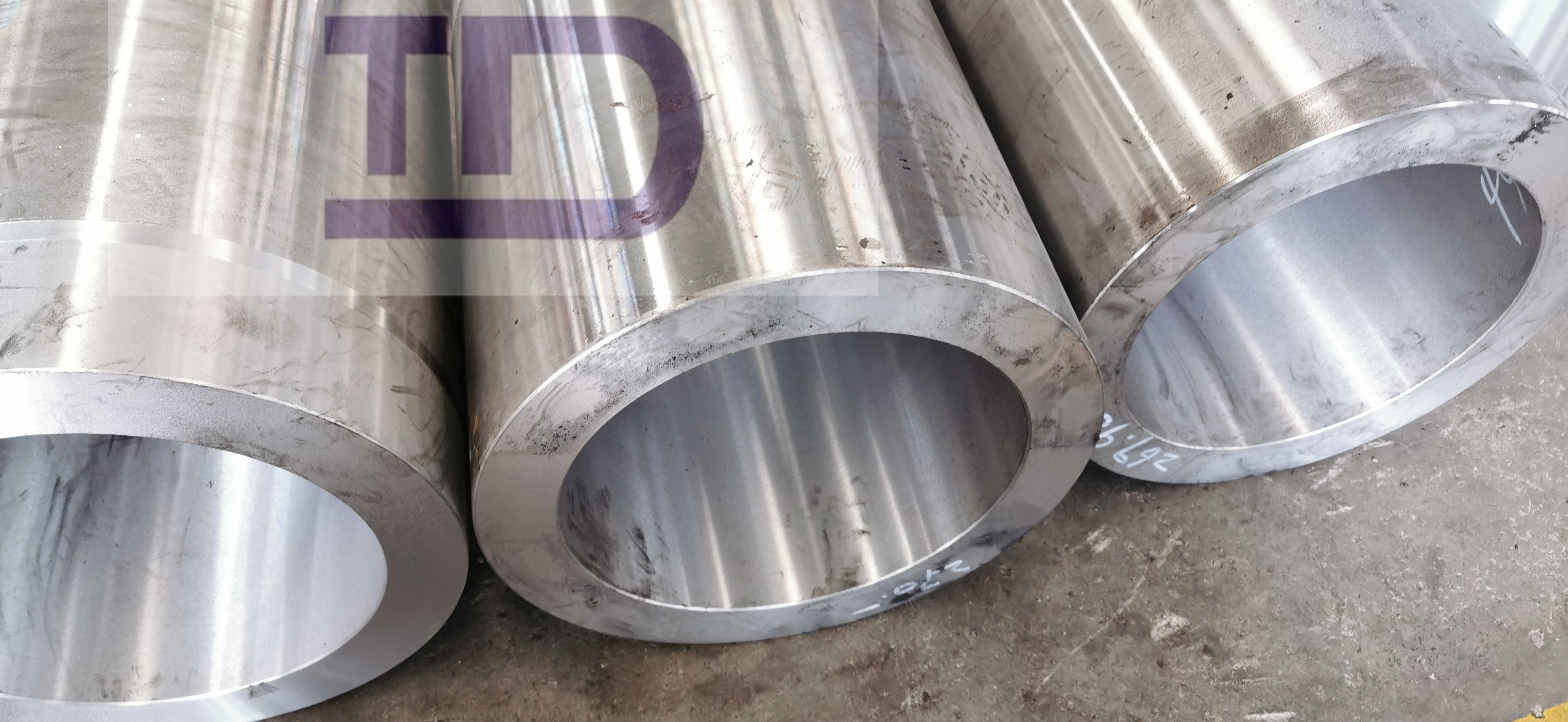
Material selection is not a supplier preference; it is a project requirement. Tuoda Machinery manufactures cylinders and customizes materials from ST52, S355, E355, C45, SAE1045 and 42CrMo4 grades. The base steel tubes are sourced and processed with a deep-processing workflow that includes precision honing, surface treatment and heat treatment to maintain structural integrity under high pressure and cyclic loads.
The sealing system is equally important. Tuoda applies metal-to-metal sealing, high-performance polyurethane seals, forged valve bodies, thick-walled seamless steel pipe tubing and overpressure protection devices for heavy duty and ultra-high-pressure cylinders. These choices respond to common field failures: leaky glands, extruded seals, scratched bores and rod corrosion.
When you request a corrosion-resistant, wear-resistant or low-temperature-resistant heavy duty hydraulic cylinder, the specification should state exactly which part of the cylinder must resist what. Rod surface treatment, wiper seal material, piston seal material and internal bore hardness all play different roles. For example, a low-temperature application may require polyurethane seals with low-temperature flexibility, while a slurry environment may need a hardened rod surface and a positive-pressure wiper.
Step 5: Decide Whether a Standard Cylinder Is Enough
Many maintenance and replacement projects can use a standard cylinder with common bore, rod and mounting dimensions. But for older machines, modified equipment, or extreme duty cycles, a non-standard design often delivers a better fit. The buying question is not whether custom is better, but where the interface constraints of the machine require custom dimensions, custom mounting or additional performance characteristics.
Customization for Tuoda Machinery covers application analysis, size, bore, stroke, pressure, load, system solution, cylinders and logo printing. In other words, customization is available both at the component level and at the system level. A system solution may include not only the cylinder but also the interpretation of how the cylinder should be connected, sealed and maintained within the whole hydraulic circuit.
Non-standard heavy duty hydraulic cylinders are frequently requested for these projects:
- Replacing a failed cylinder on imported equipment where the original mounting is unique
- Upgrading an existing machine from single-acting to double-acting operation
- Increasing load capacity from a standard cylinder to a high-load heavy duty cylinder
- Fitting a cylinder into a tight machine envelope with a custom rod end or port position
Step 6: Verify Manufacturing and Quality Control Capability
A cylinder drawing is only as reliable as the manufacturer's ability to execute it repeatedly. Tuoda Machinery operates within a 30,000 m² manufacturing site with an 80-person professional workforce. The company's engineering team includes senior mechanical engineers with professorial and research-level titles.
Quality-related parameters visible at the component level are H8/H9 bore tolerance and internal bore roughness of Ra ≤ 0.4 μm. These are not decorative numbers: they affect piston seal life, internal leakage and consistent force output over thousands of cycles. For batch consistency, the buyer should ask how the manufacturer controls inner bore dimensional stability, straightness, concentricity and surface roughness.
Tuoda also publishes a custom hydraulic cylinder lead time of 45–60 days with a minimum order quantity of one unit. A MOQ of one unit is significant for prototype, maintenance and upgrade projects because it allows buyers to validate a custom design without purchasing a full batch.
Pressure testing is referenced as a quality-control step. Buyers should confirm in the technical drawing review how pressure testing is performed and what acceptance evidence will be supplied with the cylinder.
Step 7: Use the Full System, Not Just the Cylinder
Many project-fit problems do not originate inside the cylinder barrel. They come from the interaction of the cylinder with the pump, valve, hose, alignment and structure. An experienced manufacturer can often identify these issues during application analysis.
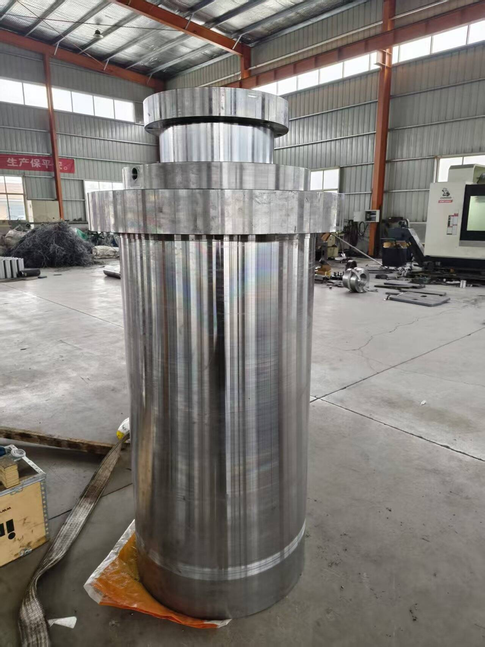
Tuoda's end-to-end service includes application analysis, drawing verification, material selection, manufacturing and honing, inspection, testing and final delivery. The company also produces deep-hole drilling and boring machines used to machine hydraulic cylinder tubes. This vertical integration is relevant to buyers because it reduces dependence on third-party machining and supports tighter control of bore roundness, straightness and surface finish.
When evaluating whether a supplier can solve an oil-leakage problem or a high-load failure, ask whether the supplier can evaluate the whole circuit. A cylinder manufacturer with hydraulic system knowledge is more likely to identify the true cause: oversize ports, improper cushioning, pipe resonance, or a rod seal incompatible with the fluid.
Scenario Case: A Straightening Machine Cylinder in Vietnam
An example of long-term project fit is a heavy machinery OEM in Vietnam using a Tuoda cylinder in a straightening machine. The machine has been operating for more than ten years. Reported results are stable operation, energy saving, reduced maintenance cost and zero major failures.
This case illustrates what scenario matching produces over the cylinder's life cycle: stability under extreme conditions, long lifespan and low maintenance. The exact bore and pressure ratings were not published, but the outcome demonstrates the importance of matching cylinder design to a real production environment rather than treating all heavy duty cylinders as interchangeable commodities.
Comparison: Heavy Duty Cylinders by Dominant Selection Driver
The table below is not a ranking of manufacturers. It summarizes common buyer scenarios and the selection logic most likely to lead to a reliable specification. It can be used as a starting point for discussion with a supplier.
| Dominant Selection Driver | Example Project | Critical Specification Focus | Typical Cylinder Type | Common Pitfall |
|---|---|---|---|---|
| Pressure capability | Hydraulic press or pressure test bench | Working pressure class, burst margin, port design, sealing system | High-pressure piston cylinder | Choosing a cylinder based only on nominal tonnage while ignoring pressure spikes |
| Bore / force output | Large mining excavator or tunnel boring machine | Bore size above 150 mm, internal bore finish and tolerance | Large bore piston cylinder | Assuming large bore alone guarantees long seal life |
| Stroke / reach | Multi-stage lifting or dump application | Stroke length, retracted length, buckling ratio | Telescopic multi-stage cylinder | Selecting a stroke longer than the machine envelope can accept |
| Motion control | Construction or robotics application | Double-acting configuration, cushioning, control valve response | Double-acting cylinder | Retrofitting from single-acting without checking head and port design |
| Environment resistance | Mining equipment or marine installation | Rod hardness, seal material, corrosion protection, wiper design | Custom heavy duty cylinder | Using one seal material for both slurry and marine conditions |
| Mounting / replacement fit | Aftermarket replacement on an older machine | Mounting style, port orientation, rod end thread, overall envelope | Custom mounting cylinder | Assuming standard mounting dimensions will match as-built equipment |
| System upgrade | Upgrading a machine from single-acting to double-acting or higher load | Force calculation, rod strength, seals, circuit compatibility | Custom cylinder plus system review | Changing only the cylinder while keeping an undersized pump or valve |
Manufacturers that supply both standard and custom heavy duty cylinders include multinational players such as Parker Hannifin and Caterpillar, which had an estimated 12% share of the hydraulic cylinder industry in 2023 (Worldmetrics) and an estimated 8%+ global share in 2024 (Global Market Insights), respectively. For buyers with custom or medium-volume requirements, suppliers such as Tuoda Machinery offer a different value proposition: single-unit MOQ, 45–60-day lead time, custom engineering and direct manufacturer communication.
FAQ: Project-Level Questions Buyers Ask
Can a custom heavy duty hydraulic cylinder meet OEM specifications and compliance requirements?
Yes, if the manufacturer follows recognized industrial standards. Tuoda Machinery manufactures to ISO hole diameter tolerances H8/H9 and internal bore roughness Ra ≤ 0.4 μm. Custom cylinders are engineered from application analysis through drawing verification, material selection, machining, inspection and testing. International heavy duty cylinders are also governed by ISO 6022 (250 bar series) and ISO 6020 (160 bar series). Buyers should send the applicable standard or mounting dimension reference to the manufacturer during the drawing review stage.
Does Tuoda Machinery offer truly custom sizes or only standard heavy duty cylinder sizes?
Tuoda's standard manufactured range covers an outer diameter from 20 mm to 800 mm, wall thickness from 3 mm to 50 mm, and lengths up to 6 m, 5.8 m, 12 m or 6–12 m depending on configuration. Beyond that range, sizes are customizable. Customization covers application, size, bore, stroke, pressure, load, system solution, cylinders and logo printing. The MOQ is one unit, so custom size validation is practical even for prototype or single-machine replacement projects.
Which heavy duty hydraulic cylinder type should I use for a long-stroke application: piston, plunger, or telescopic?
A telescopic multi-stage cylinder is the usual choice when a very long stroke must be achieved from a short retracted length. A piston cylinder can provide a long stroke but requires a longer barrel. A plunger cylinder is often used where push force is dominant. For applications such as a forklift mast, telescopic or a specially designed long-stroke cylinder may be required depending on the lift height and machine layout.
Can I use a double-acting heavy duty hydraulic cylinder to replace a single-acting cylinder?
Yes, a double-acting cylinder can replace a single-acting cylinder when the application requires both extending and retracting under hydraulic force. Before replacing, check the cylinder mounting envelope, port positions, rod end, and overall hydraulic circuit. Single-acting and double-acting cylinders differ in head construction and sealing, so the replacement should be reviewed against the original machine drawing and duty cycle.
What lead time should I expect for a custom heavy duty hydraulic cylinder and how do I request a sample or quote?
Tuoda Machinery lists a custom hydraulic cylinder lead time of 45–60 days, with a MOQ of one unit and monthly capacity described as flexible based on order. To begin a project, send the machine application, working pressure, required force, available envelope, mounting style, port positions and any relevant drawings. After the drawing verification and material selection, Tuoda can provide a quote and manufacturing plan. You can also request the company brochure below for a full overview of products and services.
📥 Download Tuoda Machinery Company Brochure (PDF)
Conclusion
Selecting the right heavy duty hydraulic cylinder requires more than a force calculation. Work with a supplier that can see the whole project: application environment, cylinder type, pressure and bore interaction, material and sealing technology, mounting geometry, and long-term service behavior. If your machine demands non-standard dimensions or a performance upgrade such as higher pressure, longer stroke or double-acting control, start with a detailed application review and a custom drawing.
Tuoda Machinery offers custom heavy duty hydraulic cylinders for construction machinery, mining equipment, industrial presses, marine systems and specialized high-pressure applications. For any heavy duty or ultra-high-pressure cylinder needed for a project in 2026–2027, contact the engineering team directly to confirm the specification before placing an order.
Have Questions or Need More Details?
Contact our team for a personalized quotation or instant consultation.
Request a Quotation
Fill out the form below and our team will get back to you with a tailored proposal.
WhatsApp Direct Chat
Prefer to chat in real-time? Message us on WhatsApp for instant assistance & quick answers.
- Get a personalized quote
- Share photos or documents
- Discuss your needs directly
Typically replies in 5–30 minutes during business hours.