
Before the Container Loads: SAE4140 Pipe Acceptance and Trade Terms
Compliance for SAE4140 seamless pipe is not created by the product listing. It is created by four written items that must agree with each other: the grade and dimensional specification in the purchase order, the pre-shipment acceptance method and its document set, the payment instrument that releases against those documents, and the Incoterm that decides who pays for carriage, insurance and import clearance, and where risk moves from seller to buyer. Get one of the four wrong and the other three stop protecting anyone.
This guide builds that package around the verified facts of the SAE4140 alloy seamless pipe supplied by Shandong Tuoda Machinery Equipment Co., Ltd.: round or square tube with 20–400 mm outside diameter and 3–30 mm wall thickness, a 5-ton minimum order quantity, a stated 30–45 day lead time, and pre-shipment quality control through a factory laboratory report or a third-party inspection arranged by the buyer. It is equally explicit about what the record does not establish: any certification, grade-specific inspection document or regional conformity requirement must be confirmed separately for the actual order, and must never be assumed from the product page.
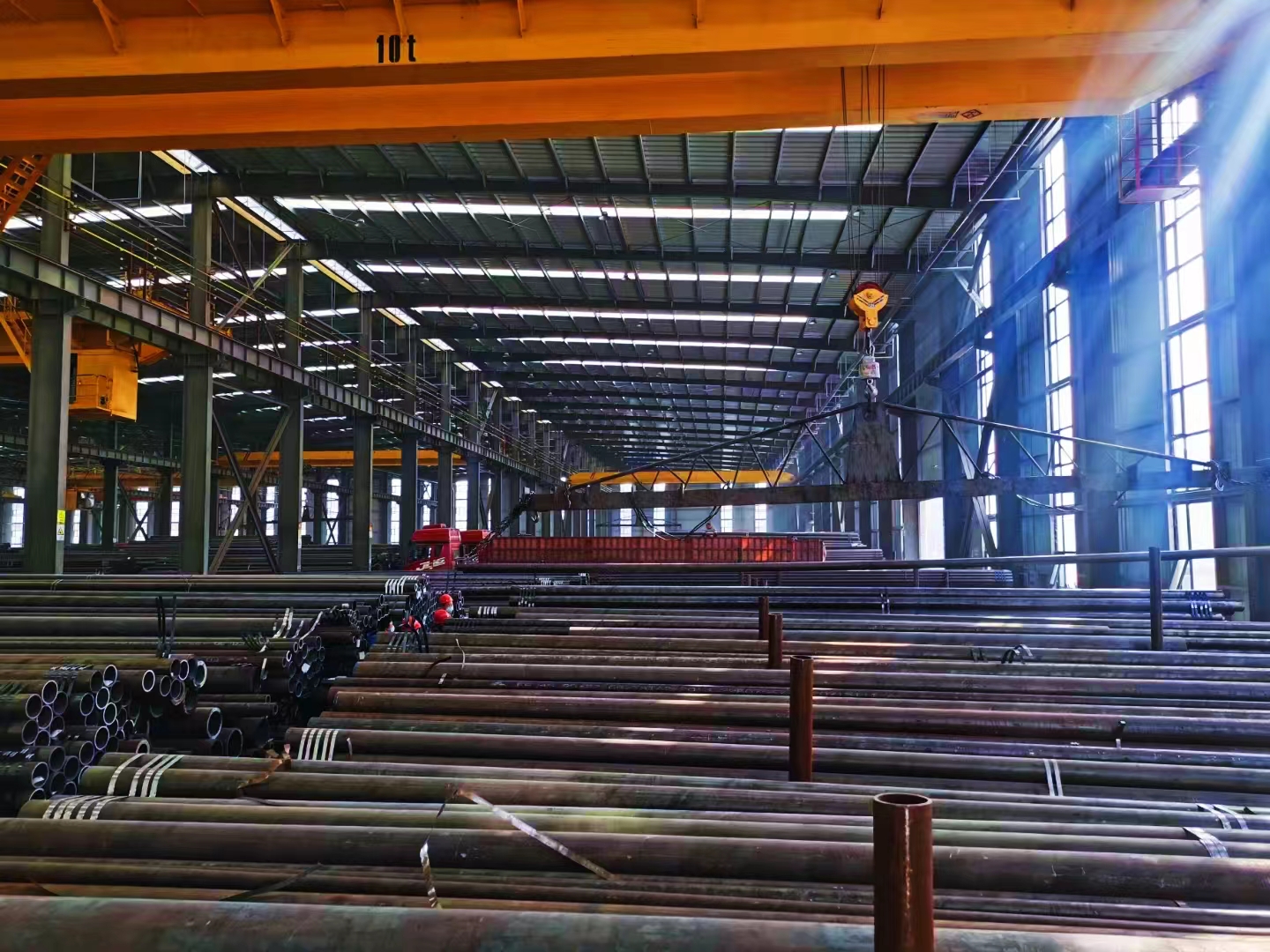
Storage and dispatch area: the point at which an acceptance plan either has evidence or does not.
What “compliant SAE4140 pipe” means inside a purchase order
Compliance has three layers, and they fail independently. Material identity answers whether the steel is SAE4140 and in which heat-treatment state. Geometry and condition answers whether the outside diameter, wall thickness, shape, length and delivery condition match what the drawing needs. Documentation answers whether a third party can later prove the first two points without relying on memory.
SAE4140 belongs to the chromium-molybdenum through-hardening family; commercial supplier datasheets describe AISI/SAE 4140 as a 1% Cr-Mo through-hardening steel. Published reference data for the equivalent AISI 4140 designation (UNS G41400), as listed by AZoM, gives carbon at 0.38–0.43% under ASTM A29 / SAE J404 and a tensile strength of 655 MPa in the annealed condition. Those are grade reference values, not acceptance values for your order. Annealed is only one supply state; supplier pages for 4140 also describe as-rolled, normalized and quenched-and-tempered availability. A purchase order that says “SAE4140” and nothing else leaves the heat-treatment condition, the applicable standard edition and the test basis undefined, and three different suppliers can satisfy that wording with three different products.
Why compliance usually breaks at the pre-shipment stage
The failure is rarely metallurgical. It is procedural, and it repeats in four recognizable patterns.
- The certificate is read as broader than it is. A mill or works certificate covers the standards and scope printed on it. It does not automatically cover a different grade, a different dimensional range or a different destination market.
- The acceptance method is never written down. “Inspection before shipment” means different things to a mill, a trading office and a buyer’s quality engineer. Chemistry by spectro, tensile on a specimen, dimensional gauging and visual surface check are separate activities with separate costs.
- Payment documents and acceptance documents drift apart. When a letter of credit lists documents that the inspection report does not produce, payment stalls even though the steel is fine.
- The Incoterm is chosen for price and not for control. Buyers compare EXW and DDP numbers, then discover that the cheapest term also removed their last physical checkpoint before the goods left the works.
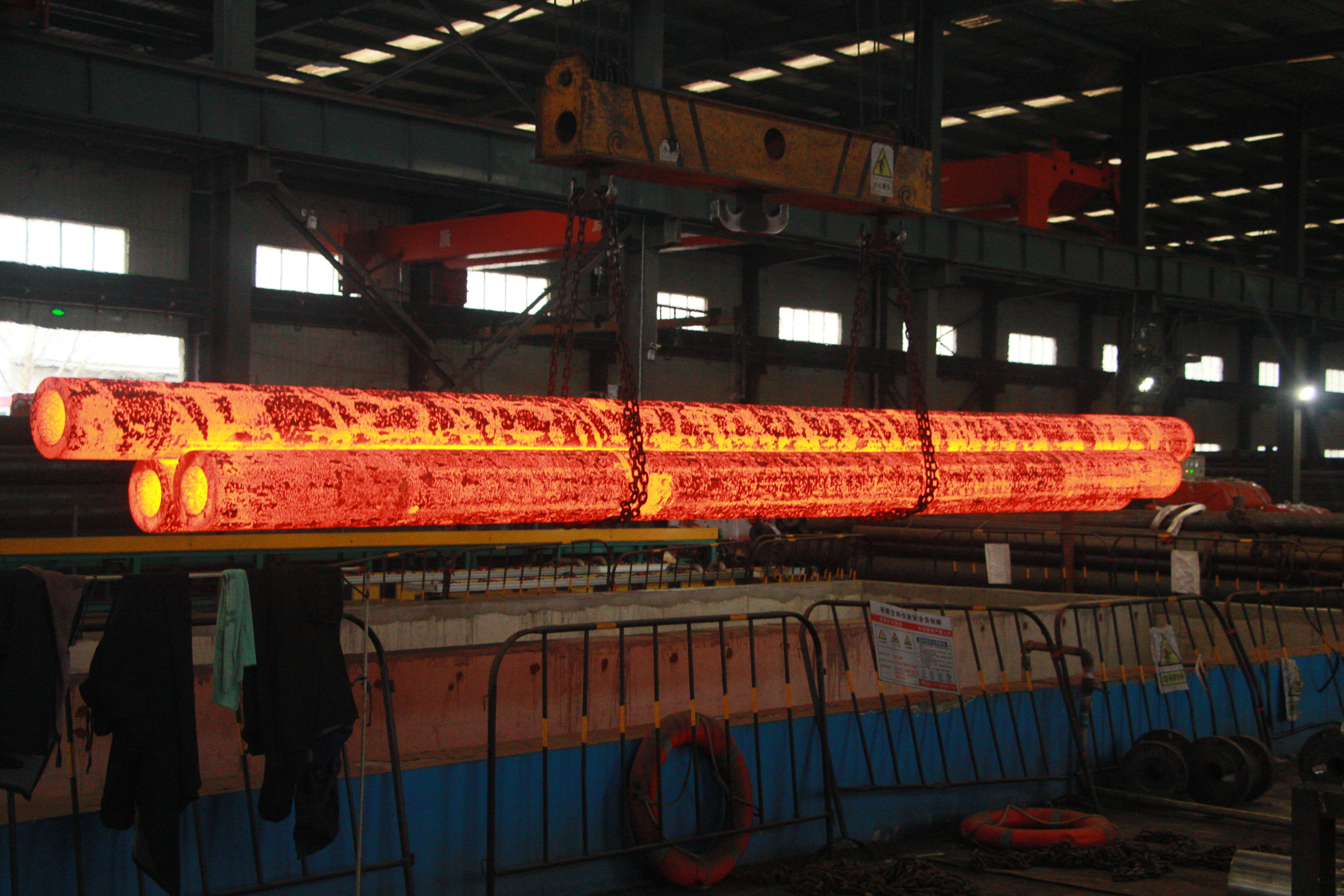
Dimensions and surface condition are created on the line; they can only be verified afterwards.
The verified specification envelope for SAE4140 tube
Start the order from values that are actually documented, then add the confirmations. The table separates the two so the gap is visible before the contract is signed.
| Parameter | Documented value | What the order still has to define |
|---|---|---|
| Outside diameter | 20–400 mm | Dimensional tolerance and the gauging method used to prove it |
| Wall thickness | 3–30 mm | Wall tolerance and measurement positions |
| Shape | Round and square tube | Corner geometry and tolerance basis for square sections |
| Length | Not stated for the SAE4140 product; the wider seamless pipe range lists 5–5.8 m, 6 m and 6–12 m | Cut length, end finish and length tolerance per order |
| Delivery condition | Hot rolled, cold drawn, cold rolled and quenched-and-tempered are listed for the pipe range | The specific condition required, since it changes both machining behaviour and price |
| Minimum order | 5 tons, or discuss | How the tonnage is split across sizes, and therefore how deep testing can go |
| Lead time | 30–45 days | The trigger date the clock starts from |
| Quality control | Factory laboratory report, or third-party inspection arranged by the buyer | Test items, sampling frequency and acceptance limits |
The length line matters more than it looks. A buyer who assumes a length from the general pipe range and never writes it into the order has no contractual basis if the cut lengths arrive short of the drawing requirement.
Pre-shipment acceptance: an eight-step protocol you can write into the contract
The sequence below is ordered so that each step produces the input the next one needs. It works with a factory laboratory report, with a buyer-arranged third-party inspection, or with both.
- Name the grade and the standard edition. Write SAE4140 together with the reference standard and its edition, rather than relying on equivalence shorthand. If the drawing cites an ASTM or SAE document, attach it. The supplier’s product page states the grade; it does not state which standard edition governs your acceptance.
- Lock geometry and condition in one table. OD, wall, shape, length, end finish and delivery condition belong in a single annex to the purchase order. Splitting them across e-mails is how “quenched and tempered” becomes “as-rolled”.
- Define the acceptance document set. For this product the documented options are a factory laboratory report or a third-party inspection arranged by the buyer. Decide which applies, who receives the report, and in what language.
- Specify the test items and the sampling basis. Chemistry, tensile properties, hardness and dimensional checks are separate line items. State how many pieces per lot, and what happens to a failing piece. These details are contract content, not defaults.
- Agree the hold point and the notification window. A pre-shipment inspection only has value if the goods are still movable. Fix the notice period between readiness and dispatch so an inspector can physically attend.
- Agree the dispatch evidence. Packing list, bundle marking, photographs of the packed consignment and the loading record give the buyer a defensible trail if the goods arrive damaged or short.
- Align payment release with the acceptance milestone. The balance should fall due after the acceptance report is issued, not after loading. Otherwise the inspection becomes advisory.
- Fix the Incoterm and the named place. Two letters and a place name decide who pays freight, who insures, who clears import and where risk transfers. Unnamed places are the single most common source of avoidable disputes.
Trade terms compared: EXW, FOB, CFR, CIF and DDP
The five terms below are the ones named in this guide’s scope. The table shows the standard allocation of duties between the parties; it is an illustration of the Incoterms logic, not a statement of the terms offered on any particular quotation. The applicable edition and the named port or place must be written into the contract.
| Term (named place required) | Main carriage | Cargo insurance | Import clearance | Risk transfers | Effect on the acceptance plan |
|---|---|---|---|---|---|
| EXW | Buyer | Buyer | Buyer | When goods are placed at the seller’s disposal | The works inspection is the last checkpoint under seller control; loading supervision must be bought separately |
| FOB | Buyer | Buyer | Buyer | When goods are on board at the named port of shipment | Seller carries cost and risk up to loading, so a loading hold point is realistic |
| CFR | Seller | Buyer | Buyer | On board at shipment, not at destination | Freight paid by the seller does not mean risk carried by the seller; the buyer still needs marine cover |
| CIF | Seller | Seller, at the minimum cover required by the term unless agreed otherwise | Buyer | On board at shipment | Check the insured value and clauses: a minimum-cover policy may leave part of a high-value alloy consignment uninsured |
| DDP | Seller | As agreed in the contract | Seller | At the named destination, ready for unloading | The seller controls the goods to arrival, so the acceptance protocol should add a destination check as well as the pre-shipment one |
Two practical consequences follow. First, under CFR and CIF the seller pays ocean freight but risk passes when the goods are loaded — so the buyer’s insurance, not the seller’s freight invoice, is what covers a wet-damaged bundle. Second, under EXW the buyer owns the loading operation, which means the pre-shipment inspection has to be scheduled before the transport arrives, not on the day it does.
Payment: how TT and LC interact with acceptance
Telegraphic transfer (TT) and a letter of credit (LC) are the two instruments normally discussed in alloy steel pipe trade. They punish a weak acceptance plan in different ways.
An LC is document-driven. The bank pays against a defined document set, which typically includes a transport document, an invoice, a packing list and whatever inspection or certificate the credit names. That makes the credit a second acceptance specification running in parallel with the technical one. If the credit calls for an inspection certificate that the agreed acceptance method never produces, the documents are discrepant even when the steel is correct. The fix is mechanical: draft the credit from the acceptance annex, line by line, before it is issued.
A TT structure is milestone-driven, usually a deposit with a balance before or after shipment. Its weakness is leverage: if the balance falls due on a fixed date rather than on issuance of the acceptance report, the pre-shipment inspection becomes advisory. Tie at least part of the balance to the acceptance milestone and the inspection regains its function. Deposit percentages, credit terms and document lists for a specific order are commercial terms to be confirmed in the quotation and the sales contract; they are not fixed by the product specification, and no percentage is asserted here.
Certifications and regional requirements: what the record shows and what it does not
The certificate record associated with this product line is a CE 3.1 certificate, number 3N230530.STMDO12, issued by ECM on 30 May 2023 and valid to 28 May 2028. Its market scope is Europe, and the standards named on it are EN 10210, EN 10219 and EN 10025. The SAE4140 alloy seamless pipe is one of the products linked to that record.
That is a meaningful document, and it is also narrower than many buyers assume. The standards printed on it are EN product standards; SAE4140 is not one of them. A 3.1 inspection document is issued against specific test results for a specific scope, so the question a buyer must ask is not “do you have a certificate” but “does the inspection document for my order, in my grade, size and condition, cover what my market requires”. Whether a given destination additionally demands a particular regional conformity mark, a notified-body opinion or a grade-specific inspection document is a matter to confirm separately, order by order. None of that can be read off a product listing, and asserting it without a document would be a compliance risk in itself.
How acceptance criteria shift between oil drilling and aerospace work
The documented applications for this product are drill collars and aerospace components, with heat treatment named as a special requirement. The dimensional envelope — 20–400 mm OD, 3–30 mm wall — is the same for both, but the acceptance emphasis is not.
Oil drilling components operate under high load, high pressure and cyclic loading. Wall thickness verification and the delivered heat-treatment condition carry most of the weight, and a petroleum equipment factory in Chile and India is documented using this material in oil drilling equipment production with stable operation reported. For a drill collar application, the acceptance annex should state the mechanical properties required from the delivered condition, because the annealed reference value of 655 MPa tensile strength says nothing about the quenched-and-tempered part in the crate.
Aerospace components add a documentation burden on top of the dimensional one. The product page names aerospace components as an application; it does not state which additional traceability records a specific aerospace programme will demand. Buyers should therefore take their own quality-system requirements — not the supplier’s listing — as the starting point and confirm each document against them before the order is placed.
Heavy machinery and energy equipment applications with high-strength, high-pressure duty conditions fall between the two: dimensional and condition control dominate, and document depth is set by the customer’s own quality system.
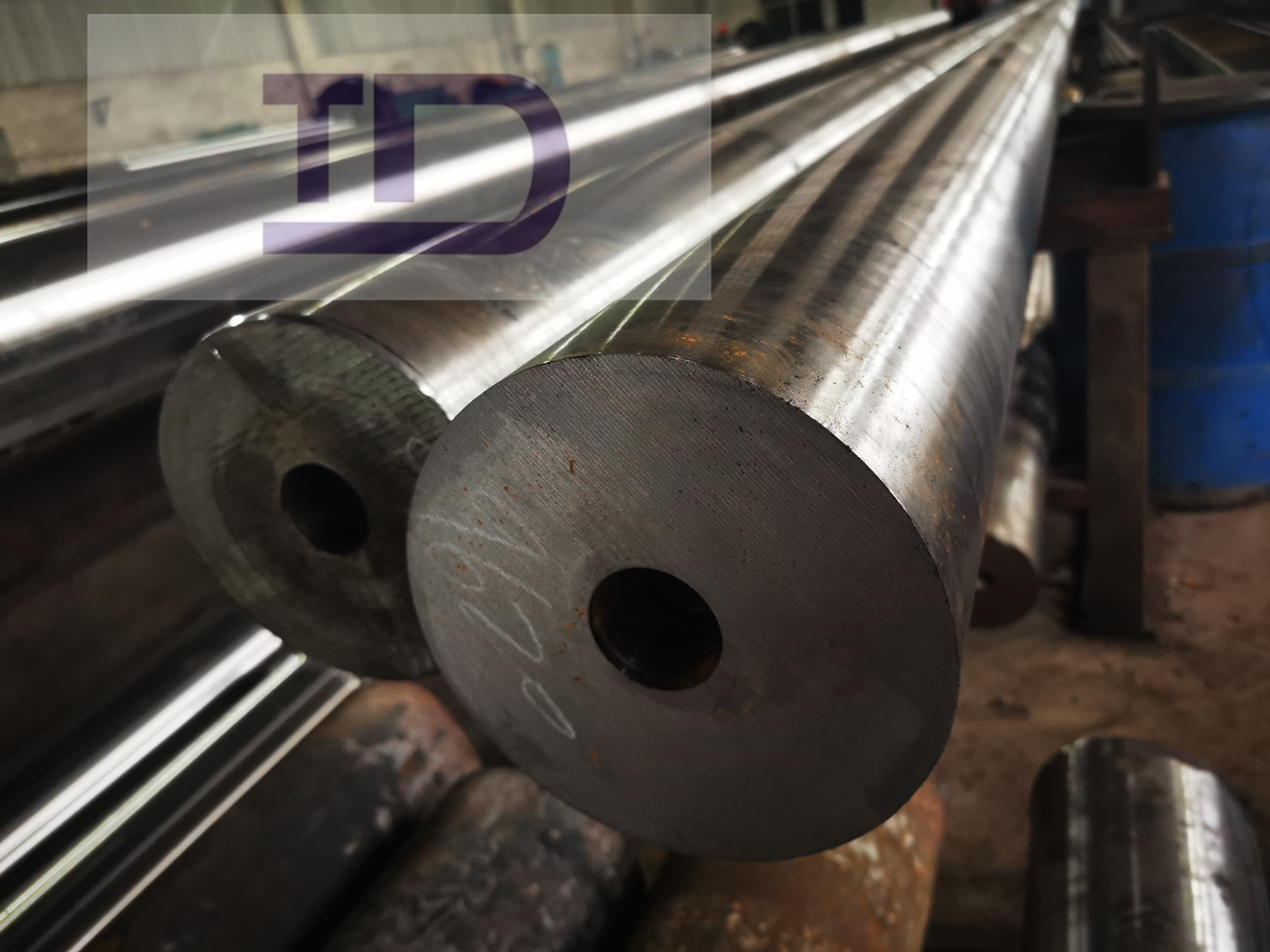
Drill collar and downhole tooling work: the delivered heat-treatment condition, not the grade name, drives the acceptance criteria.
5-ton MOQ, 1000-ton monthly capacity and the cost of a thin acceptance plan
The minimum order quantity is 5 tons, or to be discussed, and the stated monthly capacity is 1000 tons. Those two numbers together shape how much testing is affordable. A 5-ton order split across six sizes gives roughly 830 kg per size — enough to require a documented dimensional and chemistry check on each, but not enough to justify full mechanical testing on every size. Consolidating to two or three sizes per order buys depth instead of breadth.
Capacity also affects scheduling, not just price. A 5-ton lot is small against a 1000-ton monthly output, so the placement of that lot in the production calendar is a scheduling decision. The stated lead time is 30–45 days; the contract should state what starts the clock — deposit receipt, drawing approval or acceptance of the pre-production sample — otherwise the figure has no reference point.
Frequently asked questions
Does SAE4140 pipe ship with a certificate by default?
No certificate should be assumed from the product listing. What the record does show is a CE 3.1 certificate, number 3N230530.STMDO12, issued by ECM, valid from 30 May 2023 to 28 May 2028, with Europe as its scope and EN 10210, EN 10219 and EN 10025 as its standards. Whether an inspection document covering your grade, size and destination is required, and whether that record satisfies it, must be confirmed separately for the order.
What sizes and shapes can be supplied?
The SAE4140 alloy seamless pipe is offered as round or square tube with an outside diameter of 20–400 mm and a wall thickness of 3–30 mm. The wider seamless pipe range covers 10–1080 mm OD and 2–110 mm wall, with lengths of 5–5.8 m, 6 m and 6–12 m, but those figures belong to the general range rather than to the SAE4140 product, so the length for an SAE4140 order has to be written into the contract.
What is the minimum order quantity, and is a price available?
The minimum order is 5 tons, or to be discussed, and the stated monthly capacity is 1000 tons. Unit price is not published as a specification value: for alloy tube it depends on grade, size, delivery condition, quantity, Incoterm, destination and the acceptance scope, so it has to be quoted against a defined requirement rather than read from a table.
Who actually performs the pre-shipment inspection?
Two routes are documented: a factory laboratory report, or a third-party inspection arranged by the buyer. Which route applies, which test items are included, and what happens to a non-conforming piece are all contract content. If payment runs through a letter of credit, the inspection document named in the credit must be the same one the acceptance annex produces.
What lead time and delivery condition should be expected?
The stated lead time is 30–45 days, and the pipe range is documented in hot-rolled, cold-drawn, cold-rolled and quenched-and-tempered conditions. Because those conditions behave differently in machining and carry different prices, the required condition should be stated explicitly in the order and named again in the acceptance annex.
Which payment instrument and Incoterm should be used?
TT and LC are both normal in this trade, and EXW, FOB, CFR, CIF and DDP each move cost and risk to a different point, as the comparison table above shows. The instrument, the deposit structure and the term with its named port or place are commercial terms to be fixed in the quotation and the sales contract, not attributes of the material. A practical next step is to download the company brochure for the product range, then send the size, condition and acceptance requirements as one package so the quote, the inspection scope and the Incoterm can be answered together.
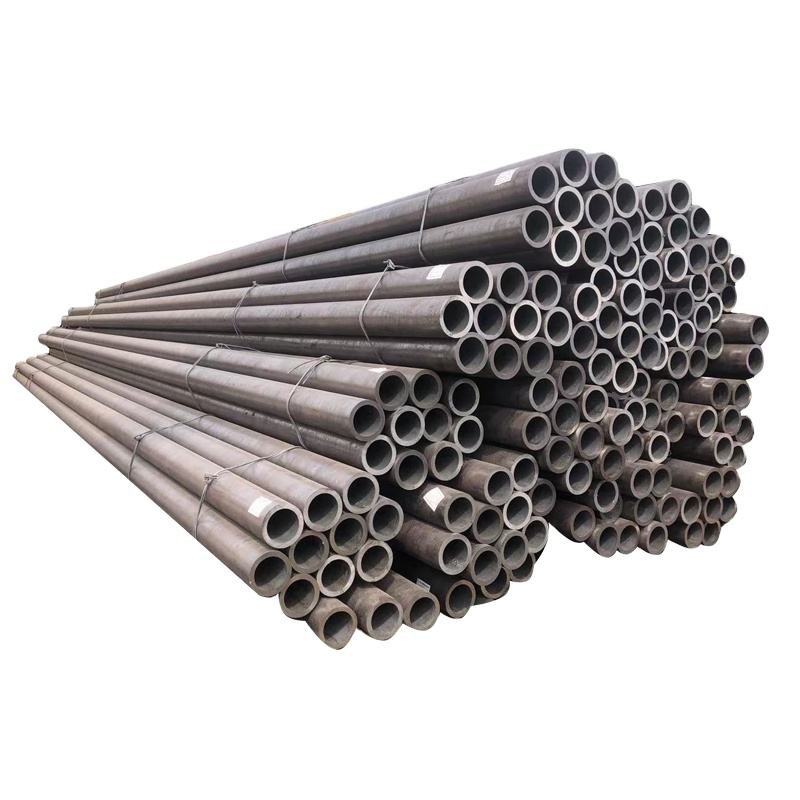
One requirement package — size, condition, acceptance scope and trade term — produces a quote that can actually be compared.
Conclusion
Acceptance for SAE4140 seamless pipe is a document problem before it is a steel problem. The verified envelope is clear enough — round or square tube, 20–400 mm OD, 3–30 mm wall, 5-ton MOQ, 30–45 day lead time, factory laboratory report or buyer-arranged third-party inspection. What decides whether a shipment is compliant is whether the purchase order names the grade standard, the heat-treatment condition, the length and the test basis; whether the payment instrument releases against that same acceptance document; and whether the Incoterm and its named place put the last inspection checkpoint on the right side of the risk transfer. Certificates and regional requirements stay outside that envelope until they are confirmed for the specific order, with a specific document, in writing.
Have Questions or Need More Details?
Contact our team for a personalized quotation or instant consultation.
Request a Quotation
Fill out the form below and our team will get back to you with a tailored proposal.
WhatsApp Direct Chat
Prefer to chat in real-time? Message us on WhatsApp for instant assistance & quick answers.
- Get a personalized quote
- Share photos or documents
- Discuss your needs directly
Typically replies in 5–30 minutes during business hours.