
Line Down: Diagnosing Rod Seal Leakage and Pressure Loss in Heavy Duty Hydraulic Cylinders
A weeping rod seal and a cylinder that will not hold pressure are two different failures, and treating them as one is the main reason a repaired heavy duty hydraulic cylinder comes back off the machine a second time.
Oil at the rod points to the rod seal, the rod surface or the gland. A cylinder that stays dry but drifts under load, or decays on a pressure test, is bypassing internally past the piston seal, or is losing pressure somewhere else in the circuit entirely. The isolation sequence below separates those paths inside a maintenance shift, and the build factors behind the cylinder decide whether a reseal will hold or whether the machine needs a specified replacement.
Tuoda Machinery (Shandong Tuoda Machinery Equipment Manufacturing Co., Ltd.) builds hydraulic cylinders and seamless steel tube in Liaocheng, Shandong, China, including custom high-pressure cylinders in the 31.5–63 MPa range and ultra-high-pressure cylinders above 63 MPa. The variables that set seal life on those cylinders, namely bore finish, bore tolerance, barrel material and the sealing system, are the same variables that explain why a reseal sometimes fails within weeks of the repair.
Fast answer: reseal when the bore is still within tolerance, the rod plating is intact and the duty pressure has not changed. Specify a custom cylinder when the bore is scored or out of round, when the original pressure class no longer matches the duty, or when the same unit has already consumed a seal kit and a second teardown in a short service interval.
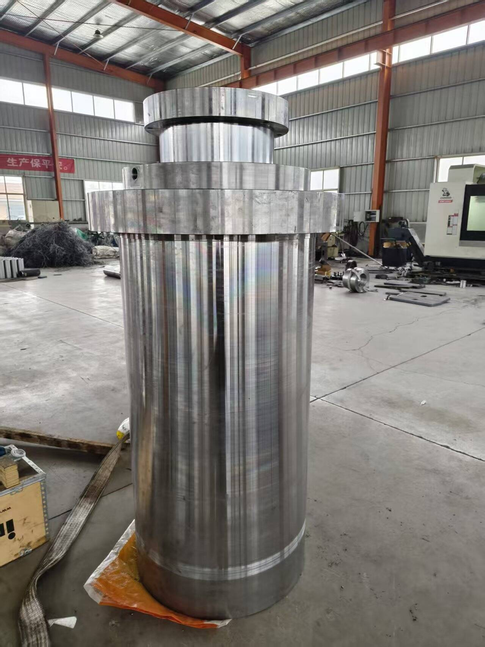
Cover: high-pressure heavy duty hydraulic cylinder. Rod seal leakage and pressure loss are decided by bore finish, tolerance and the sealing system, not by the seal alone.
Problem Definition: Three Symptoms, Three Different Failure Paths
Maintenance logs often record “cylinder leaking” and “cylinder weak” as separate entries even when both describe the same unit. Separating the failure path first is what keeps the repair scope honest, because each path points at a different component and a different cost.
External leakage is fluid escaping past the rod seal, the wiper or a damaged gland, and it is visible. Internal leakage is fluid bypassing the piston seal from the bore side back to the rod side; nothing is visible outside, but the rod drifts under load and the cylinder cannot hold position. Circuit-level pressure loss looks like a cylinder fault but originates at a valve, a hose, a fitting or a relief setting, and a cylinder that is perfectly leak-tight will still show decay on a gauge if it is tested inside a leaking circuit.
| Symptom on the machine | Most likely path | Field check that separates it | Typical action |
|---|---|---|---|
| Oil weeping at the rod gland or under the wiper | Rod seal wear, damaged rod plating, gland damage | Wipe the rod dry, cycle the cylinder, inspect the rod surface for scoring or plating loss | Reseal the gland, or replace a damaged rod |
| Cylinder drifts or creeps under load, no external oil | Internal bypass past the piston seal | Cap both ports, apply pressure, observe rod movement with no external leak present | Reseal the piston, then verify bore condition |
| Pressure decays on a bench or test stand | Cylinder internal leakage or circuit loss | Isolate the cylinder from the circuit and repeat the decay test on the unit alone | Repair the cylinder if it decays in isolation; otherwise inspect valve and circuit |
| Leak returns weeks after a reseal | Bore finish, ovality or contamination | Measure bore surface finish and diameter; check filtration and oil cleanliness | Replace with a correctly honed barrel or a specified custom cylinder |
The fourth row is the one that drives procurement decisions. A seal cannot seal a surface it cannot track. If the bore finish has drifted away from the Ra ≤ 0.4 μm target, or the bore diameter has moved outside the ISO H8/H9 band, a fresh seal will wear into the same pattern within a short interval and the machine will be down again.
Industry Background: Why Pressure Loss Is Expensive to Ignore
Heavy duty cylinders carry the load in construction machinery, mining equipment, industrial presses, marine steering gear and high-pressure test benches. Their working envelope is defined by pressure class rather than by physical size alone: ISO 6022:2006 establishes mounting dimensions for single-rod cylinders in the 25 MPa (250 bar) series, with typical maximum pressures up to 320 bar, while ISO 6020-1:2007 covers the 16 MPa (160 bar) medium series. Custom builds move well above both bands, into the 31.5–63 MPa high-pressure range and beyond 63 MPa for ultra-high-pressure work.
The installed base is large and the repair market follows it. Fortune Business Insights values the global hydraulic cylinder market at USD 18.11 billion in 2026, with Asia Pacific holding a 38.40% share in 2025, and Grand View Research reports that double-acting cylinders accounted for 70% of the market in 2024. Practically, that means a maintenance team facing a leaking cylinder has three realistic routes: a workshop reseal, a like-for-like replacement, or a custom rebuild that corrects the underlying build factor.
One clarification matters for acceptance inspection. The ISO cylinder standards are dimensional and interchangeability documents. ISO 6022 and ISO 6020-1 fix mounting patterns and pressure classes; they do not certify leakage performance, seal life, duty cycle or fatigue resistance. ISO 23778:2022 applies specifically to cylinders that form part of the load-carrying structure of cranes. A cylinder that bolts onto an ISO 6022 pattern is dimensionally interchangeable, not automatically leak-tight, which is why the pre-shipment pressure test record is a separate document to request.
Detailed Solution: The Build Factors Behind a Leak That Keeps Coming Back
Bore finish and bore tolerance decide whether the seal survives
The bore is the running surface for the piston seal, and its finish controls how much oil film the seal can maintain. A honed bore held to Ra ≤ 0.4 μm gives the seal a consistent film without tearing it, while a rougher or polished-through surface either abrades the seal lip or starves it of lubrication. Bore diameter is equally decisive: the ISO H8/H9 tolerance band keeps clearance predictable around the circumference, so the seal is not compressed on one side and loose on the other. A barrel that is out of round will leak again regardless of seal quality.
This is why precision honing and heat treatment belong in the specification rather than in the sales conversation. Tuoda Machinery performs deep processing of seamless steel pipe including precision honing, surface treatment and heat treatment, which is the stage where the Ra and H8/H9 targets are actually created or lost.
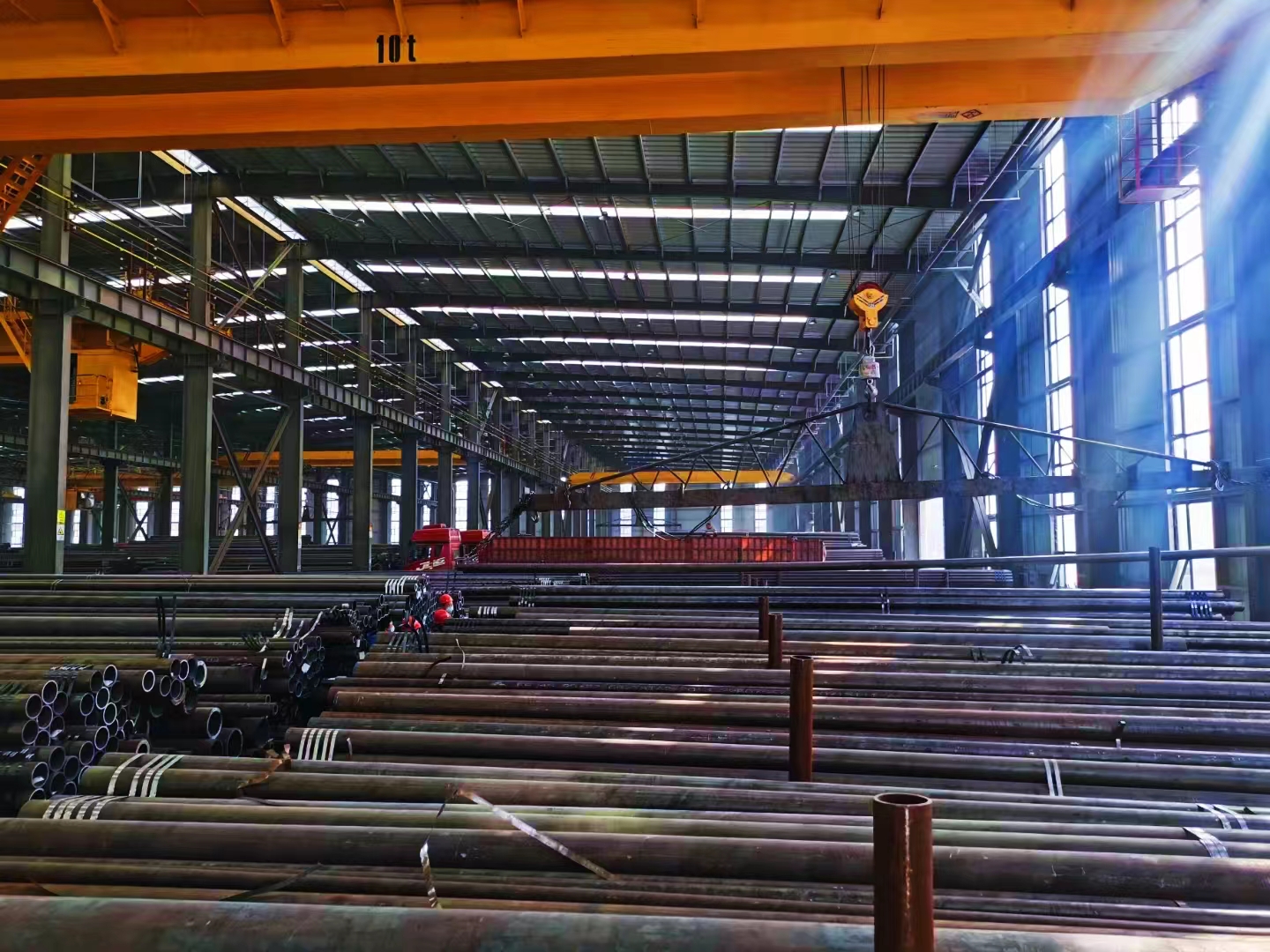
Thick-walled seamless steel tube stock. Wall thickness and material grade set the pressure ceiling long before the seal is selected.
Material grade sets the pressure and fatigue ceiling
Custom heavy duty cylinders from Tuoda Machinery use material grades including ST52, S355, E355, C45, SAE1045 and 42CrMo4. In practice, ST52, S355 and E355 belong to the barrel and structural side of the build, while C45, SAE1045 and 42CrMo4 are used where higher strength is needed in rods and stressed components. Thick-walled seamless steel pipe tubing is the base for high-pressure work, and the combination of wall thickness and grade is what allows a cylinder to sit in the 31.5–63 MPa band without distorting under load. A distorted barrel loses its bore geometry, and lost geometry is the origin of most repeat leaks.
The sealing system and flow design decide pressure loss and energy draw
Seal selection is a system decision, not a parts decision. Tuoda Machinery builds on metal-to-metal sealing, high-performance polyurethane seals, forged valve bodies and overpressure protection devices. A high-efficiency sealing system reduces internal bypass, which is exactly the mechanism behind drift and bench pressure decay, and an optimised flow design reduces pressure loss and energy consumption across the working cycle. For a plant engineer, the practical translation is simple: a cylinder that holds pressure holds position, and a cylinder that holds position draws less energy to do the same work.
Standards give interchangeability, not leak performance
When a replacement is ordered, the mounting interface and the pressure class must be specified as two separate requirements. A cylinder may match an ISO 6022 mounting pattern and still be unsuitable if the duty pressure has risen, and it may be rated for the pressure while the mounting envelope has changed. Treating model numbers as the specification is how a replacement arrives that bolts up correctly and leaks within a month.
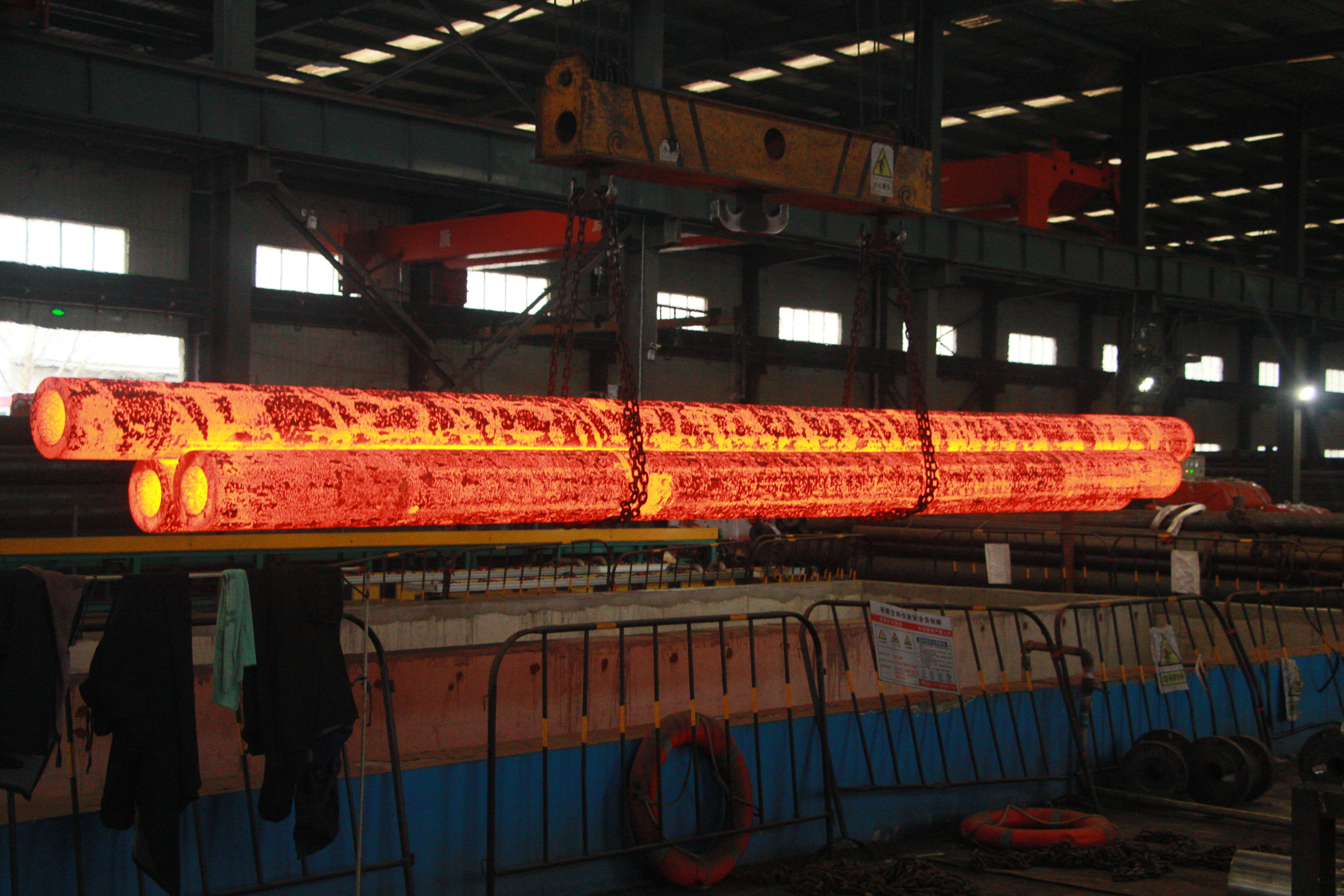
Material upstream of the cylinder: grade and heat treatment determine whether the finished bore can hold its tolerance under cyclic load.
Step-by-Step Breakdown: Triage in Eight Steps
Step 1 — Isolate the cylinder from the circuit
Blank the ports or disconnect the cylinder and cap the lines. Pressure loss measured with the cylinder still plumbed into a worn circuit tells you nothing about the cylinder. Only a decay test on the isolated unit assigns the fault.
Step 2 — Classify the leak path
Dry the rod, cycle the cylinder under load and watch the gland. External oil means rod seal, rod surface or gland. No external oil plus drift or decay means internal bypass past the piston seal. Neither symptom appearing on an isolated, correctly pressurized unit means the fault is in the valve, hose or relief setting.
Step 3 — Measure the bore, do not judge it by eye
Check surface finish against the Ra ≤ 0.4 μm target and diameter against the ISO H8/H9 band at more than one position along the stroke. Scoring, ovality and a polished-through hone pattern are the three conditions that make a reseal pointless.
Step 4 — Inspect the rod and gland
Plating loss, dents and pitting on the rod destroy new seals quickly. If the rod needs re-plating, add that to the reseal scope before comparing it with a replacement.
Step 5 — Decide reseal or replace
Reseal when bore finish, bore diameter and rod are all still in specification and the duty pressure is unchanged. Replace when any of those three has failed, or when the same unit has already been resealed once in a short interval.
Step 6 — Capture the interface data before requesting a quote
Bore, stroke, working pressure, mounting type and hole pattern, port size and position, rod end thread, and the failure description with photographs. Tuoda Machinery customizes on application, size, bore, stroke, pressure, load, system solution, cylinders and logo printing, so this data is what the quotation is actually built from.
Step 7 — Specify the sealing and flow package
State whether the application needs the standard high-pressure build in the 31.5–63 MPa band or the ultra-high-pressure build above 63 MPa, and whether the environment calls for wear-resistant or corrosion-resistant execution, or low-temperature operation. Piston, plunger, telescopic and rotary configurations are each specified differently.
Step 8 — Verify with a pre-shipment pressure test, then plan spares
Pressure testing is performed by the manufacturer as part of quality control, and the pre-shipment test is the defined acceptance criterion. Treat that record as the handover document, then set a spare seal and rod seal kit level against the service interval rather than against the failure date.
Use Cases: Where This Triage Applies
The same sequence works across the applications where heavy duty cylinders actually fail:
- Construction machinery. Excavator boom and arm cylinders combine high pressure with shock loading; rod seal leakage is the usual first symptom, and bore ovality is the usual reason a reseal returns.
- Industrial presses. A press that will not hold pressure on the hold cycle usually has internal bypass past the piston seal rather than an external leak, which makes the isolated decay test the decisive check.
- High-pressure test benches. A bench cylinder that drifts corrupts every reading taken on that bench, so pressure loss here is a calibration problem as well as a maintenance problem.
- Mining equipment. Long stroke, high load and contaminated environments accelerate bore wear; wear-resistant and corrosion-resistant builds belong in the original specification rather than in the third repair.
- Forklift and material handling. Compact envelopes leave little room for a larger cylinder, so a custom mounting becomes the practical route when the original unit is obsolete.
- Cold and aggressive environments. Low-temperature operation changes seal compound behaviour, and a cylinder that sealed correctly at ambient temperature can weep at low temperature if the compound was not specified for it.
A documented example of the replacement route: a heavy machinery OEM client in Vietnam installed one Tuoda unit (product 3558) on a straightening machine application. The project ran for over ten years with stable operation, energy savings, reduced maintenance cost and zero major failures, with stability under extreme conditions, long lifespan and low maintenance cited as the key highlights. That outcome rests on the same build factors described above, not on a different seal.
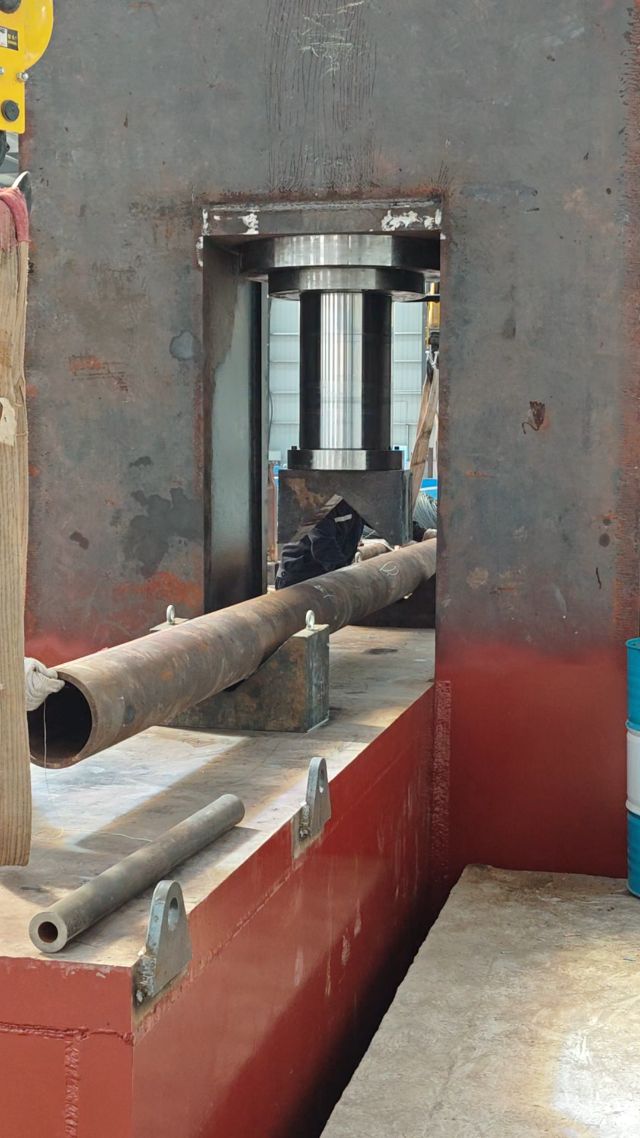
Straightening machine application, Vietnam heavy machinery OEM: one unit in service for over ten years with reduced maintenance cost.
Comparison Table: Reseal or Specify a Custom Replacement
| Decision factor | Reseal the existing cylinder | Specify a custom replacement |
|---|---|---|
| Failure addressed | Rod seal or piston seal wear; external weep or internal bypass | Seal wear plus bore scoring, ovality, or a dimensional or pressure-class shortfall |
| Bore condition required | Finish and geometry still within tolerance (Ra ≤ 0.4 μm, ISO H8/H9) | New bore honed to the same targets, or re-specified for a higher pressure class |
| Pressure class | Unchanged from the original rating | 31.5–63 MPa high pressure, or above 63 MPa ultra-high pressure |
| Mounting and envelope | Unchanged by definition | Custom mounting, bore, stroke and porting; ISO 6022 / ISO 6020-1 patterns used as a dimensional reference |
| Materials | Existing barrel and rod | ST52, S355, E355, C45, SAE1045, 42CrMo4 |
| Sealing and flow | Replacement seals only | High-efficiency sealing system, metal-to-metal sealing, high-performance polyurethane seals, optimised flow design |
| Verification | Workshop leak check | Pre-shipment pressure test as the acceptance criterion |
| Minimum order | Not applicable | 1 unit |
| Lead time | Workshop slot and seal-kit availability | 45–60 days typical production lead time |
| Best fit when | Leak is recent, rod and bore are undamaged, duty is unchanged | Repeat failure, upgraded load, obsolete original, or a pressure class that no longer matches the machine |
Frequently Asked Questions
Answers below follow the sequence a maintenance or plant engineer usually asks them in: compliance, capability, budget, sample, then lead time.
1. Which standards apply when replacing a heavy duty hydraulic cylinder, and what do they not cover?
ISO 6022:2006 fixes mounting dimensions for single-rod cylinders in the 25 MPa (250 bar) series, with typical maximum pressures up to 320 bar, and ISO 6020-1:2007 does the same for the 16 MPa (160 bar) medium series. Both exist for interchangeability. They do not certify leakage performance, seal life, duty cycle or fatigue resistance, so a cylinder built to an ISO 6022 mounting pattern is dimensionally interchangeable, not proven leak-tight. ISO 23778:2022 applies specifically to cylinders forming part of the load-carrying structure of cranes. Request the pre-shipment pressure test record alongside the drawing.
2. Can a custom cylinder replace a standard cylinder without changing the mounting?
Yes, provided the mounting interface and the pressure class are specified as two separate requirements. Tuoda Machinery customizes on application, size, bore, stroke, pressure, load, system solution, cylinders and logo printing, and builds piston, plunger, telescopic and rotary configurations. Because ISO pressure classes are not interchangeable by assumption, a replacement should be ordered against the actual mounting drawing and the required working pressure, not against the old model number alone.
3. What drives the cost difference between resealing and replacing?
A reseal carries workshop labour, a seal kit, possible rod re-plating and the downtime of removing and refitting the cylinder. A replacement carries the unit, the production lead time and installation. The deciding factor is usually bore condition: if the bore is scored, out of round or below the required finish, the seal fails again, and the second reseal plus its downtime generally outweighs the cost of a correctly specified cylinder.
4. Can we validate one cylinder before committing to a series?
Yes. The minimum order quantity is 1 unit, and pressure testing is performed as part of quality control, with the pre-shipment test defined as the acceptance criterion. Delivery terms available are FOB, CIF, CFR, EXW and DDP, and payment terms are TT or LC.
5. What is the lead time for a replacement, and what support follows delivery?
Typical production lead time is 45 to 60 days, and monthly capacity is flexible and adjusted to order requirements. After-sales support covers repair, spare parts and a service network. To start a technical review, send the bore, stroke, working pressure, mounting drawing and current failure description with photographs to the Tuoda Machinery team; the full capability and specification brochure is available for download below.
Conclusion
Rod seal leakage and pressure loss are diagnosed by isolation, not by inspection. Dry the rod and cycle the machine to separate external from internal leakage, cap the ports to confirm whether the cylinder itself decays, and measure the bore instead of assessing it visually. Those three checks decide the repair scope in a single shift.
The build factors then decide whether the fix lasts. A bore honed to Ra ≤ 0.4 μm and held within ISO H8/H9, a barrel in ST52, S355 or E355, a stressed component in C45, SAE1045 or 42CrMo4, and a high-efficiency sealing system with optimised flow design are what keep pressure loss and leakage from returning. When the existing cylinder cannot meet those conditions, a custom high-pressure or ultra-high-pressure cylinder, in piston, plunger, telescopic or rotary configuration, is the more economical decision across the service interval than a second reseal.
Send the failure, get a specification review
Share the bore, stroke, working pressure, mounting drawing and a photo of the leak with Tuoda Machinery. MOQ is 1 unit, typical production lead time is 45–60 days, and every cylinder ships against a pre-shipment pressure test.
Download the product brochure (PDF)Request a sample or quoteHave Questions or Need More Details?
Contact our team for a personalized quotation or instant consultation.
Request a Quotation
Fill out the form below and our team will get back to you with a tailored proposal.
WhatsApp Direct Chat
Prefer to chat in real-time? Message us on WhatsApp for instant assistance & quick answers.
- Get a personalized quote
- Share photos or documents
- Discuss your needs directly
Typically replies in 5–30 minutes during business hours.