
SAE4140 Seamless Pipe Application Guide: Oil, Gas, Water, and Structural Projects
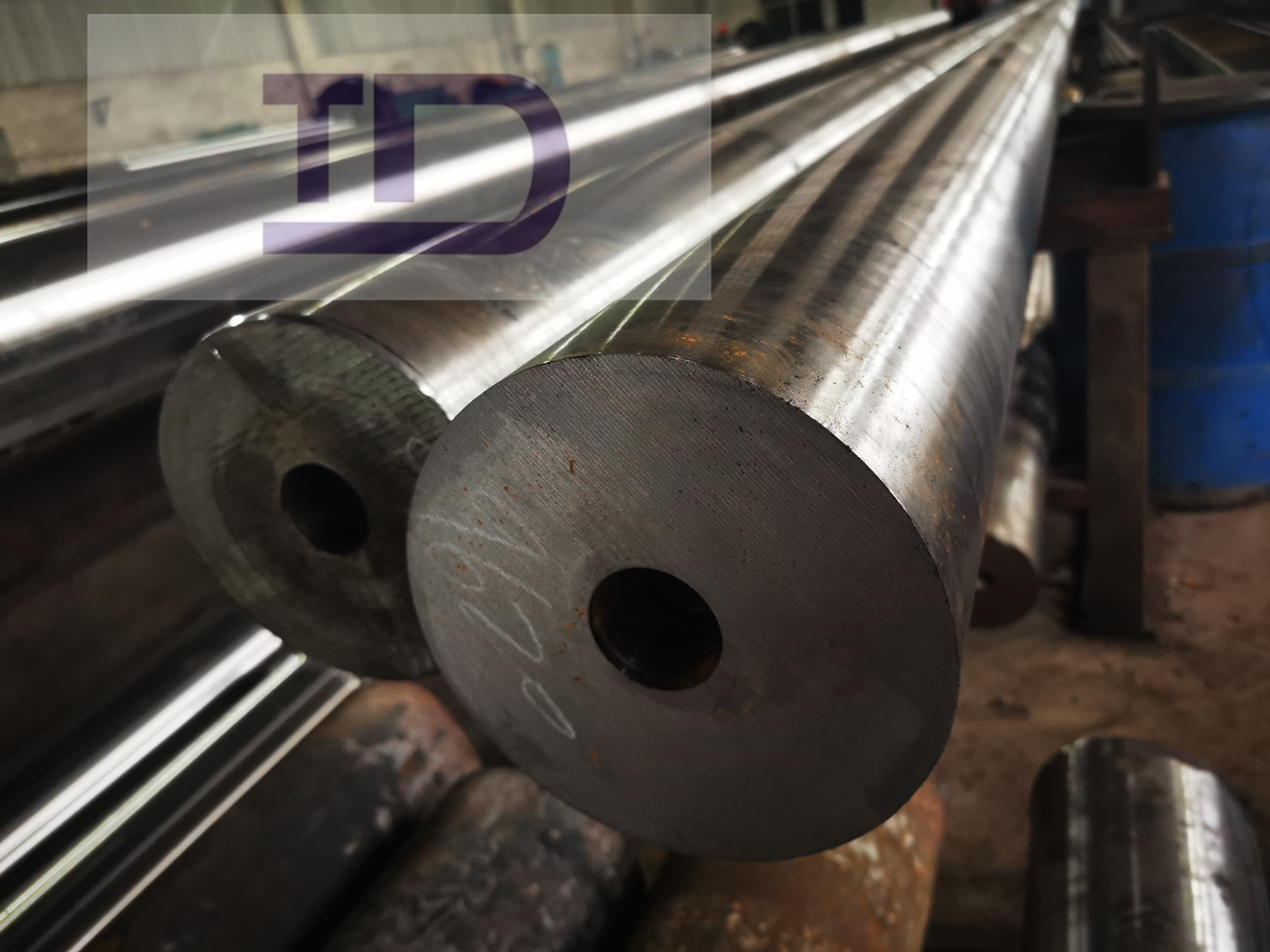
In a project that mixes oil and gas, water and structural scope, SAE4140 seamless pipe belongs on the loaded, machined and pressure-bearing parts — drill collars, downhole tools, hydraulic cylinder barrels, pump shafts, pins and tie rods — while bulk conveyance and framing lines are normally served by the wider carbon seamless range. The SAE4140 route covers OD 20 mm to 400 mm with wall 3 mm to 30 mm; the wider product line covers OD 10 mm to 1080 mm with wall 2 mm to 110 mm, in hot rolled, cold drawn, cold rolled and quenched and tempered delivery conditions.
- SAE4140 seamless pipe range: OD 20–400 mm, wall 3–30 mm.
- Wider product line: OD 10–1080 mm, wall 2–110 mm.
- Delivery conditions: hot rolled, cold drawn, cold rolled, quenched and tempered (Q&T).
- Monthly production capacity: 1,000 tons. Typical production lead time: 30–45 days.
- Minimum order quantity: 5 tons or negotiable. Payment: TT or LC. Delivery terms: FOB, CIF, CFR, EXW, DDP.
Four project types, one grade name, and more than a dozen ways to get the purchase order wrong. That is the situation most procurement teams face when a single enquiry bundles oil and gas equipment, a water transmission package and a structural steelwork package. The grade is almost never the problem. The problem is that SAE4140 seamless pipe describes a material family, not a deliverable.
This guide maps the grade to each project family, shows where the wider product line takes over, and sets out the shape, dimensional and delivery-condition decisions that have to be fixed before a quotation is meaningful. It draws on the product scope and processing capability of Shandong Tuoda Machinery Equipment Manufacturing Co., Ltd. (Tuoda Machinery), a steel pipe and machined-component manufacturer based in Liaocheng, Shandong, China, whose output covers carbon seamless steel tube, round bars and pressure cylinders, and which exports to the EU, Middle East, India, Chile, Argentina and Turkey.
Where SAE4140 specifications usually break down
A pipe specification fails in one of four places, and each failure has a different cost attached to it.
- The duty is not stated. A buyer writes the grade and the size but not the load case. A drill collar, a hydraulic cylinder barrel and a pump shaft all attract SAE4140, yet they require different delivery conditions and different acceptance tests. Without the duty, the mill cannot choose the condition, and the buyer pays for whichever one was quoted by default.
- The section is not aligned with the drawing. Section shape drives both the manufacturing route and the machining plan. A round tubular part can be turned, bored and honed from seamless pipe; a frame or base component may be drawn as a square or rectangular hollow section, which is a different sourcing question.
- The delivery condition is left open. SAE4140 is offered as-rolled, annealed, normalized and quenched and tempered, and those states do not perform the same in service or on the machine. Leaving the condition blank transfers a metallurgical decision to the supplier.
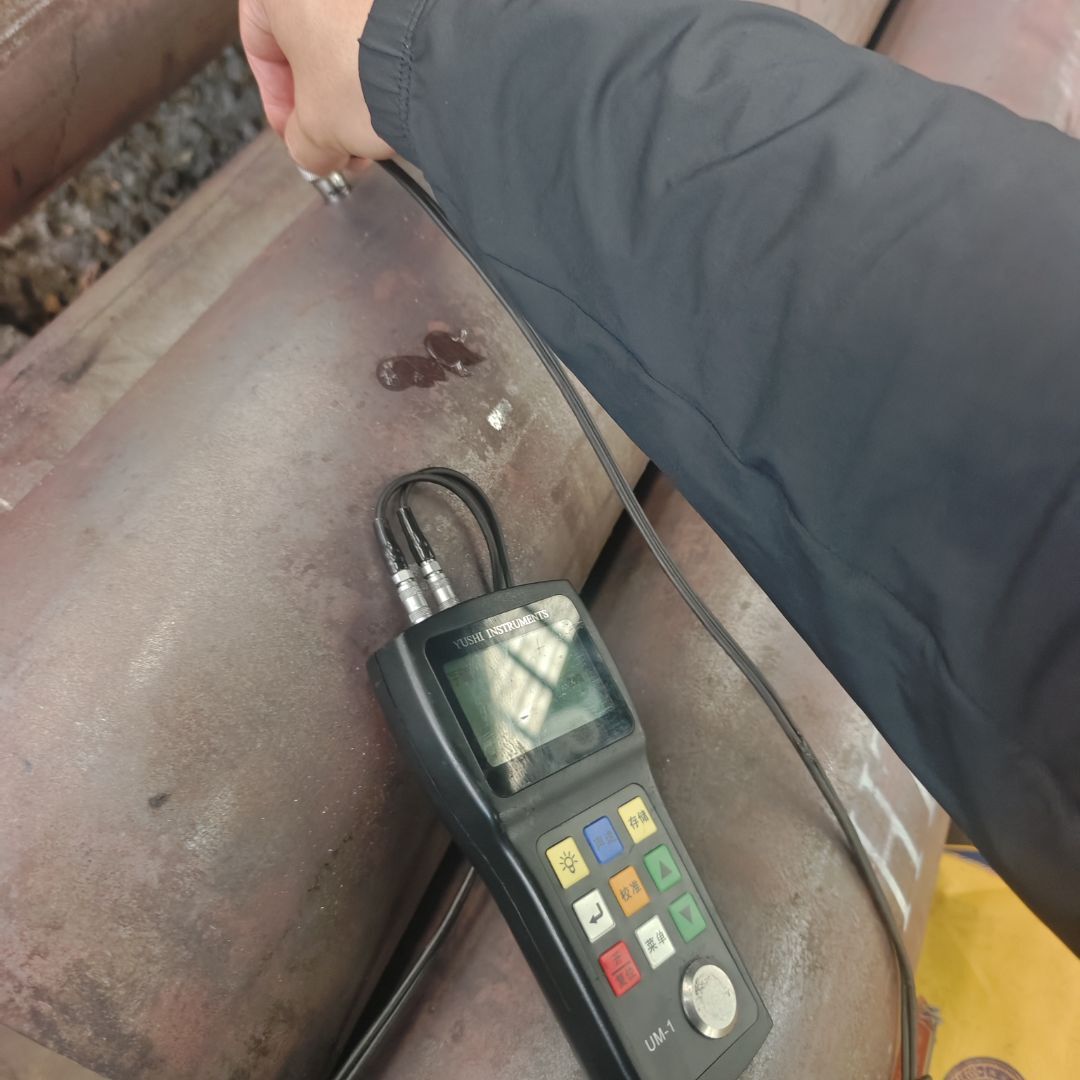
- Acceptance is not defined. Dimensional inaccuracy is the most common root cause of assembly failure on site: the pipe meets the grade, misses the fit, and the project stops. Tuoda treats this as a controlled risk by performing 100% dimensional inspection with a coordinate measuring machine (CMM) before delivery, confirming drawings and tolerance standards with the customer, applying statistical process control during production, and recording test data.
The practical consequence is straightforward. Two buyers can order the same nominal SAE4140 pipe, one receives material that assembles first time and the other receives material that requires rework, because only one of them specified duty, section, condition and acceptance.
What SAE4140 contributes to a loaded application
SAE4140 is a chromium-molybdenum through-hardening alloy steel, commonly described in supplier technical literature as a 1% Cr-Mo grade with carbon content in the region of 0.38–0.43% under ASTM A29 / SAE J404 reference data. That chemistry is the reason the grade appears wherever a component must carry load, resist wear or survive cyclic stress rather than simply convey fluid.
The published property baseline is a useful starting point. In the annealed condition, tensile strength is commonly reported around 655 MPa, which is a machinability state rather than a service state. Performance in service depends on the heat-treatment condition actually supplied, which is why the same grade appears across such different duties.
- Higher strength, better hardness, superior toughness, improved fatigue resistance and excellent hardenability.
- Hardness up to HRC 32–40 and tensile strength of at least 1080 MPa in the hardened and tempered condition.
- Fatigue life indicated at roughly twice that of standard carbon steel in comparable service.
- Typical fit: industrial manufacturing, aerospace components and oil drilling equipment.
Independent supplier literature consistently lists the same application families for 4140-type material: motor and drive shafts, axles, spindles, gears, sprockets, couplings, connecting rods, crankshafts, studs, bolts, hydraulic and pneumatic cylinder rods, oil and gas downhole tools, and CNC-machined parts. That list is the bridge between a grade name and the four project families covered by this guide.
Seamless construction matters in these duties because the wall is homogeneous around the circumference, with no weld seam to interrupt the section where hoop stress, boring or honing takes place. Tuoda's seamless pipe output is produced against international standards including ASTM and CE, with reference to EN 10210, EN 10305, API 5L, A335, A333 and A106, and the company's processing scope includes precision honing, surface treatment and heat treatment — the three operations that convert a pipe into a finished cylinder, collar or shaft blank.
Matching SAE4140 to the four project families
The selection logic is the same in every case: identify what the pipe physically does, then choose the route that satisfies that duty at the lowest total cost. Applying SAE4140 to a line that only has to convey water adds cost without adding capability; applying a standard carbon line pipe to a drill collar removes the hardenability the component depends on.
Oil and gas projects
Oil and gas work is where SAE4140 seamless pipe earns its place most clearly. Drill collars, downhole tools, petroleum equipment bodies, valve components and hydraulic cylinder barrels all combine high static load, pressure and, in the case of rotating or reciprocating parts, cyclic stress. The grade's through-hardening response allows the same starting tube to be machined into a thick-walled collar or a honed cylinder barrel after quenched and tempered supply.
For these duties, specify the Q&T condition, the final machined dimension, the inspection method and the test documentation in the RFQ. Where the component will be bored or honed after delivery, state the machining allowance so the supplied wall thickness still meets the finished requirement.
Water projects
Water schemes are usually misread as an SAE4140 opportunity. Most of the pipe in a water transmission or penstock package is conveyance duty and is correctly served by carbon seamless line pipe under routes such as API 5L, A106, EN 10210 or EN 10305, in sizes up to OD 1080 mm with wall up to 110 mm. SAE4140 enters the same project at the rotating and pressurised equipment: pump shafts, hydraulic cylinder barrels on penstock and gate drives, and wear-prone machined fittings.
Splitting the package this way is what keeps a water project competitive. The conveyance tonnage is bought on a carbon line pipe basis, and only the dynamic components carry the alloy premium.
Structural projects
Structural packages need the same discipline. Machined load-bearing parts — pins, tie rods, clevis components, machinery frames and connection hardware — are legitimate SAE4140 applications where strength and fatigue resistance govern. Hollow sections for framing, bracing and guarding are a different product: they are specified to structural hollow section standards such as EN 10210, which Tuoda references within its standards scope, and are sourced from the wider line rather than from the SAE4140 range.
The rule for the buyer is simple: if the drawing calls for a section that will be machined and loaded, evaluate SAE4140; if the drawing calls for a hollow section that will be welded or bolted into a frame, evaluate the structural route first and confirm the grade requirement with the structural engineer.
Aerospace and precision components
Aerospace component work uses SAE4140 tube and pipe for fixtures, prototype structural parts, bushes and machined details where a hardenable alloy with predictable machining behaviour is required. These orders are usually small, tolerance-critical and documentation-heavy, which is why drawing confirmation and CMM verification carry more weight than tonnage in the quotation.
Round or square: how section shape changes the order
Section shape is a drawing decision, but it has procurement consequences that are often discovered late.
- Round sections are the default for pressure containment, turning, deep-hole boring and honing. Drill collars, cylinder barrels, shafts and rollers are all round because the manufacturing process and the stress distribution are both axisymmetric.
- Square and rectangular sections are normally specified for frames, bases, guards and machine structures, where bending stiffness and joint geometry matter more than pressure containment. These requirements are usually satisfied from the structural part of the product line.
Because SAE4140 is a through-hardening grade used mainly for machined and pressure-bearing parts, a square or rectangular requirement on an SAE4140 drawing should be raised at enquiry stage rather than at order stage, so that it is quoted from the correct manufacturing route. A quoted price based on the wrong section route is not a saving; it is a schedule risk.
Dimensions: the two ranges and when the wider one applies
Two size envelopes are relevant to a mixed project package. The SAE4140 seamless pipe range covers OD 20–400 mm with wall 3–30 mm. The wider product line extends from OD 10 mm to 1080 mm with wall 2 mm to 110 mm and covers the carbon seamless tube duties that surround the alloy components.
| Range | Outside diameter | Wall thickness | Typical project use |
|---|---|---|---|
| SAE4140 seamless pipe | 20–400 mm | 3–30 mm | Drill collars, downhole tools, cylinder barrels, pump shafts, machined pins and tie rods |
| Wider product line | 10–1080 mm | 2–110 mm | Water conveyance, penstocks, structural and general mechanical tube, large-diameter line pipe |
When a project drawing falls outside the SAE4140 envelope, the correct response is not to force the alloy route. Confirm whether the duty genuinely requires a through-hardening alloy; if it does not, the wider line usually delivers the size with acceptable performance. If it does, the component design may need to be reviewed before the RFQ is issued.
Delivery condition: the decision that changes performance more than the grade
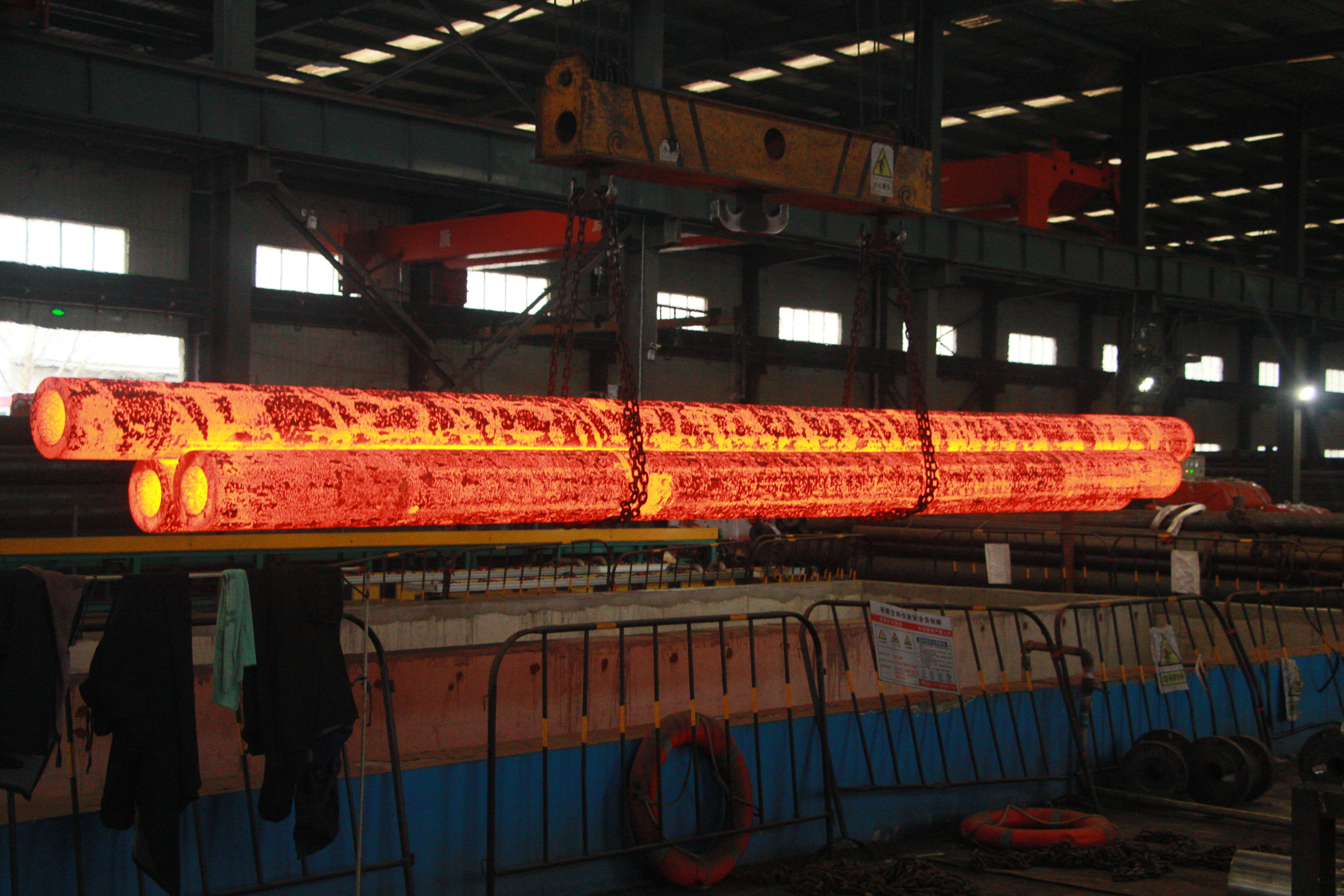
Buyers spend most of their attention on the grade and very little on the condition, yet the condition determines hardness, machinability and fatigue behaviour. Four routes are available for these projects.
- Hot rolled. The base route for tube produced from a pierced billet. Suitable where subsequent machining or heat treatment will establish the final properties, and for larger sizes where cold working is impractical.
- Cold drawn. Tighter dimensional control and improved surface finish, which reduces machining allowance on shafts, rods and cylinder barrels.
- Cold rolled. Used where surface quality and dimensional consistency are the governing requirements on smaller sections.
- Quenched and tempered. The service condition for loaded parts. This is the route that produces the hardness and tensile range quoted for SAE4140 components, and it should be specified together with the required hardness or tensile range, the test method and the section size at which the property is guaranteed.
Alongside the manufacturing route, supplier literature describes SAE4140 as available in as-rolled, annealed, normalized and quenched and tempered conditions. Annealed stock is normally chosen when the buyer will machine heavily before final heat treatment; normalized stock is used where a uniform ferritic-pearlitic structure is wanted for machining and subsequent hardening. The important point is that the condition must appear in the purchase order, not be inferred from the grade.
Step-by-step: specifying an SAE4140 pipe order that will not be re-quoted
- Define the duty in one sentence. State pressure, load, temperature, medium and whether the part rotates, reciprocates or is static. This single line decides whether SAE4140 is required at all.
- Split the package by function. Separate conveyance tonnage from machined and pressurised components. Conveyance is quoted on the wider carbon line; components are quoted on the SAE4140 route.
- Fix the section and the finished dimension. Round for pressure and machining, square or rectangular only where the drawing genuinely requires it. Give the finished size plus machining allowance, not the tube size alone.
- Choose the delivery condition and state the acceptance property. Hot rolled, cold drawn, cold rolled or Q&T, with a hardness or tensile requirement and the test method attached.
- Define inspection before the order is placed. Drawing and tolerance confirmation, dimensional inspection, CMM verification before delivery, in-process statistical process control and recorded test data. Tuoda applies this sequence to pipe that will be assembled directly on site.
- Agree commercial terms. Minimum order quantity of 5 tons or negotiable, payment by TT or LC, delivery on FOB, CIF, CFR, EXW or DDP terms, and pre-shipment testing as the acceptance criterion.
- Confirm the schedule against capacity. Monthly production capacity is 1,000 tons with a typical lead time of 30–45 days; a package that exceeds one month of capacity should be phased rather than promised in a single shipment.
- Plan the repeat order. Once the first delivery is accepted, fix the drawing revision, condition and inspection plan as the standing specification so that subsequent orders do not restart the discussion.
Application evidence: three factory-level cases
Drill collar stock. A drill collar starts as heavy-wall seamless tube that is bored, machined and threaded. The governing requirements are wall uniformity to keep the bore concentric after machining, through-hardening for the finished section, and dimensional verification before shipment so that the threads and shoulders align in assembly. This is the application where the SAE4140 range and the Q&T condition combine most directly.
Aerospace component production. Small lots of hardenable tube and pipe for fixtures, prototype structural parts and machined details. Here the order is driven by tolerance and documentation rather than tonnage: drawings are confirmed and re-confirmed with the customer, and the dimensional inspection record travels with the delivery.
Petroleum equipment factory supply. Equipment builders order thick-wall pipe for cylinder bodies, valve parts and machined housings where pressure and wear act together. The recurring problem in this segment is not finding the grade, it is matching the delivered wall to the machining plan, which is why drawing confirmation and a defined inspection step matter as much as the steel specification.
Project-fit comparison
| Project family | What the pipe actually does | Recommended route | Condition to specify | Acceptance focus |
|---|---|---|---|---|
| Oil and gas | Drill collars, downhole tools, equipment bodies, cylinder barrels | SAE4140 seamless pipe, OD 20–400 mm, wall 3–30 mm | Q&T; annealed or normalized where heavy machining precedes hardening | Dimensional and CMM verification, pre-shipment test, recorded test data |
| Water | Conveyance and penstock lines; pump shafts and cylinder barrels | Wider carbon seamless line for conveyance (OD 10–1080 mm, wall 2–110 mm); SAE4140 for dynamic components | Hot rolled or cold drawn for line pipe; Q&T for shafts and barrels | Pressure and pre-shipment testing for line pipe; dimensional verification for machined parts |
| Structural | Pins, tie rods, frames, bracing and guarding | SAE4140 for machined load-bearing parts; structural hollow sections from the wider line | Normalized or Q&T for loaded parts; hot rolled for hollow sections | Drawing and tolerance confirmation, dimensional inspection |
| Aerospace components | Fixtures, prototype parts, bushes, machined details | SAE4140 seamless pipe and round bar | Q&T, or annealed for machining | Drawing confirmation, CMM verification, test records |
SAE4140 seamless pipe versus standard carbon steel pipe
| Attribute | SAE4140 seamless pipe | Standard carbon steel pipe |
|---|---|---|
| Strength and hardness | Higher strength and better hardness after hardening and tempering; tensile strength of at least 1080 MPa and hardness up to HRC 32–40 in Tuoda comparison data | Lower strength and hardness; adequate for conveyance and general structural duty |
| Toughness and fatigue | Superior toughness and improved fatigue resistance; fatigue life indicated at roughly twice that of standard carbon steel in comparable service | Fatigue performance limits its use in highly cyclic loaded parts |
| Hardenability | Chromium-molybdenum through-hardening grade, suitable for components heat treated after machining | Limited response to hardening; normally used in the as-supplied condition |
| Best fit | Industrial manufacturing, aerospace components, oil drilling, machined shafts, gears and cylinder barrels | Water conveyance, general mechanical tube, framing and low-load piping |
| Cost logic | Higher material and processing content, justified by load, wear or fatigue duty | Lower cost per ton; specified where the alloy properties are not used |
Building a repeatable supply chain across project cycles
For repeat buyers, the value of a supplier is measured in the second and third order, not the first. Three parameters decide whether a supply relationship holds across project cycles: capacity, lead time and commercial flexibility.
Tuoda's production facility has a monthly capacity of 1,000 tons, with typical lead times of 30–45 days and a minimum order quantity of 5 tons or negotiable. Payment is by TT or LC, delivery can be arranged on FOB, CIF, CFR, EXW or DDP terms, and pre-shipment testing is the acceptance basis. The company exports to the EU, Middle East, India, Chile, Argentina and Turkey, and provides fully standardized customised products according to customer requirements, which is the mechanism that allows a project-specific drawing to become a repeatable line item.
Framework practice matters as much as capacity. Buyers who fix the drawing revision, delivery condition and inspection plan at the first order avoid renegotiating the specification on every subsequent release, and suppliers who hold that specification consistently deliver pipe that assembles without rework. That is the practical meaning of long-term supply in this category.
Frequently asked questions
Which standards and delivery conditions can an SAE4140 seamless pipe order be placed against, and how is conformity confirmed?
Tuoda's pipe output is manufactured against international standards including ASTM and CE, with reference to EN 10210, EN 10305, API 5L, A335, A333 and A106. SAE4140 material is supplied as-rolled, annealed, normalized or quenched and tempered, and the condition must be stated on the order together with the acceptance property. Conformity is confirmed by drawing and tolerance confirmation before production, 100% dimensional inspection with CMM verification before delivery, statistical process control during production, and recorded test data issued with the shipment. Pre-shipment testing is the standard acceptance criterion.
Can SAE4140 be supplied outside the standard size range, or in shapes other than round?
The SAE4140 seamless pipe range covers OD 20–400 mm with wall 3–30 mm. Where a project requires sizes outside that envelope, the wider product line runs from OD 10 mm to 1080 mm with wall 2 mm to 110 mm and should be evaluated against the actual duty first. Round sections are standard for pressure and machined parts; square and rectangular hollow sections are normally satisfied from the structural part of the line. The manufacturer also provides fully standardized customised products according to customer requirements, so a non-standard drawing should be raised at enquiry stage rather than assumed unavailable.
What order size and commercial terms apply to an SAE4140 project package?
The minimum order quantity is 5 tons or negotiable, and payment is accepted by TT or LC. Delivery can be arranged on FOB, CIF, CFR, EXW or DDP terms according to the buyer's logistics arrangement. Because MOQ is negotiable, a trial or phase-one quantity can be discussed within the same commercial framework as the production order, which is useful when a project package combines a small number of alloy components with larger carbon line pipe tonnage.
How is material validated before shipment?
Validation is built into production rather than added at the end. Drawings and tolerance standards are confirmed with the customer, statistical process control is applied during production, 100% dimensional inspection is carried out with CMM verification before delivery, and test data is recorded and issued with the shipment. Pre-shipment testing serves as the acceptance criterion, so the buyer receives dimensional and test evidence for the actual delivered batch rather than a general specification sheet.
What lead time should be planned for, and how does capacity affect scheduling?
Typical production lead time is 30–45 days against a monthly production capacity of 1,000 tons. A package that exceeds one month of capacity should be phased across shipments rather than consolidated into a single delivery date. The manufacturer exports to the EU, Middle East, India, Chile, Argentina and Turkey, so transit planning should be added to the production lead time for those destinations. To confirm a schedule against a specific drawing, send the specification to the contact below or download the catalogue first.
Conclusion
SAE4140 seamless pipe is a component material, not a line pipe. Used where the duty is mechanical — drill collars, downhole tools, cylinder barrels, pump shafts, pins and tie rods — it delivers the strength, hardness, toughness and fatigue resistance that standard carbon steel cannot, within a size envelope of OD 20–400 mm and wall 3–30 mm. Used where the duty is conveyance or framing, it adds cost without adding capability, and the wider product line from OD 10 mm to 1080 mm with wall 2 mm to 110 mm is the correct route.
The selection decisions that decide whether a project runs on schedule are unglamorous: state the duty, fix the section and finished dimension, name the delivery condition, define the inspection, and agree the commercial terms before the order is placed. Buyers who do those five things receive pipe that assembles first time; buyers who specify only a grade receive a quotation that has to be renegotiated.
Next step: match your drawing to the right route
Send the drawing, duty description and required delivery condition, and the specification will be confirmed against the SAE4140 range or the wider product line — whichever suits the application.
Contact: Olivia | Email: olivia@sdtuoda.com | Tel / WhatsApp: +86 13290268388
Shandong Tuoda Machinery Equipment Manufacturing Co., Ltd., NO853 South Liaoniu Road, Dongchangfu District, Shandong, China | www.sdtdsteel.com
Download the product catalogue and specification sheets: Tuoda Machinery catalogue (PDF)
Have Questions or Need More Details?
Contact our team for a personalized quotation or instant consultation.
Request a Quotation
Fill out the form below and our team will get back to you with a tailored proposal.
WhatsApp Direct Chat
Prefer to chat in real-time? Message us on WhatsApp for instant assistance & quick answers.
- Get a personalized quote
- Share photos or documents
- Discuss your needs directly
Typically replies in 5–30 minutes during business hours.