
SAE4140 in the Steel Pipe Family: Forms, Ranges and Fit
SAE4140 in the Steel Pipe Family: Alloy Seamless Pipe, Hollow Bar, and Welded Tube Basics
SAE4140 is a chromium-molybdenum, through-hardening alloy steel that appears inside the steel pipe family in three practical forms: alloy seamless pipe and tube, hollow steel bar, and welded steel pipe. Shandong Tuoda Machinery Equipment Co., Ltd. (Tuoda Machinery) supplies SAE4140 alloy seamless steel pipe and tube in an outside diameter range of 20–400 mm with wall thickness of 3–30 mm, within a wider product family that also covers seamless steel pipe, carbon steel tube, alloy steel pipe, hollow steel bar and welded steel pipe. The sections below explain where SAE4140 sits in that family, how the three forms differ in service, and how to write a specification that returns the form you actually need.
- Grade: SAE4140 — chromium-molybdenum through-hardening alloy steel; reported carbon range 0.38–0.43% (ASTM A29 / SAE J404 reference values compiled by AZoM).
- Seamless tube range (Tuoda Machinery): OD 20–400 mm, wall 3–30 mm.
- Wider family at Tuoda Machinery: seamless steel pipe, carbon steel tube, alloy steel pipe, hollow steel bar, welded steel pipe.
- Typical environments: oil drilling equipment and downhole tooling, aerospace components, shafts, gears, couplings, hydraulic rods, machined parts.
- Commercial baseline: MOQ 5 tons or discuss, lead time 30–45 days, TT or LC, pre-shipment test as acceptance criterion.
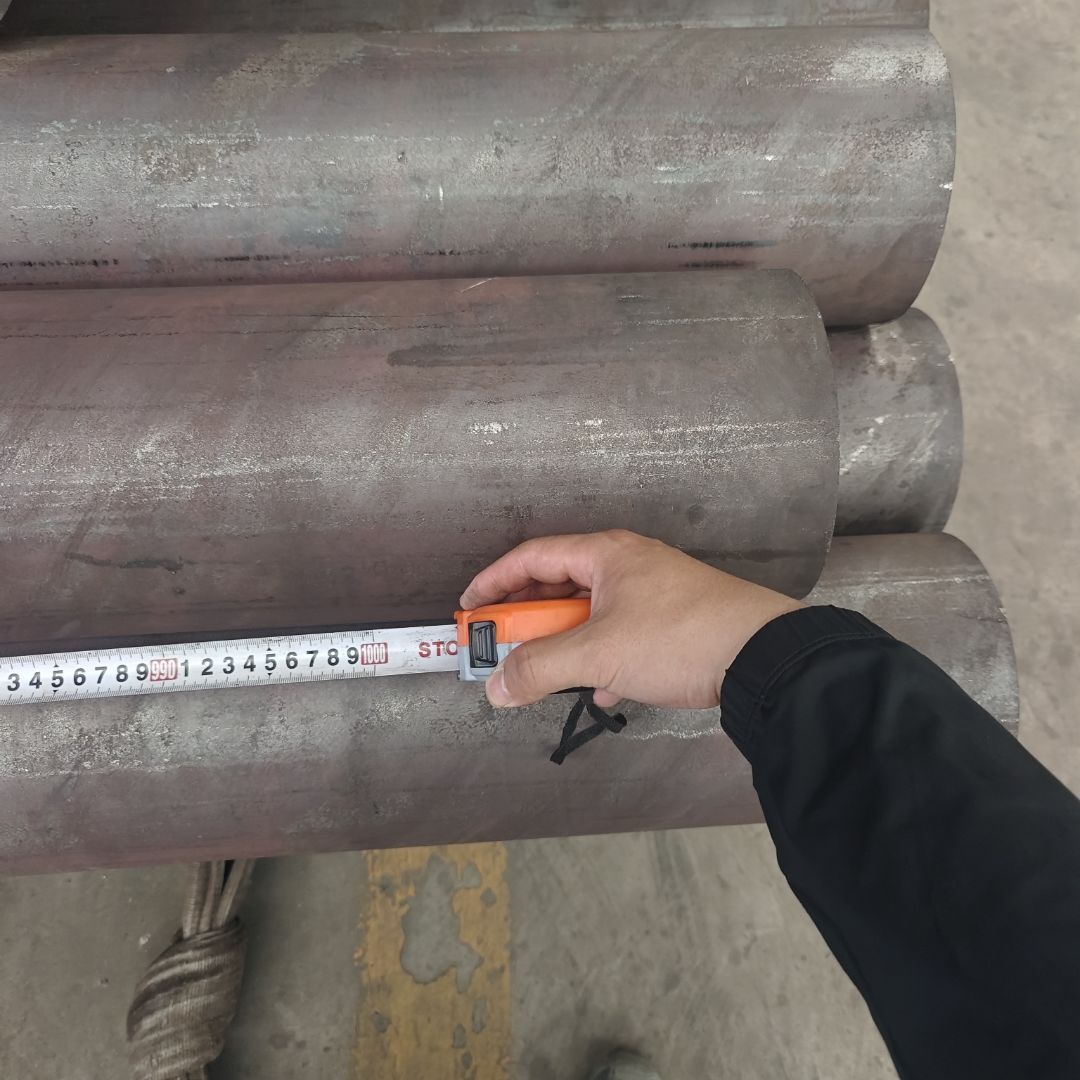
Why “SAE4140 Pipe” Is an Ambiguous Request
The phrase SAE4140 pipe does not identify a single purchasable item. It describes a grade applied to several product forms, and each form carries its own manufacturing route, dimensional limits, inspection logic and cost structure. A buyer who sends that phrase in an RFQ may receive a seamless tube, a welded tube, or a bored hollow bar — three products that can look similar in a warehouse photograph and behave very differently in service.
The ambiguity produces three recurring procurement problems:
- Grade–form mismatch. SAE4140 is specified for strength and hardenability, but if the delivered form is a welded tube where a seamless tube was intended, the joint becomes a new variable that the design did not account for.
- Machining allowance mismatch. A component machined from hollow bar starts with a different stock geometry than the same component machined from a thin-wall tube. The wrong choice shows up as excess turning time, scrap, or an unachievable finished wall.
- Documentation mismatch. Pressure, drilling and aerospace programs usually require a defined inspection route. If the RFQ never states the acceptance basis, the shipment arrives with paperwork that the quality department cannot close out.
The practical remedy is to specify three things together — grade, form, and delivery condition — rather than the grade alone. That is the organising idea of this article, and it applies whether the project is a single drill-collar blank or a recurring production order.
The Steel Pipe Family Around SAE4140
Steel pipe is a broad commercial category, and SAE4140 is one grade inside it rather than a category of its own. Context for the category is large: one commercial research estimate places the global steel market at USD 1,525.8 billion for 2026 (Grand View Research, 2026). That figure covers all steel, not alloy tube specifically, but it explains why catalogues mix many families under one heading — and why buyers need a taxonomy before they need a price.
Alloy seamless pipe and tube
A seamless tube is formed from a solid billet that is pierced and then rolled or drawn to final dimensions, so the tube wall is continuous around the circumference with no welded joint. SAE4140 seamless tube is the reference form when the application involves pressure, cyclic loading, downhole service, or a machined component that must be homogeneous through the wall. Tuoda Machinery supplies this form as SAE4140 alloy seamless steel pipe and tube in OD 20–400 mm and wall 3–30 mm.
Hollow steel bar
Hollow bar is heavy-wall tubular stock intended primarily as machining input rather than as a conveying pipe. In practice the distinction is one of intent: a hollow bar becomes a shaft, sleeve, ring or coupling after material is removed, while a tube usually stays close to its supplied dimensions in service. When a component would otherwise be drilled from solid SAE4140 round bar, starting from hollow stock removes a roughing operation — but only if the available wall and bore are compatible with the finished part.
Welded steel pipe
Welded pipe is produced by forming strip or coil into a cylinder and joining the longitudinal edge. It is an efficient route for many structural and general-duty applications and is a legitimate member of the same commercial family; Tuoda Machinery lists welded steel pipe alongside its seamless ranges. The engineering question is not whether welded pipe is acceptable in general, but whether a seam is acceptable in the specific part — a distinction that should be resolved at RFQ stage, not at goods receipt.
Carbon steel tube
Carbon steel tube is the non-alloy or low-alloy branch of the family. Tuoda Machinery's wider tube range includes grades such as A106 Gr.B, ST52, ST44, S355, E355, ST37, 10# and 20#, which cover general conveyance, structural and mechanical duty. SAE4140 sits above these in alloy content and hardenability, and is chosen when through-hardening response, wear behaviour or fatigue duty matters more than lowest material cost.
Alloy steel pipe as an umbrella term
Alloy steel pipe is the umbrella under which SAE4140 sits together with other grades such as 42CrMo and 30CrMo in Tuoda Machinery's range. Because the umbrella spans several chemistries, a purchase order that says only “alloy pipe” leaves the mill or stockist to choose the grade — which is precisely the outcome a specification should prevent.
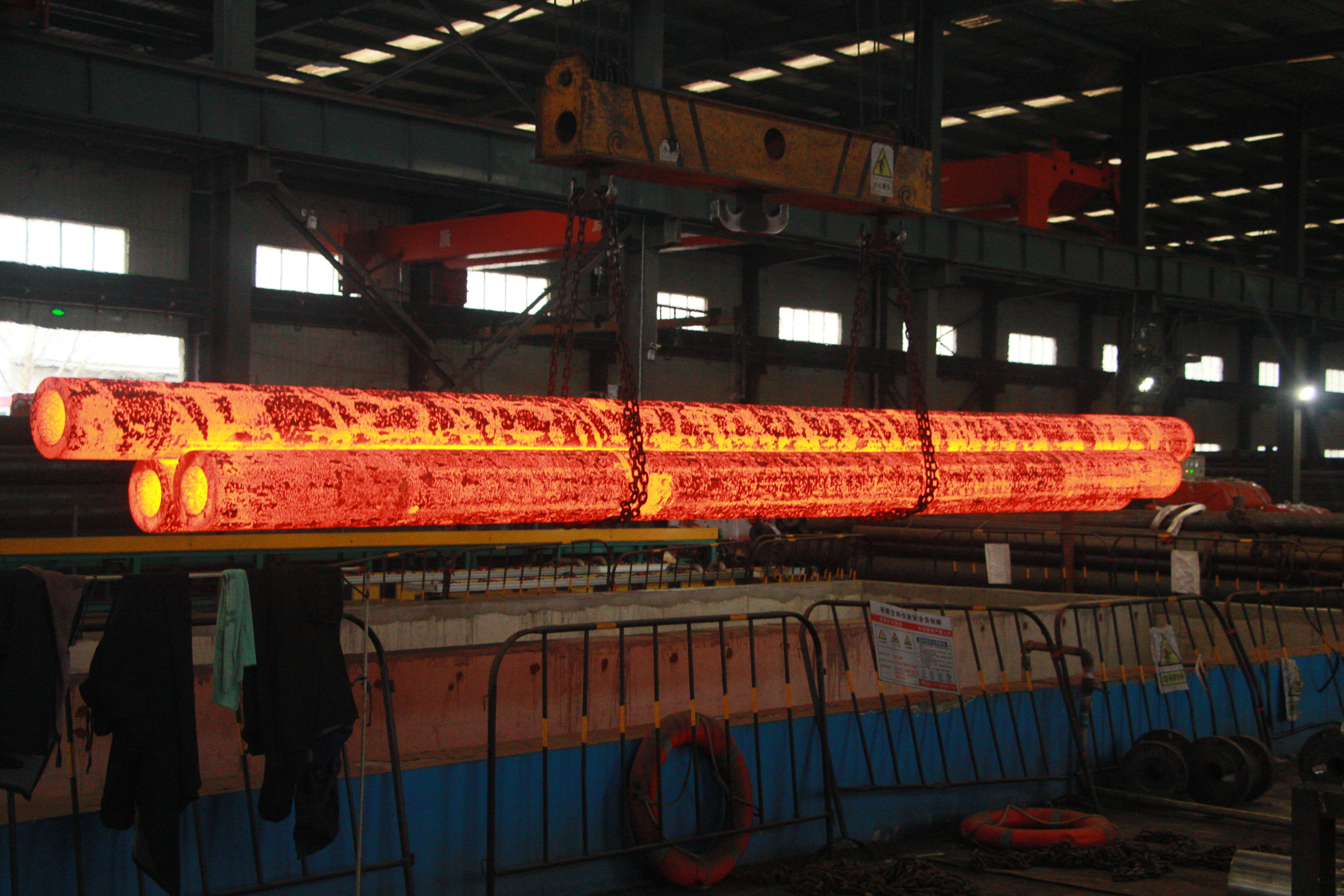
What SAE4140 Actually Is, in Reported Reference Terms
SAE4140 is described in commercial technical datasheets as a 1% Cr-Mo through-hardening steel (D.A. Cooper & Sons). Published reference values compiled by AZoM give a carbon range of 0.38–0.43% under ASTM A29 / SAE J404 and an annealed tensile strength of 655 MPa. Those figures are reference values for the grade, not a guarantee of any specific delivery: the mechanical result a buyer receives depends on heat-treatment condition, section size and the test basis recorded on the mill certificate.
Supply condition is therefore part of the specification, not an afterthought. Supplier documentation describes SAE4140 as offered in as-rolled, annealed, normalized and quenched-and-tempered conditions (Lanoit Steel Industries). For tube and hollow bar, condition affects machinability, dimensional stability after machining, and the inspection route. A quenched-and-tempered order and an annealed order for the same OD and wall are different products with different processing time.
Commercial sources consistently associate the grade with strength-and-toughness duty rather than with fluid conveyance alone: one technical page positions SAE4140 for wear resistance, toughness and fatigue resistance in gears, shafts and other mechanical components (TSM Steel). That positioning is why the grade appears in the pipe family at all — it is a tube or hollow form chosen for mechanical performance, not simply for moving media from one place to another.
What Tuoda Machinery Supplies in SAE4140
Tuoda Machinery is a Shandong-based manufacturer of seamless steel pipe processing, round bar and related mechanical components, exporting to the EU, Asia and South America. Its SAE4140 offer is the alloy seamless steel pipe and tube line, with a stated OD range of 20–400 mm and wall range of 3–30 mm, sitting inside the broader family of seamless steel pipe, carbon steel tube, alloy steel pipe, hollow steel bar and welded steel pipe.
Capability figures that matter at evaluation stage:
- Monthly capacity: 1000 tons.
- Lead time: 30–45 days.
- Minimum order: 5 tons, or discuss for project-specific quantities.
- Customisation scope: size, length, mechanical property, delivery time, and testing/inspection arrangements — the manufacturer states it provides fully standardised custom products according to customer requirements.
- Quality control: a factory laboratory report, or a third-party inspection arranged by the buyer.
- Certification: CE 3.1 certificate 3N230530.STMDO12 issued by ECM, scope EU, referencing EN 10210, EN 10219 and EN 10025, issued 30 May 2023 and valid to 28 May 2028.
Two clarifications keep this useful rather than promotional. First, the CE 3.1 certificate is a company-level conformity document referencing structural hollow section standards; it does not by itself certify a specific SAE4140 heat, so the order-level inspection route — factory laboratory report or third-party inspection — remains the operative document for a given shipment. Second, Tuoda Machinery also appears in 2026 trade press coverage of SAE4140 suppliers in China (EINPresswire, 2026); that is a market-visibility reference, not a substitute for a factory audit.
Step-by-Step: Specifying an SAE4140 Tube Correctly
Step 1 — Define the function before the grade
Decide whether the part conveys media under pressure, carries structural load, or is machining stock for a finished component. The same grade serves all three, but the form and inspection route differ. Writing the function first prevents the grade from becoming the only decision on the page.
Step 2 — Choose the family member
Seamless tube for pressure, cyclic and downhole duty; hollow bar where machining stock geometry is the point; welded tube where a seam is acceptable and economy matters more. If the application cannot tolerate a longitudinal weld, state “seamless” explicitly in the RFQ rather than assuming it.
Step 3 — Fix the dimensions inside the available range
For Tuoda Machinery's SAE4140 seamless tube, specify OD within 20–400 mm and wall within 3–30 mm. Where a design sits at the top of the wall range, confirm rolling capability at the RFQ stage; where it sits at the bottom, confirm that the finished part still has enough stock for machining after tolerances are applied.
Step 4 — State the delivery condition
Annealed, normalized, as-rolled or quenched and tempered are distinct supply states. Specify the condition and, where relevant, the target mechanical property range, because “SAE4140” alone does not fix hardness or tensile result. Section size should accompany the condition, since response to heat treatment varies with wall thickness.
Step 5 — Set the inspection and document basis
Agree the acceptance route up front: factory laboratory report, buyer-arranged third-party inspection, and pre-shipment test as the acceptance criterion. For export programs, confirm whether a 3.1-type certificate is required and how it maps to the referenced standards on the order.
Step 6 — Confirm commercial terms
Tuoda Machinery's stated terms are MOQ 5 tons or discuss, payment by TT or LC, and delivery under FOB, CIF, CFR, EXW or DDP. With a 30–45 day lead time, the Incoterm and inspection sequence should be agreed before the order is released, so the pre-shipment test does not land in the middle of a booking window.
Where SAE4140 Tube and Hollow Bar Are Used
Oil drilling equipment and drill collars
Drill collars and related bottom-hole assemblies are a natural fit for thick-wall SAE4140 tube and hollow bar: the part is a heavy section that must be machined to finished geometry and then perform under cyclic load and abrasive conditions. Supplier documentation lists oil and gas components, downhole tools and related surface and subsurface parts among typical applications for the grade (D.A. Cooper & Sons; EpoCrafter).
A documented Tuoda Machinery reference exists in this segment. Petroleum equipment factory clients have used the product for oil drilling equipment production, with 50 sets installed across projects in Chile and India and stable operation reported over a ten-year period, with low loss, high performance and high applicability recorded as the operating highlights. The relevance to a new buyer is not the number of sets but the durability profile: a decade of service in drilling-equipment manufacturing is a stronger signal than a laboratory snapshot.
Aerospace components and precision machined parts
Aerospace work tends to be dimension-critical and documentation-critical rather than volume-critical. Alloy tube and hollow bar are used where a machined component needs consistent through-section properties and a traceable inspection route. Because aerospace programs usually impose their own acceptance basis, the practical requirement is a supplier able to hold a stated condition, provide the agreed test documentation, and keep the pre-shipment sequence predictable.
Machining stock: shafts, gears, couplings and hydraulic rods
Supplier application lists for SAE4140 repeatedly include drive shafts, pump shafts, axles, spindles, gears, sprockets, couplings, connecting rods, crankshafts, studs, bolts, hydraulic and pneumatic cylinder rods and CNC-machined parts (D.A. Cooper & Sons; Ganpat Industrial Corporation; EpoCrafter). Within the pipe family, tube and hollow bar serve this demand where the finished part is annular — sleeves, cylinder bodies, ring sections and thick-wall machined components. Round bar remains the correct starting point for a solid part; hollow forms are the efficient choice only when the finished geometry already has a bore.
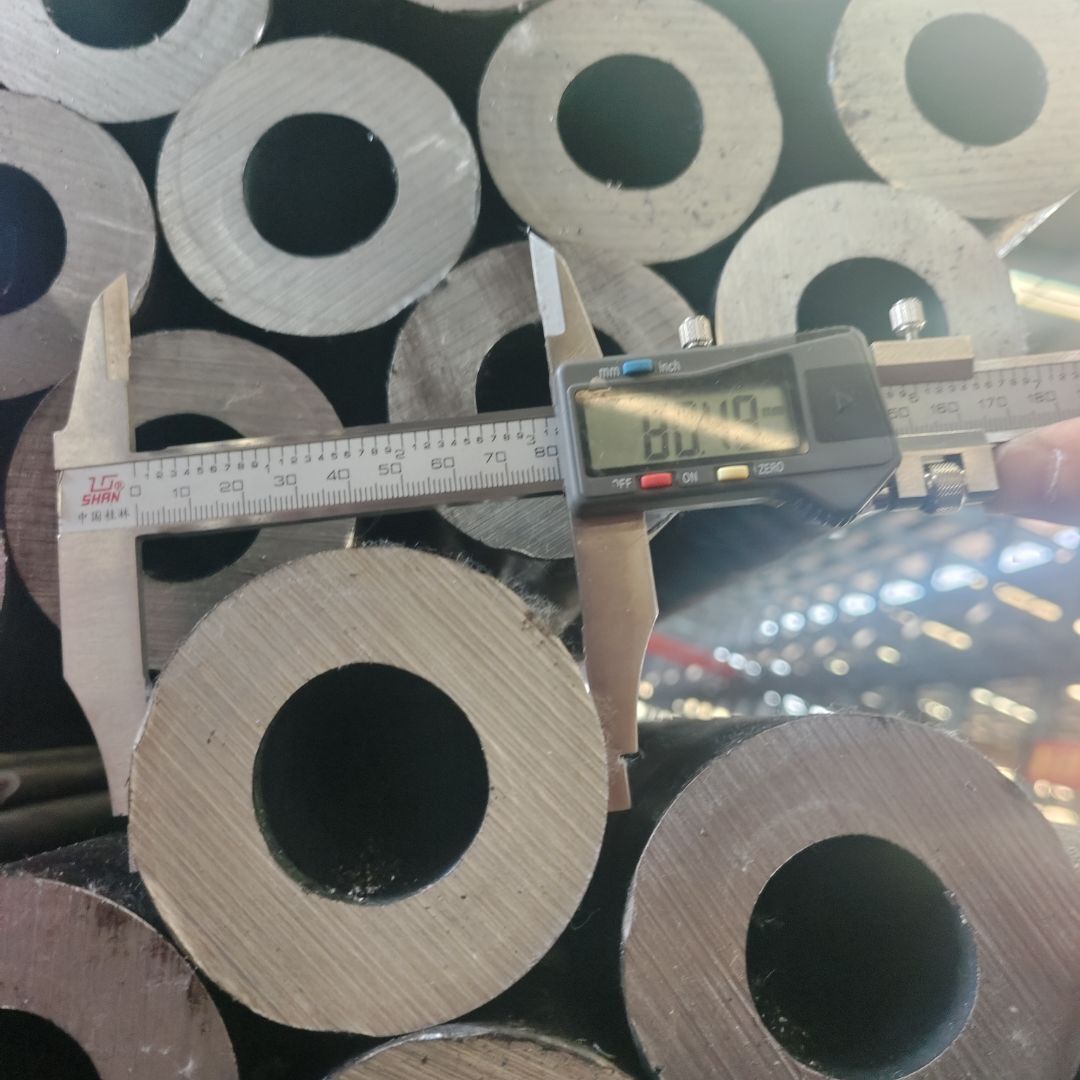
Comparison: Seamless Pipe, Hollow Bar and Welded Tube
| Family member | How it is made (general) | Where SAE4140 fits | Typical buyer use | Sourcing note |
|---|---|---|---|---|
| Alloy seamless pipe and tube | Solid billet pierced and rolled or drawn; no circumferential weld | Tuoda Machinery's SAE4140 alloy seamless steel pipe and tube, OD 20–400 mm, wall 3–30 mm | Drill collars, pressure and cyclic-duty components, machined annular parts | Specify OD, wall, delivery condition and inspection basis together |
| Hollow steel bar | Heavy-wall tubular stock produced as machining input | SAE4140 hollow bar for parts machined from the wall | Shafts, sleeves, rings, couplings with an existing bore | Wall thickness and bore geometry drive both cost and machining time |
| Welded steel pipe | Strip or coil formed and longitudinally welded | Part of Tuoda Machinery's wider family; distinct from seamless SAE4140 tube | Structural and general-duty applications where a seam is acceptable | Confirm seam acceptance in writing before ordering |
| Carbon steel tube | Non-alloy or low-alloy tube routes | Separate branch of the family (e.g. A106 Gr.B, ST52, ST44, S355, E355, ST37, 10#, 20#) | Conveyance, structural and general mechanical duty | Chosen when hardenability and wear duty are not the governing requirement |
| Alloy steel pipe (umbrella) | Any alloy-grade tubular product | SAE4140 sits here with grades such as 42CrMo and 30CrMo | Varies entirely with grade and form | “Alloy pipe” alone is not a specification — name the grade |
Manufacturing descriptions above are general industry characterisations of each product family; grade-specific properties should be confirmed against the mill certificate and the agreed inspection route for the actual order.
Round and Square Availability, and What the OD/Wall Range Means
In the SAE4140 seamless range described here, the dimensional envelope is round: outside diameter 20–400 mm and wall 3–30 mm. That envelope covers the drill-collar, cylinder-body and heavy machined-sleeve work the grade is normally bought for, and it is the range a buyer should reference when requesting a quotation.
Square and rectangular hollow sections belong to a different forming route and are not part of the stated round OD/wall range. Buyers who need a square profile should raise it as a separate line item and confirm availability, tolerances and inspection basis directly rather than inferring square capability from a round-pipe catalogue. The same discipline applies to square bar as machining stock: it is a bar-family question, not a seamless-tube question.
A second boundary worth stating plainly: an OD of 400 mm is not a universal ceiling across the industry, and this article makes no claim about other suppliers' ranges. It describes Tuoda Machinery's SAE4140 seamless tube envelope, which is the figure a procurement team should verify at quotation for their specific wall-and-length combination.
FAQ
Does Tuoda Machinery provide a 3.1 certificate with SAE4140 tube orders?
Tuoda Machinery holds a CE 3.1 certificate, number 3N230530.STMDO12, issued by ECM with EU scope and referencing EN 10210, EN 10219 and EN 10025; it was issued on 30 May 2023 and is valid until 28 May 2028. Because that certificate is a company-level conformity document, the order-level evidence remains the agreed inspection route: a factory laboratory report, or a third-party inspection arranged by the buyer, with pre-shipment test as the acceptance criterion. Buyers whose program requires heat-specific certification should state that requirement in the RFQ so it is priced and scheduled correctly.
What SAE4140 forms and sizes can Tuoda Machinery supply, and what can be customised?
Tuoda Machinery supplies SAE4140 alloy seamless steel pipe and tube with outside diameter 20–400 mm and wall thickness 3–30 mm, within a wider family covering seamless steel pipe, carbon steel tube, alloy steel pipe, hollow steel bar and welded steel pipe. Customisation is stated to cover size, length, mechanical property, delivery time, and testing/inspection arrangements, and the manufacturer describes its output as fully standardised custom products built to customer requirements. Monthly capacity is 1000 tons, which is the figure to check against an annual program before assuming schedule certainty.
What is the minimum order and how are payments and delivery handled?
The stated minimum order is 5 tons, or discuss where a project quantity differs. Payment terms are TT or LC, and delivery can be quoted under FOB, CIF, CFR, EXW or DDP. For evaluation-stage budgeting, the useful discipline is to request the quotation with the Incoterm, the delivery condition and the inspection basis already fixed, because changing any one of those after quotation changes both price and lead time.
How can a buyer validate the material before committing to a full order?
Validation runs through documentation and inspection rather than assumption. Tuoda Machinery provides a factory laboratory report, and the buyer may arrange third-party inspection; pre-shipment test is the stated acceptance criterion. Where the design depends on a specific mechanical result — tensile, hardness or impact — the report should state the heat-treatment condition, section size and test basis, since reported reference values for SAE4140 such as an annealed tensile strength of 655 MPa (AZoM) describe the grade in general, not a particular delivery.
What is the lead time for an SAE4140 tube order?
Stated lead time is 30–45 days. The variable that most often moves a schedule is not the rolling itself but the inspection sequence: if a third-party inspection is required, it must be booked to fall before shipment, and the Incoterm should support that order of events. Buyers planning around a fixed installation date should confirm the inspection window at order placement rather than at the end of production. For a formal quotation on a specific OD, wall, condition and destination, contact Olivia at Olivia@sdtuoda.com or +86 13290268388, or review the product range at www.sdtdsteel.com.
Next Step
If you are specifying SAE4140 as a tube, hollow bar or welded form, the fastest way to avoid the grade–form mismatch described above is to send the requirement with all three elements fixed: form, dimension (OD and wall), and delivery condition — plus the inspection basis your quality team needs.
Download the product catalogue: Tuoda Machinery brochure (PDF)
Contact: Olivia | Email: Olivia@sdtuoda.com | Tel / WhatsApp: +86 13290268388
Shandong Tuoda Machinery Equipment Co., Ltd., NO853 South Liaoniu Road, Dongchangfu District, Shandong, China | www.sdtdsteel.com
Conclusion
SAE4140 is a grade, not a product. Inside the steel pipe family it appears as alloy seamless pipe and tube, as hollow steel bar used for machining stock, and as welded tube where a seam is acceptable — each sitting alongside carbon steel tube and the wider alloy steel pipe umbrella. Tuoda Machinery's contribution to that family is an SAE4140 alloy seamless steel pipe and tube range of OD 20–400 mm and wall 3–30 mm, supported by 1000 tons monthly capacity, a 30–45 day lead time, a 5-ton minimum order, and an inspection route built on factory laboratory reporting or buyer-arranged third-party inspection, with pre-shipment test as the acceptance basis.
The decision rule that follows is simple and survives contact with procurement: name the form, name the dimension, name the condition, name the inspection basis. Everything else — price, lead time, and whether the delivered item performs for a decade in drilling equipment — follows from those four.
Have Questions or Need More Details?
Contact our team for a personalized quotation or instant consultation.
Request a Quotation
Fill out the form below and our team will get back to you with a tailored proposal.
WhatsApp Direct Chat
Prefer to chat in real-time? Message us on WhatsApp for instant assistance & quick answers.
- Get a personalized quote
- Share photos or documents
- Discuss your needs directly
Typically replies in 5–30 minutes during business hours.