
Heavy Duty Hydraulic Cylinder FAQ: Pre-Shipment Testing, Lead Times, and Long-Term Supply
Most heavy duty hydraulic cylinder projects do not stall on engineering. They stall on the operational questions that appear after the drawing is approved: what is actually tested before the cylinder leaves the factory, how long the first order really takes, which payment and delivery terms apply, and whether the same specification can be ordered again later without re-qualifying a new supplier. This FAQ answers those questions using documented Tuoda Machinery terms — a minimum order quantity of 1 unit, T/T and L/C payment, FOB/CIF/CFR/EXW/DDP delivery, a 30–45 day standard lead time, pre-shipment testing inside acceptance inspection, and a ±10% weight tolerance.
Why These Questions Decide Whether a Cylinder Project Moves Forward
A heavy duty hydraulic cylinder is rarely a catalogue purchase. It is specified against a mounting envelope, a pressure class, a duty cycle, and a delivery window tied to an assembly line, a commissioning date, or a planned shutdown. When any one of those four elements is unclear, procurement holds the order — not because the engineering is wrong, but because nobody has answered the operational question attached to it.
The uncertainty usually concentrates in four places:
- Acceptance. The buyer knows the cylinder will be tested, but not what the test covers, who witnesses it, or what happens if a measured value falls outside the agreed range.
- Timing. A quoted lead time without a defined starting point cannot be scheduled against a commissioning date.
- Commercial terms. Payment method, Incoterm, and weight tolerance change both the landed cost and the cash-flow profile of the order.
- Continuity. The first cylinder may perform, but the tenth one has to match it. Bore stability, straightness, roughness, and concentricity have to hold across batches, not just in a single sample.
None of these are product-design questions. They are process questions, and they are answered by documented working terms rather than by brochure language. That is why this guide is organised as a sequence of questions a buyer asks between the purchase order and the repeat order — the same sequence in which the money, the risk, and the schedule actually move.
Industry Background: What Standards Do and Do Not Tell You
The commercial context for these questions is large and geographically concentrated. Fortune Business Insights valued the global hydraulic cylinder market at USD 17.34 billion in 2025 and projected USD 18.11 billion for 2026, rising to USD 27.19 billion by 2034. Asia Pacific accounted for 38.40% of that market in 2025, which is one reason so many custom heavy duty cylinder sourcing conversations begin with manufacturers in China.
Demand is also concentrated by cylinder type. Grand View Research reported that double-acting cylinders held a 70% share of the hydraulic cylinder market in 2024. The practical consequence for a buyer is straightforward: most custom specifications arriving at a factory are double-acting, most suppliers are organised around that work, and the questions in this guide apply to the majority of orders rather than to an exotic minority.
The standards picture, however, is narrower than many buyers assume. ISO 6022:2006 establishes mounting dimensions for single-rod hydraulic cylinders in the 25 MPa (250 bar) series, with typical maximum pressures reaching 320 bar. ISO 6020-1:2007 covers metric mounting dimensions for medium-series cylinders at 16 MPa (160 bar). Both standards exist to make cylinders interchangeable. Neither one certifies a supplier, and neither one sets durability, leakage, or duty-cycle performance.
| Standard | Pressure class | What it defines | What it does not prove |
|---|---|---|---|
| ISO 6022:2006 | 25 MPa (250 bar), typical maximum up to 320 bar | Mounting dimensions for single-rod cylinders; interchangeability | Supplier certification, durability, leakage performance, duty cycle |
| ISO 6020-1:2007 | 16 MPa (160 bar) | Metric mounting dimensions for medium-series cylinders; interchangeability | Supplier certification, durability, leakage performance, duty cycle |
Read that table as a division of labour. The standard tells you whether a replacement cylinder will fit and which pressure class it belongs to. It does not tell you whether the cylinder in the crate was built to the drawing. That gap is closed by acceptance inspection and pre-shipment testing — precisely where most purchase orders leave too much unsaid.
Pre-Shipment Testing: What Should Be Agreed Before the Order Starts
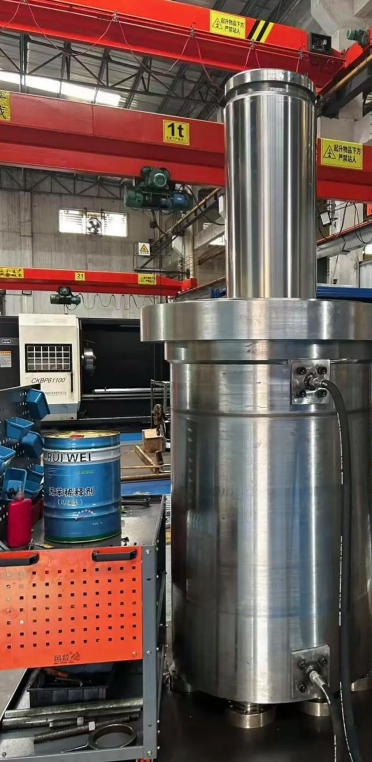
In Tuoda's documented quality control, pressure testing is the recorded test step, and pre-shipment testing sits inside acceptance inspection — it happens on the finished cylinder, before packing, against the specification the buyer signed off. The test itself is only one part of the arrangement. The value comes from deciding in advance what is measured, what is recorded, and what counts as a pass.
Three items should be fixed in writing at the purchase order stage:
- The test. The pressure level relative to the rated working pressure, and how long it is held.
- The measurable specification. Bore tolerance, surface roughness, material grade, stroke, and mounting dimensions — the values that can be re-checked on arrival.
- The evidence. What the buyer actually receives as proof, and whether the buyer or a third party witnesses the test.
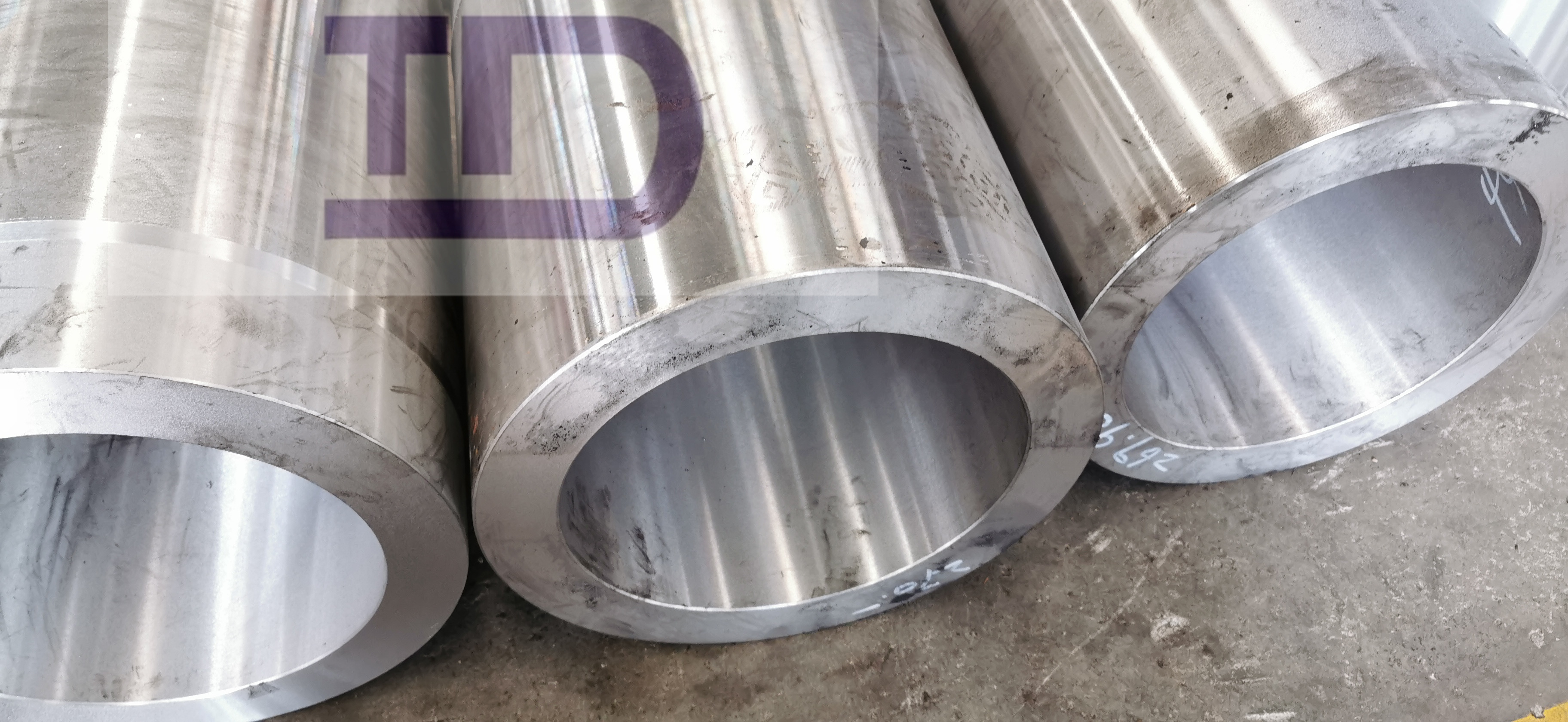
On the specification side, Tuoda's cylinder documentation lists ISO hole diameter tolerances of H8/H9 and arithmetic roughness of Ra ≤ 0.4 μm, with bore diameters from 20 mm to 800 mm and wall thickness from 3 mm to 50 mm. Available material grades include ST52, S355, E355, C45, SAE1045, and 42CrMo4. These are the right numbers to place in the acceptance criteria, because they are the numbers a buyer can measure again after the crate is opened.
What a standard does not do is repeat itself on the shop floor. ISO 6022 defines a mounting envelope; it does not state that a particular cylinder was tested against it. Buyers who treat standard compliance and product verification as the same thing are the ones who discover the difference at commissioning, when the cylinder is already bolted to the machine and the commissioning window is already open.
A related point concerns leakage. Pressure testing is where a leak path — at the seal, the gland, or a welded joint — shows up while the cylinder is still in the factory and still under the supplier's control. Once the unit is on a vessel, the same fault becomes a warranty discussion, a return freight calculation, and a downtime event. That asymmetry is the entire commercial argument for spending an extra day on acceptance inspection.
Lead Times: Planning Around a 30–45 Day Standard Window
Tuoda's standard lead time for heavy duty hydraulic cylinders is 30–45 days. The range is not padding. It reflects how much of a given cylinder is engineered rather than selected from stock.
Orders move toward the upper end of the window when several of the following appear together:
- Non-standard bore and stroke combinations that fall outside routine machining setups.
- Custom mounting geometry that has to be verified against the buyer's machine envelope before cutting starts.
- Material grades outside the routinely worked set.
- Additional operations such as honing to a tighter roughness target, surface treatment, heat treatment, or logo printing.
Tuoda's documented customization scope covers application, size, bore, stroke, pressure, load, system solution, cylinders, and logo printing. The useful planning question is therefore not "can this be customized" — it usually can — but "which of these changes pushes the order into the longer half of the 30–45 day window".
Two planning rules follow from that. First, define the start of the lead time inside the purchase order: order confirmation, drawing approval, or receipt of deposit. A 30–45 day window measured from an undefined point cannot be scheduled against a commissioning date, and disputes about lateness almost always trace back to this omission rather than to the factory. Second, separate production time from transit time. Tuoda ships under FOB, CIF, CFR, EXW, and DDP terms; each places a different part of the logistics chain on the buyer and adds a different number of days between the factory gate and the site.
For context on where those shipments go, approximately 70% of Tuoda's output is exported to the EU, Asia, and South America, with documented export markets including India, Turkey, Vietnam, Indonesia, Canada, Germany, the United Kingdom, and Sweden. A buyer importing into any of those markets is working with a supplier whose routine export documentation flow already covers that destination — which shortens the administrative tail of the order even when the machining schedule does not change.
Commercial Terms: MOQ, Payment, Incoterm, and Weight Tolerance
Four commercial terms are settled early because they affect everything downstream of them.
Minimum order quantity: 1 unit
Tuoda's MOQ is 1 unit. For a maintenance engineer replacing a single cylinder on one machine, that removes the usual barrier between a fault and a custom build. For a project buyer, it creates a staged path: build and test one unit against the specification, review the acceptance evidence, then release the balance of the order against a design that has already been proven. The MOQ is not a discount threshold here; it is a risk-management option.
Payment: T/T and L/C
Both T/T and L/C are accepted. The choice is a risk-allocation decision more than a price decision. T/T is simpler and faster to execute. An L/C introduces documentation conditions and a bank-mediated release step, which is why it tends to appear on larger orders or on first orders where neither party has an established trading history. Match the method to the size of the order and to how much of the specification has already been verified.
Delivery: FOB, CIF, CFR, EXW, and DDP
All five terms are available. EXW leaves export clearance and main carriage with the buyer. FOB transfers risk once the cargo is loaded on the vessel. CFR adds freight to the seller's side; CIF adds freight and insurance. DDP places delivery at the destination with duties handled. The Incoterm belongs in the quotation, not in a verbal understanding reached after the price is fixed — the same number can mean materially different landed costs under different terms.
Weight tolerance: ±10%
Cylinder weight carries a tolerance of ±10%. This is not a clerical detail. Weight drives ocean freight calculation, container loading plans, and lifting arrangements on site. On long-stroke and large-bore cylinders, a ±10% band can mean a meaningful difference in the freight and handling estimate, particularly when several units ship together. The tolerance should appear in the purchase order and on the packing list, so that it is a known allowance rather than a discovery at the port.
What Keeps Repeat Supply Consistent
The hardest part of long-term supply is not the first cylinder. It is the tenth cylinder, delivered eighteen months later, fitting the same mounting and holding the same pressure with the same seal behaviour.
Tuoda's application documentation names the requirements that decide this: internal bore dimensional stability across batches, straightness, internal bore roughness, concentricity, and stable lead times. Those five items are the ones to write into a repeat-order specification, because they are the ones that quietly drift when a supplier changes a process, a tool, or a material source between orders.
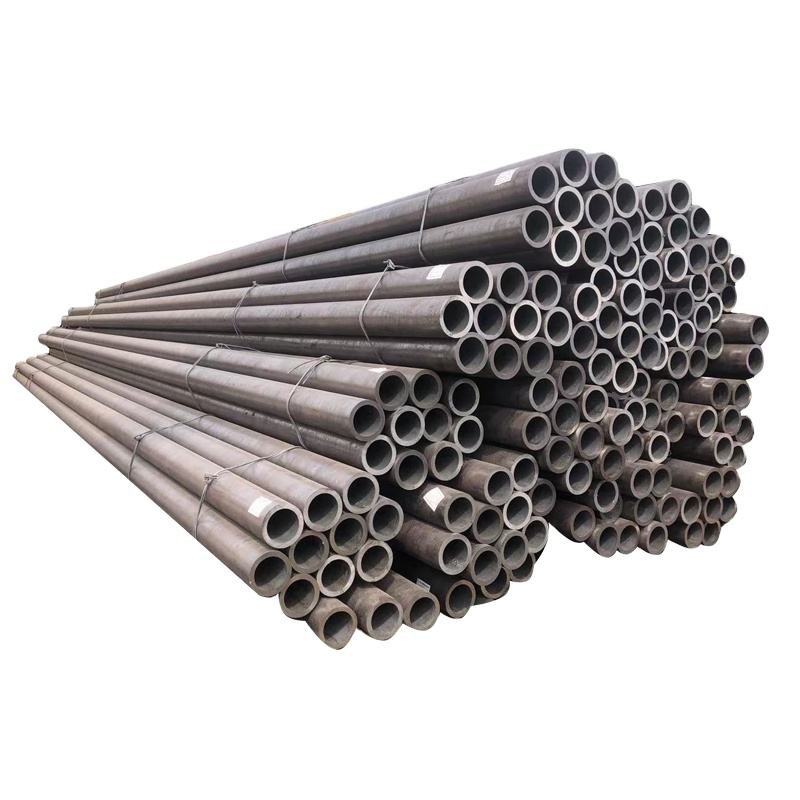
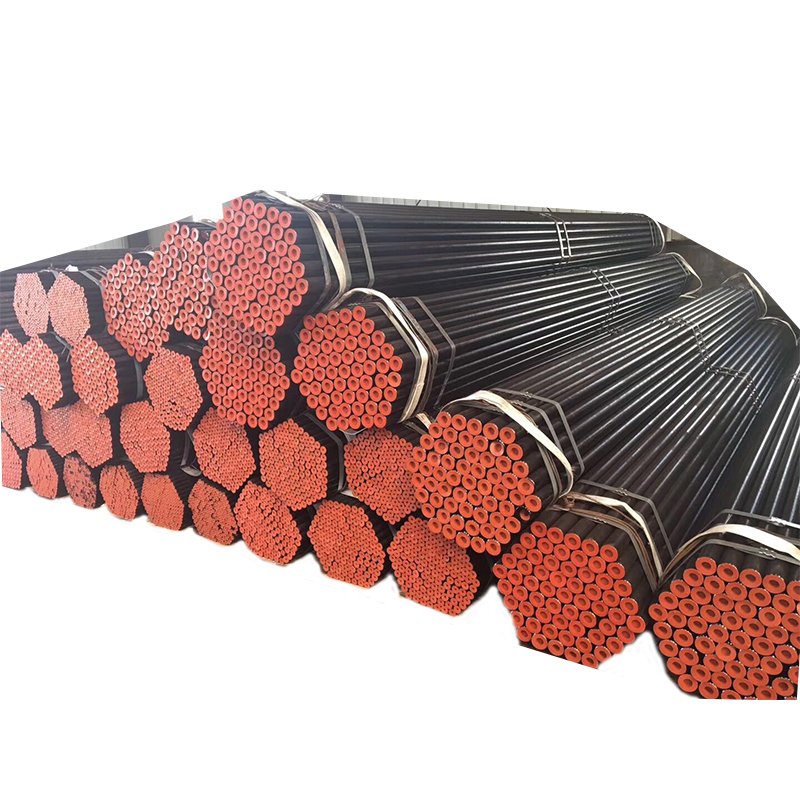
They are also the items a factory either controls or does not. Shandong Tuoda Machinery Equipment Manufacturing Co., Ltd. — Tuoda Machinery — is a manufacturer based in Liaocheng, Shandong, China, established in 2020, operating a 30,000 m² facility with approximately 150 staff, three R&D engineers, and annual output of about 1,200 units. Its work combines custom hydraulic cylinder manufacturing with deep processing of seamless steel pipe, including honing, surface treatment, and heat treatment. That combination matters here: bore stability and surface roughness are created in the tube and the honing operation, not in final assembly, so a supplier that controls the barrel from raw pipe through finished bore has fewer variables to re-qualify on a repeat order.
Material consistency matters as much as machining consistency. If the first order used ST52 and a later order arrives in a different grade, the dimensions may match while the fatigue behaviour does not. Specify the grade — ST52, S355, E355, C45, SAE1045, or 42CrMo4 — and treat it as a locked attribute of the part number rather than a preference to be optimised on cost at the next reorder.
Step-by-Step: From Purchase Order to Repeat Order
- Define the requirement. Application, bore, stroke, pressure, load, mounting envelope, and the machine-side interface. Anything left out here becomes a change later, and a change inside the lead time is what turns 30–45 days into an open date.
- Verify the drawing. Tuoda's process begins with application analysis and drawing verification before material selection, so that the cylinder is designed against the machine rather than against a catalogue.
- Select material. Grade fixed against pressure class and duty cycle, recorded on the drawing.
- Manufacture and hone. Deep-hole machining, honing, surface treatment, and heat treatment as required, to the specified bore tolerance and roughness.
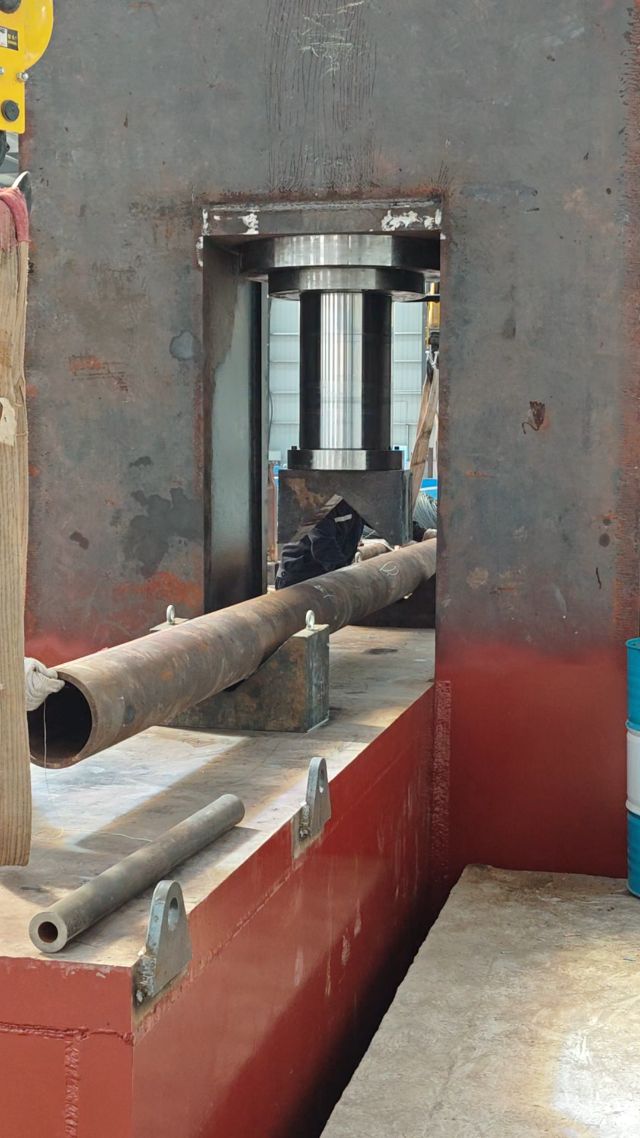
- Inspect and test. Pressure testing inside acceptance inspection, measured against the criteria agreed at order stage.
- Approve pre-shipment. Review the evidence, confirm packing, and confirm weight inside the ±10% tolerance before the cargo is released.
- Ship on the agreed terms. FOB, CIF, CFR, EXW, or DDP, with payment by T/T or L/C as specified in the contract.
- Record the specification. The approved drawing, material grade, and inspection record become the baseline for the repeat order.
Step 8 is the one buyers most often skip, and it is the one that determines whether the second order is a fifteen-minute reorder or a new qualification project. A repeat order is only repeatable if the first order left a documented baseline behind it.
Use Cases: Where These Terms Matter Most
The working conditions that make acceptance testing and lead-time planning critical are the ones Tuoda's application documentation lists: high temperature, dusty environments, high humidity, marine exposure, outdoor sites, and mine conditions that combine impact with slurry. Each of these pushes a different part of the order.
Construction machinery and excavators
An excavator cylinder is replaced inside a maintenance window, not on a convenient date. A minimum order quantity of 1 unit combined with a 30–45 day standard lead time is what makes a single-unit replacement of a non-standard cylinder practical: there is no volume commitment to negotiate, and the schedule is short enough to fit a planned service interval rather than forcing an unplanned stoppage.
Mining equipment
Impact plus slurry attacks both the rod and the sealing system, and a cylinder that fails early is measured in lost production hours rather than in parts cost. Here the pre-shipment pressure test and the batch-consistency requirements — bore stability, straightness, roughness, concentricity — do more for reliability than any single specification value. The value of a repeatable specification shows up over the second and third order, not the first.
Industrial presses and high-pressure test benches
Tuoda manufactures high-pressure hydraulic cylinders in the 31.5–63 MPa range for equipment including hydraulic excavators, crushers, four-column hydraulic presses, marine steering gear, and anchor winches, and ultra-high-pressure cylinders above 63 MPa for applications such as high-pressure water jet cutting machines, material pressure-testing apparatus, and similar equipment. At these pressures, the pre-shipment test is not a formality — it is the last point at which a sealing or weld defect can be corrected economically.
Marine hydraulic systems
Marine and offshore duty adds corrosion exposure to the ordinary pressure and cycle requirements, and it removes the option of a fast field repair. A cylinder ordered for a vessel has to arrive right the first time, which puts the weight of the order on the acceptance criteria and on the documentation that travels with the unit.
A documented example shows what a single-unit order can produce. A heavy machinery OEM in Vietnam ordered one unit for a straightening machine. The cylinder has run for more than ten years with stable operation, reduced energy consumption, lower maintenance cost, and no major failures. The order quantity was a single unit — which is the point: the minimum order quantity did not prevent the project, and a specification that held from the first order onward is what made a decade-long result measurable at all.
Documented Terms vs. What to Lock in the Purchase Order
The table below separates what is documented on the supplier side from what the buyer still has to confirm in writing. The second column is fact; the third column is the decision the buyer owns.
| Item | Tuoda documented position | What to write into the purchase order |
|---|---|---|
| Minimum order quantity | 1 unit | Whether this is a single trial unit or a staged release against a proven design |
| Payment | T/T and L/C | Which method applies, and the milestone each payment is tied to |
| Delivery terms | FOB, CIF, CFR, EXW, DDP | The single Incoterm that applies, plus the named port or place |
| Standard lead time | 30–45 days | The event from which the lead time starts counting |
| Pre-shipment testing | Carried out within acceptance inspection; pressure testing is the recorded quality-control step | Test pressure, hold period, and the evidence the buyer receives |
| Weight tolerance | ±10% | Whether the tolerance is acceptable for freight, container, and lifting planning |
| Customization scope | Application, size, bore, stroke, pressure, load, system solution, cylinders, logo printing | Which of these are in scope and which are explicitly out |
| Material grades | ST52, S355, E355, C45, SAE1045, 42CrMo4 | The single grade locked to the part number |
An order that specifies every row in the third column is an order that can be inspected, scheduled, and repeated. An order that leaves two or three rows blank is an order that will be renegotiated at the least convenient moment.
Frequently Asked Questions
Does a heavy duty hydraulic cylinder order come with a compliance certificate for ISO 6022?
No — and the distinction matters. ISO 6022:2006 establishes mounting dimensions for single-rod cylinders in the 25 MPa (250 bar) series so that cylinders remain interchangeable; ISO 6020-1:2007 does the same for medium-series cylinders at 16 MPa (160 bar). Neither standard certifies a supplier, and neither defines durability, leakage, or duty-cycle performance. Tuoda's documented quality-control step is pressure testing within acceptance inspection. If your project requires a specific third-party certificate, a material grade certificate, or a witnessed test, state the requirement in the purchase order before the order is released, so that the documentation is produced alongside the cylinder rather than requested after it has shipped.
Can a single custom cylinder be ordered first, and repeated at volume later?
Yes. Tuoda's minimum order quantity is 1 unit, and its customization scope covers application, size, bore, stroke, pressure, load, system solution, cylinders, and logo printing. The facility in Liaocheng, Shandong covers 30,000 m², employs approximately 150 staff, includes three R&D engineers, and produces annual output of about 1,200 units — so a single trial unit and a later repeat volume come from the same manufacturing operation rather than from different supply chains. The condition for a clean scale-up is that the trial order ends with a locked drawing, a locked material grade, and an inspection record that the repeat order can be measured against.
Which payment and delivery terms affect the total cost of the order?
Two levers dominate. The first is the delivery term: EXW, FOB, CFR, CIF, and DDP allocate freight, insurance, risk transfer, and duties differently, so the same ex-works price produces different landed costs under each. The second is the ±10% weight tolerance. Because weight feeds directly into ocean freight calculation, container loading, and site lifting arrangements, a weight variance on a large-bore or long-stroke cylinder can change the logistics estimate without any change in the cylinder price. Payment by T/T or L/C changes the timing and the banking cost of the transaction rather than the goods value. Confirm the Incoterm and the weight tolerance together, in writing, before comparing quotations.
How is pre-shipment testing witnessed or documented?
Pre-shipment testing is carried out within acceptance inspection, with pressure testing as the recorded quality-control step, and it happens before packing. What varies is the evidence package, and that is a buyer decision rather than a supplier default: whether the result is issued as a signed test record, whether photographs or video accompany it, and whether the buyer or a nominated third party attends the test. Because the minimum order quantity is 1 unit, a first order can be structured as a single-unit build whose acceptance record becomes the reference for everything that follows. Agree the evidence format at order stage; asking for it after the test has been completed is where most documentation disputes begin.
How should a 30–45 day lead time be planned for a repeat supply programme?
Start by defining the trigger: order confirmation, drawing approval, or deposit receipt. A 30–45 day window with an undefined start cannot be scheduled. Then decide which customization items are genuinely required on each release — non-standard bore and stroke, custom mounting, non-routine material grades, and additional operations such as tighter honing, surface treatment, or logo printing each push an order toward the longer end. Finally, treat "stable lead times" as a specification item in its own right, alongside bore stability, straightness, roughness, and concentricity, so that continuity is something the supplier reports on rather than something the buyer discovers. To plan a specific cylinder against a specific delivery date, send the drawing and required date to olivia@sdtuoda.com or call +86 13290268388.
Conclusion: The Order Is Only as Repeatable as Its Documentation
Pre-shipment testing, lead times, and long-term supply are usually treated as three separate conversations. In practice they are one: the acceptance criteria agreed before the order determine what can be verified before shipment, the way the lead time is defined determines whether the shipment meets its window, and the record left behind determines whether the next order is a reorder or a re-qualification.
Tuoda Machinery works within a set of documented terms that make those three conversations concrete — MOQ of 1 unit, T/T and L/C payment, FOB/CIF/CFR/EXW/DDP delivery, a 30–45 day standard lead time, pre-shipment testing inside acceptance inspection, and a ±10% weight tolerance, supported by a 30,000 m² facility, approximately 150 staff, three R&D engineers, and annual output of about 1,200 units across a customer base that takes roughly 70% of output into the EU, Asia, and South America.
Next Step: Put the Terms in Writing
Send the drawing, the pressure class, the required delivery date, and the acceptance evidence you need. We will confirm which items fall inside the 30–45 day standard window and which move it, and return a quotation with the Incoterm and weight tolerance stated explicitly.
Email: olivia@sdtuoda.com | Tel / WhatsApp: +86 13290268388 | Web: www.sdtdsteel.com
Product brochure (PDF, public download): Tuoda Machinery catalogue
Have Questions or Need More Details?
Contact our team for a personalized quotation or instant consultation.
Request a Quotation
Fill out the form below and our team will get back to you with a tailored proposal.
WhatsApp Direct Chat
Prefer to chat in real-time? Message us on WhatsApp for instant assistance & quick answers.
- Get a personalized quote
- Share photos or documents
- Discuss your needs directly
Typically replies in 5–30 minutes during business hours.