Ranked: 5 Heavy-Duty Hydraulic Cylinder Configurations for Extreme Industrial Loads
Configuration decides more than brand once a cylinder has to hold pressure under shock, high cycle counts and long service intervals. This ranking orders five heavy-duty hydraulic cylinder configurations by application fit, load profile and lifecycle value:
- Ultra-high-pressure custom build (above 63 MPa)
- Heavy-duty double-acting piston cylinder (31.5–63 MPa high-pressure band)
- Telescopic multi-stage cylinder
- Plunger (single-acting ram) cylinder
- Rotary actuator
The ranking covers configurations, not catalog part numbers, and it is written for the evaluation stage — the point where a buyer already has a load case and needs to know which design can carry it, which design is being over-specified, and what each choice costs over a service life rather than at the purchase order. Tuoda Machinery (Shandong Tuoda Machinery Equipment Manufacturing Co., Ltd.) is the reference manufacturer used for build-level evidence: a custom hydraulic cylinder producer based in Liaocheng, Shandong, China, whose documented product scope includes high-pressure cylinders in the 31.5–63 MPa range and ultra-high-pressure cylinders above 63 MPa.
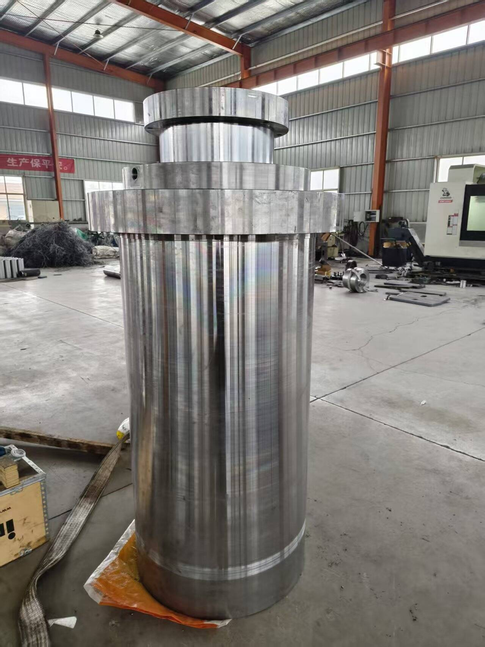
What makes a load "extreme" rather than merely heavy
Extreme is a load case, not a marketing tier. A cylinder is being asked to do extreme work when several of the following apply at the same time:
- Pressure is sustained in the high-pressure band, or above 63 MPa.
- The duty cycle is cyclic rather than static, so the seals see repeated pressure reversals.
- Shock and overpressure events occur — valve closure, stall, impact.
- Stroke is long and side load is present, so rod buckling and bearing wear govern life.
- The environment is corrosive, contaminated or cold.
- A failure stops a line or a vessel instead of costing one replacement part.
That distinction matters because the usual reference point for heavy duty is an interchangeability standard. ISO 6022:2006 sets mounting dimensions for single-rod cylinders in the 25 MPa (250 bar) series, which is why it is quoted so often in replacement work — but it defines dimensions and a pressure class, not durability, leakage performance, duty cycle or supplier capability. Two cylinders can share a mounting pattern and behave very differently after 20,000 cycles.
Why configuration now carries commercial weight
The global hydraulic cylinder market was valued at USD 17.34 billion in 2025 and projected at USD 18.11 billion in 2026, with USD 27.19 billion forecast by 2034 (Fortune Business Insights). Asia Pacific accounted for 38.40% of that market in 2025, and double-acting cylinders held a 70% share of cylinder types in 2024 (Grand View Research).
Market totals do not select a configuration, but they do show where the design consensus sits. The double-acting share is the useful signal: most mobile and industrial circuits are built around powered motion in both directions, which makes the double-acting piston the default rather than the specialist choice. The other four configurations in this ranking exist because the default stops working at the edges — a long stroke inside a short envelope, a purely one-directional press force, limited-angle rotation, or a pressure ceiling above the high-pressure band.
How the five configurations were ranked
Each configuration was assessed against five criteria that mirror the order in which specification problems usually surface:
- Load-profile fit — whether the design matches the direction, magnitude and character of the force.
- Pressure and geometry feasibility — whether the pressure class, bore and stroke can be built without compromising wall thickness, honing length or rod guidance.
- Sealing and flow architecture — how the design manages leak paths, bore deflection and pressure spikes.
- Lifecycle and serviceability — seal access, re-honing, spare-part availability and re-installation effort.
- Application and compliance fit — whether the relevant standard, mounting interface and duty cycle are covered.
A configuration enters this ranking only if it can be delivered as a custom-engineered build. The documented customization scope covers application, size, bore, stroke, pressure, load, system solution, cylinders and logo printing; material grades include ST52, S355, E355, C45, SAE1045 and 42CrMo4; minimum order quantity is one unit, so a single evaluation cylinder can be ordered before any series commitment; and custom builds are typically quoted at 45–60 days. The entries below describe design types — where a project needs a non-standard geometry, it is quoted against a drawing within that same custom scope.
The build features used to judge each entry are also what separate a heavy-duty design from a standard cylinder: metal-to-metal sealing, high-performance polyurethane seals, forged valve bodies, thick-walled seamless steel pipe tubing, precision-honed bores and overpressure protection devices. Pressure testing sits inside the production quality-control step before delivery.
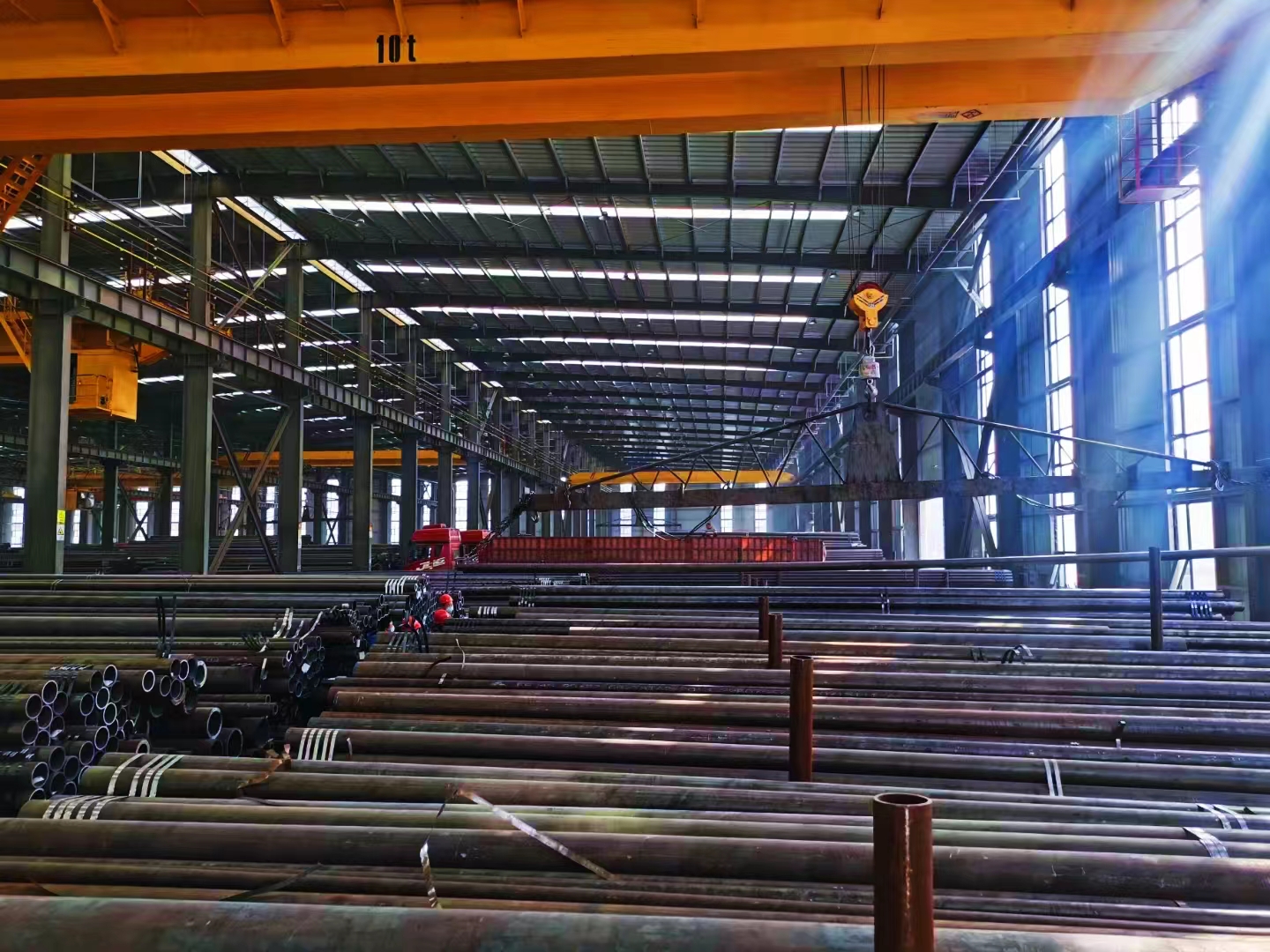
Bore is treated here as a drawing-level question rather than a headline number. Published heavy-duty welded ranges vary widely — Yates Industries, a US manufacturer, reports heavy-duty welded cylinders up to 3,000 PSI and 18 in bore (company-reported, 2024) — and a bore figure without a matching pressure, stroke and mounting drawing says very little. Where a project needs a bore beyond a supplier's published range, wall thickness, honing length and rod guidance have to be confirmed together on the drawing.
The five configurations, ranked
Rank 1 — Ultra-high-pressure custom build (above 63 MPa)
First, because it is the only configuration designed from the outset for pressures above the high-pressure band. The documented ultra-high-pressure range (above 63 MPa) is applied to high-pressure water jet cutting machines, artillery recoil systems and material pressure-testing apparatus — applications where the pressure ceiling, not the stroke, is the governing constraint.
- Where it wins: pressure-test benches, water-jet cutting, recoil absorption, and any circuit that would exceed the pressure class of a standard high-pressure cylinder.
- Load profile: sustained high static pressure with short, severe load events; the design margin sits in wall thickness and sealing interface rather than in stroke length.
- Lifecycle note: 42CrMo4 and comparable alloy grades are commonly specified where higher strength is required; because fewer of these units are in service, spare-part strategy and re-test intervals should be agreed at the order stage.
- Where it stops: unit cost and engineering effort. It is not a default upgrade for a 25 MPa application — specifying it where the load case does not require it adds cost without adding life.
Rank 2 — Heavy-duty double-acting piston cylinder (31.5–63 MPa)
Second, and the configuration most extreme-load projects actually install. A double-acting piston cylinder delivers controlled force in both directions, which matters wherever retraction is part of the working cycle. Hydraulic excavators, crushers, four-column hydraulic presses, marine steering gear and anchor winches all appear in the documented application list for the 31.5–63 MPa high-pressure band, and these are the duties where a double-acting piston design is normally specified.
Its position reflects breadth rather than peak pressure. Piston designs carry the largest share of industrial demand, have the widest service ecosystem, and can be re-sealed without replacing the barrel. Where the load is cyclic and bidirectional, this is usually the lowest-risk configuration to specify.
The limits are structural rather than commercial. A long stroke with side load brings rod buckling and bearing wear into the design; contaminated environments expose the rod seal; and the mounting has to provide alignment that the cylinder cannot supply itself. Thick-walled seamless tubing, a honed bore and polyurethane dynamic seals address bore deflection and leak paths, but they do not remove the need for correct installation.
Rank 3 — Telescopic multi-stage cylinder
Third: the configuration that buys stroke with envelope. Nested stages extend to a long working length from a short retracted length, which is why the design appears wherever installation space is fixed — tipping bodies, hatch covers, lifting platforms and similar mechanisms. In a load ranking it sits below the piston because the same working stroke arrives with more seal interfaces and less lateral stiffness.
Three load-profile notes matter. Force varies stage by stage as effective piston area changes, so the structural check must be done per stage rather than at the cylinder's nominal rating. Side load is more damaging here than in a single-stage design. And every additional stage is an additional potential leak path, which shifts lifecycle value toward stage guidance and seal quality rather than headline pressure. Where a project requires this geometry, stage count, stroke per stage and sealing arrangement are defined on the drawing within the custom scope rather than picked from a catalog.
Rank 4 — Plunger (single-acting ram) cylinder
Fourth: the simplest way to generate a large one-directional force. A plunger uses the ram itself as the working surface and returns by gravity or an external force, which suits vertical press rams, lifting and one-way clamping where the load always pushes in the same direction. Fewer dynamic seals on the pressure side mean fewer leak paths, but the plunger surface and guide bearing become the wear parts.
This is also the configuration at the centre of most single-acting to double-acting questions. A plunger cannot pull, so replacing it with a double-acting cylinder changes the machine's force path — the rod-end connection, return line, mounting and structural check all have to be re-verified. The conversion is feasible, but it is engineering work, not a parts swap.
Rank 5 — Rotary actuator
Fifth, and last in a linear-load ranking by definition: a rotary actuator produces torque over a limited angle rather than force over a stroke. Rack-and-pinion and helical designs are used for steering, attachment rotation, and valve or chute actuation. Where an application genuinely needs rotation under extreme load, this is the correct device — but it cannot substitute for a linear cylinder, and a linear cylinder cannot substitute for it, without redesigning the mechanism.
Its lifecycle picture is dominated by vane or rack seal wear and positional accuracy rather than rod-seal leakage, so service planning should be built around those parts instead of cylinder re-sealing practice.
Configuration comparison at a glance
| Rank and configuration | Best load profile | Pressure or sizing basis | Lifecycle and service notes | Typical applications |
|---|---|---|---|---|
| 1. Ultra-high-pressure custom build | Sustained high pressure with short, severe load events | Above 63 MPa; bore, wall thickness and honing length confirmed per drawing | Alloy grades such as 42CrMo4 commonly specified; spare-part and re-test strategy agreed at order | High-pressure test benches, water-jet cutting, artillery recoil systems, material pressure-testing apparatus |
| 2. Double-acting piston | Bidirectional, cyclic, shock-loaded | 31.5–63 MPa band; ISO 6022:2006 covers mounting dimensions for the 25 MPa series | Seal replacement is the main service item; honed bore and polyurethane seals reduce leak paths | Excavators, crushers, four-column hydraulic presses, marine steering gear, anchor winches |
| 3. Telescopic multi-stage | Long stroke within a short retracted envelope | Application-dependent; force varies per stage, confirm per drawing | More seal interfaces; stage guidance and alignment govern service life | Fixed-envelope lifting, tipping mechanisms, hatch covers |
| 4. Plunger (single-acting ram) | One-directional vertical force | Application-dependent; confirm per drawing | Plunger surface and guide bearing are the wear parts; no controlled retraction | Press rams, vertical lifting, one-way clamping |
| 5. Rotary actuator | Torque over a limited angle rather than linear force | Application-dependent; confirm per drawing | Vane or rack seal wear and positional accuracy drive maintenance | Steering, attachment rotation, valve and chute actuation |
Step-by-step: specifying to the load case
The ranking narrows the field; the drawing decides the outcome. Six steps turn a load case into an orderable cylinder.
- Quantify the load case. Force, stroke, cycle count, side load, shock events, environment and required service life. Without these numbers the configuration cannot be ranked honestly and no supplier can quote responsibly.
- Fix the pressure class and the mounting interface. Decide whether the duty sits in the 31.5–63 MPa band or above 63 MPa. When replacing an existing cylinder, check mounting dimensions against the correct pressure class: ISO 6022:2006 covers the 25 MPa series, ISO 6020-1:2007 the 16 MPa medium series, and pressure classes are not interchangeable by assumption. Cylinders forming part of a crane's load-carrying structure fall within ISO 23778:2022 and need application-specific design verification rather than a generic heavy-duty label.
- Match the material grade to the failure mode. ST52, S355 and E355 are structural grades for barrel and body work; C45 and SAE1045 suit machined components that need hardness; 42CrMo4 is commonly specified where higher strength is required under stress.
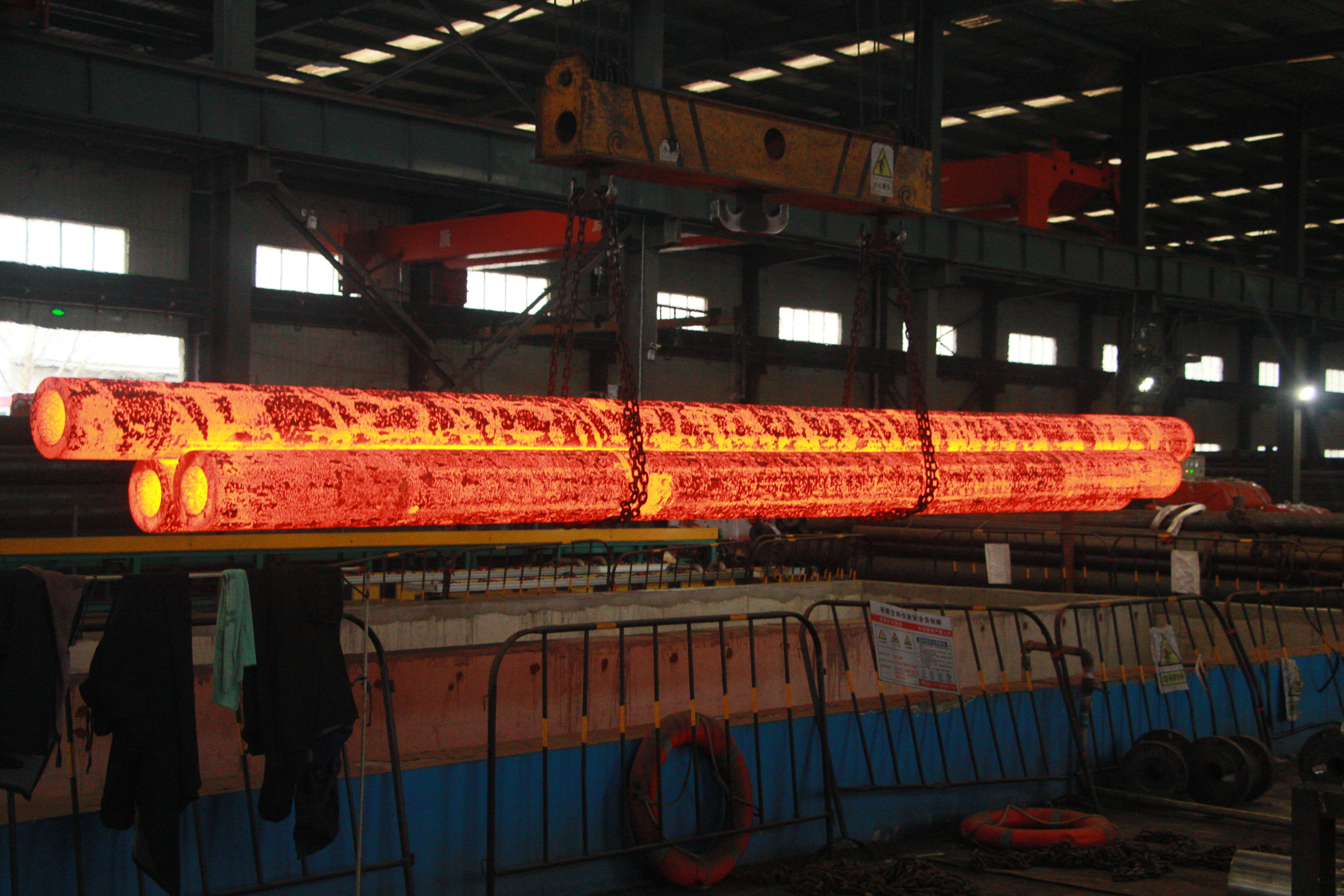
- Specify the sealing and flow architecture. Ask which failure mode each element addresses: metal-to-metal sealing interfaces for static leak paths, polyurethane dynamic seals for rod and piston movement, forged valve bodies for pressure containment, thick-walled seamless tube against bore deflection, honing for bore and rod surface quality, and overpressure protection against pressure spikes. Corrosion-resistant and low-temperature duties need the seal compound and material confirmed per drawing, because ratings are project-specific.
- Agree acceptance testing before production. Pressure testing forms part of the pre-shipment quality-control step; test pressure, hold time, documentation and any witness arrangement should be written into the order rather than assumed at dispatch.
- Confirm the commercial terms. Minimum order quantity is one unit for an evaluation build, custom production is typically quoted at 45–60 days, and drawings plus logo printing sit inside the customization scope.
Where each configuration earns its place
In heavy machinery, the double-acting piston cylinder covers excavator and crusher duty, where cyclic bidirectional force is the norm. In hydraulic presses, the choice runs between piston cylinders for double-acting press circuits and plunger rams for vertical squeeze force, with ultra-high-pressure builds reserved for pressure-testing apparatus. In marine systems, steering gear and anchor winches sit in the high-pressure band and add corrosion-resistant material and seal selection to the specification. In military equipment, artillery recoil systems use the ultra-high-pressure range. And high-pressure test benches are the clearest case for a custom build above 63 MPa, because the pressure ceiling is the entire point of the machine.
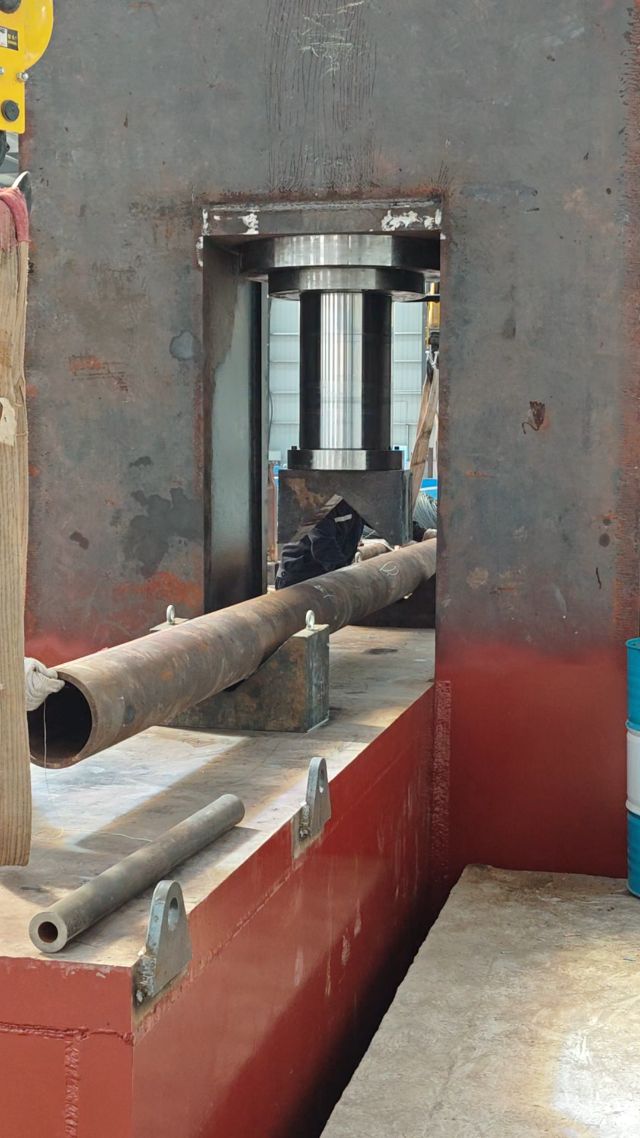
Documented lifecycle evidence in this source set is a single case rather than a pattern. A heavy machinery OEM in Vietnam installed one Tuoda cylinder (product 3558) on a straightening machine, and the unit has run for a project duration exceeding ten years with stable operation, energy savings, reduced maintenance costs and zero major failures. It shows what a correctly specified heavy-duty build can achieve in one application. It is one unit in one process, and should be read that way rather than as a failure-rate guarantee.
Lifecycle value: what to compare instead of purchase price
Total cost of ownership for a cylinder is decided by four figures the purchase order rarely shows: the cost of a seal kit and how long the machine is down while it is fitted; whether the barrel can be re-honed or must be replaced; the price and lead time of a replacement unit; and the installation effort created by mounting and alignment. A configuration that is harder to service can still be the cheaper choice over a decade — but only where the service interval is long enough to offset the intervention cost, and that has to be calculated per project rather than assumed from the configuration type.
Two practical rules follow. First, compare quotations only when the drawings and the acceptance test are identical; a lower price against an unspecified test protocol is not a lower price. Second, treat the documented ten-year case as a reason to ask harder questions about sealing architecture and material grade, not as a promised service life.
Frequently asked questions
Do heavy-duty hydraulic cylinder configurations have to comply with ISO standards?
Some do, and the scope matters. ISO 6022:2006 sets mounting dimensions for single-rod cylinders in the 25 MPa (250 bar) series so cylinders remain interchangeable; ISO 6020-1:2007 does the same for the 16 MPa medium series; and ISO 23778:2022 applies to cylinders that form part of the load-carrying structure of cranes. These standards define dimensions, pressure classes and application scope — not durability, leakage performance, duty cycle or supplier certification. A mounting-dimension match is not proof of compliance, so request the standard a build is designed to, the drawing, and the pressure-test documentation before accepting an interchangeable claim.
Can a single-acting cylinder be replaced with a double-acting heavy-duty cylinder?
Yes, when the mechanism can accept a rod-end connection and a return line. The conversion requires mounting dimensions and stroke to match, the pressure class to be confirmed, and the structure checked for force in both directions. Where the original is a plunger ram returning by gravity, a double-acting cylinder changes the force path, so mounting and guidance have to be re-verified. Because the custom scope covers application, size, bore, stroke, pressure and load, this kind of high-load upgrade is quoted against a drawing rather than a catalog number — which is exactly why it is a specification exercise, not a part-number lookup.
What drives the cost of an extreme-load configuration?
Pressure class, bore and stroke, material grade from ST52 through 42CrMo4, sealing architecture, honing length, non-standard mounting, and the extent of testing and documentation. Those variables move together, so published price comparisons between configurations are rarely meaningful. A budget is only comparable between quotations built on the same drawing and the same acceptance test.
Can I order one unit before committing to a series?
Yes. Minimum order quantity is one unit, and the evaluation build can be produced to the project drawing — custom size, bore, stroke, pressure and mounting included, with logo printing where required. Ordering a single unit first is also the cheapest way to validate sealing performance and installation fit before a series order.
What lead time should I plan for, and how do I start?
Custom heavy-duty builds are typically quoted at 45–60 days, plus time for drawing approval and for pre-shipment pressure testing. Working backwards from a maintenance window, that usually means placing the evaluation order about one quarter ahead. The material range, high-pressure and ultra-high-pressure capability, customization scope and testing arrangements are documented in the Tuoda Machinery catalog, which can be downloaded here: Tuoda Machinery product catalog (PDF). For a project-specific quotation, send the load case and mounting drawing with the application details so the configuration can be confirmed against a drawing rather than a description.
Conclusion
For extreme industrial loads the order runs: ultra-high-pressure custom builds where pressure is the binding constraint; double-acting piston cylinders where duty cycle, breadth of application and service access matter most; then telescopic, plunger and rotary designs where the mechanism itself dictates the choice. That order is a decision aid, not a hierarchy of quality — a plunger ram at rank four can be exactly the right cylinder for a vertical press, and an ultra-high-pressure build at rank one can be the wrong purchase for a 25 MPa circuit.
What separates the configurations that last is rarely the headline pressure. It is whether the load case was quantified, the pressure class and mounting interface were checked against the right standard, the material grade matched the failure mode, the sealing architecture was specified rather than assumed, and the acceptance test was written into the order. Buyers who work through those five items before requesting a quotation end up with a cylinder that matches the machine — and a lifecycle cost they can defend.
Specifying a cylinder for an extreme-load application? Tuoda Machinery builds custom heavy-duty cylinders from a single unit, with material grades from ST52 to 42CrMo4, pressure classes from 31.5 MPa to above 63 MPa, and pre-shipment pressure testing. Download the catalog above or send your load case and drawing for a quotation.
Have Questions or Need More Details?
Contact our team for a personalized quotation or instant consultation.
Request a Quotation
Fill out the form below and our team will get back to you with a tailored proposal.
WhatsApp Direct Chat
Prefer to chat in real-time? Message us on WhatsApp for instant assistance & quick answers.
- Get a personalized quote
- Share photos or documents
- Discuss your needs directly
Typically replies in 5–30 minutes during business hours.