
SAE4140 Seamless Tube Specs for Drill Collars & Aerospace
SAE4140 Seamless Tube Specs for Drill Collars & Aerospace
Direct answer: converting a drill collar or aerospace component requirement into a buyable SAE4140 seamless tube line item means fixing six variables in a defined sequence — shape, outer diameter (OD), wall thickness, standard length, delivery condition, and pre-shipment acceptance criteria. Tuoda Machinery supplies SAE4140 alloy seamless tube in round and square shapes, from 20 mm to 400 mm OD, with 3 mm to 30 mm wall thickness, in hot rolled, cold drawn, cold rolled and quenched and tempered delivery conditions, in standard lengths of 5 m–5.8 m, 6 m and 6 m–12 m, with TT or LC payment against FOB, CIF, CFR, EXW or DDP terms.
That paragraph is the compressed version of a purchase specification. What follows is the working version: what each parameter actually controls, where the envelope ends, the order in which the decisions should be made, and what has to be verified before the material leaves the mill.
Problem Definition: A Drawing Is Not a Tube Specification
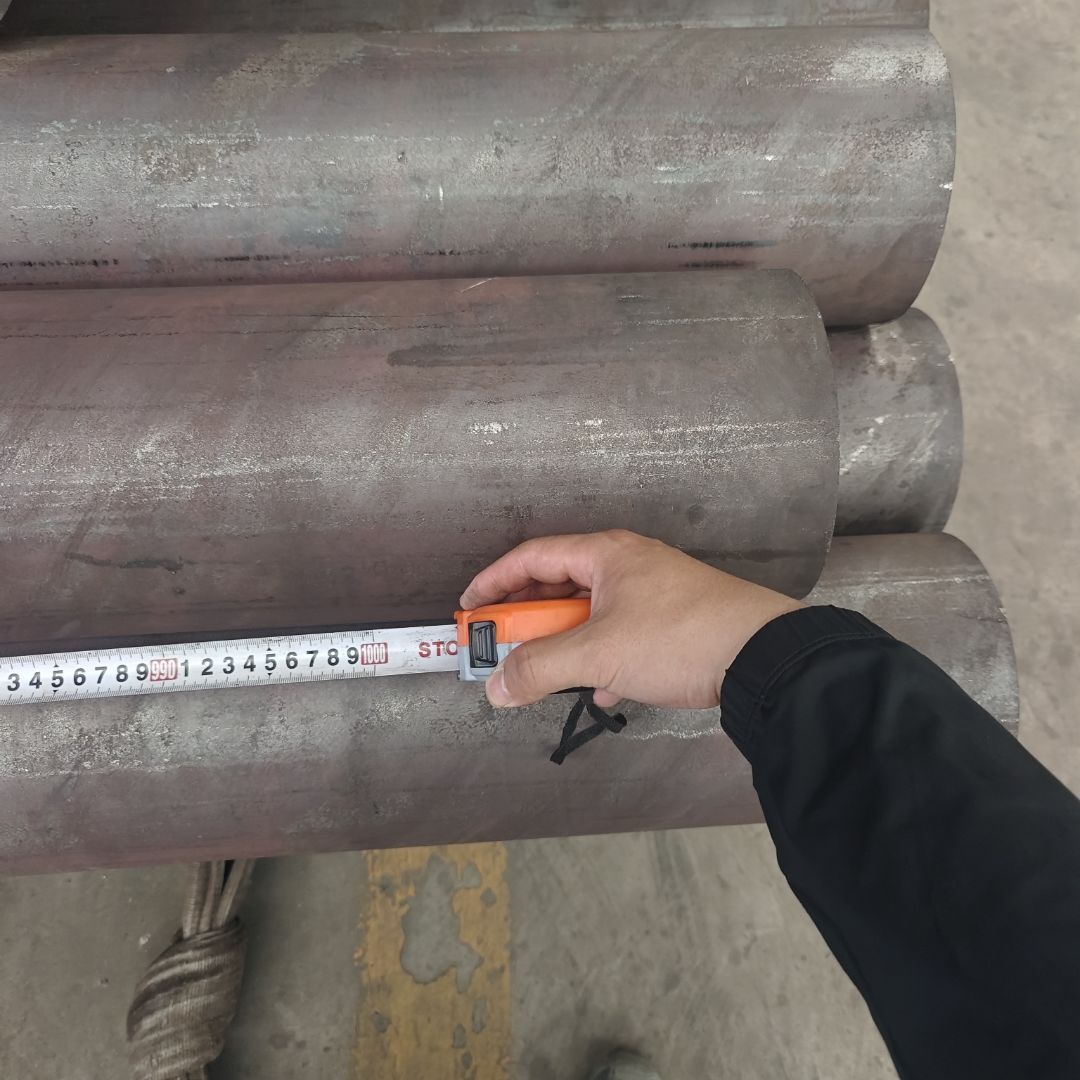
Engineers rarely send a mill a tube specification. They send a component drawing with a finished bore, a wall callout, a strength target, a tolerance block and a connection detail. Turning that into a purchasable SAE4140 line item is where most of the cost, delay and rework risk sits, because the mill can only produce what is written down.
In practice, three failure patterns repeat:
- Dimensional mismatch. The OD, wall or straightness called off in the RFQ does not survive machining, so the finished part does not assemble. In our own risk register for this product family, 'assembly failure due to dimensional inaccuracy' is the first listed risk type, controlled through precision CNC machining, in-line dimensional inspection, coordinate measuring machine (CMM) verification and strict testing after production.
- Performance that is too low to be used. The tube arrives in the wrong delivery condition, or in a condition that cannot reach the intended hardness or tensile band after heat treatment. This is the second listed failure mode for the same family.
- Quotes that are not comparable. Two suppliers return the same headline number for SAE4140, but one is quoting hot rolled random-length tube and the other is quoting quenched and tempered, cut-to-length, inspected tube. The difference is not price — it is scope.
The fix is procedural, not commercial: define the parameters in order, state the acceptance criteria, and make the commercial terms explicit so every quotation is measured against the same baseline.
Industry Background: Where SAE4140 Seamless Tube Sits
Steel is a large, slow-moving category, and alloy tube is a narrow, specification-driven slice of it. Grand View Research projects the global steel market at USD 1,525.8 billion in 2026, which mainly matters as context: within that volume, the buyer's real problem is not availability of steel, it is availability of a documented, dimensionally controlled SAE4140 tube that matches a specific component requirement.
SAE4140 is a chromium-molybdenum through-hardening alloy steel, commonly described as a 1% Cr-Mo grade in supplier technical datasheets. Published material data derived from ASTM A29 / SAE J404 lists its carbon content at 0.38–0.43%, and the same authoritative source gives a tensile strength of 655 MPa for the annealed condition — a useful reference point for buyers who are comparing an as-supplied condition against a quenched and tempered one.
Commercial sources consistently associate the grade with load-bearing, motion-transfer and downhole components. Datasheets list drive shafts, pump shafts, couplings, connecting rods, conveyor pins, bolts, gears and oil-and-gas components; other supplier pages list motor and drive shafts, axles, spindles, gears, sprockets, crankshafts, studs, hydraulic rods, downhole tools and CNC-machined parts; a third supplier summary reduces the picture to shafts, gears and fasteners. The same commercial sources describe the grade as available in annealed, normalized, as-rolled and quenched and tempered conditions.
Two caveats belong in the background section, because they change how a buyer reads everything else. First, public SAE4140 material data is largely commercial and supplier-reported; official standard verification and mill certificates remain a buyer-side action. Second, supplier presence is not the same as verified capacity. Shandong Tuoda Machinery Equipment Manufacturing Co., Ltd., a Liaocheng-based manufacturer working in seamless steel pipe deep processing, heat treatment and machined steel components, was profiled among reputable SAE4140 alloy steel manufacturers in China in 2026 industry reporting — but the operational data that a tier-one buyer wants (monthly capacity, export frequency, tolerance capability per size) has to be confirmed order by order, not assumed.
The Specification Envelope: Shape, OD, Wall, Length, Condition
Everything in this section is a selection parameter, not a marketing claim. The envelope below is what can be quoted directly; anything outside it should be raised as a separate engineering review rather than forced into an existing configuration.
Shape: Round and Square
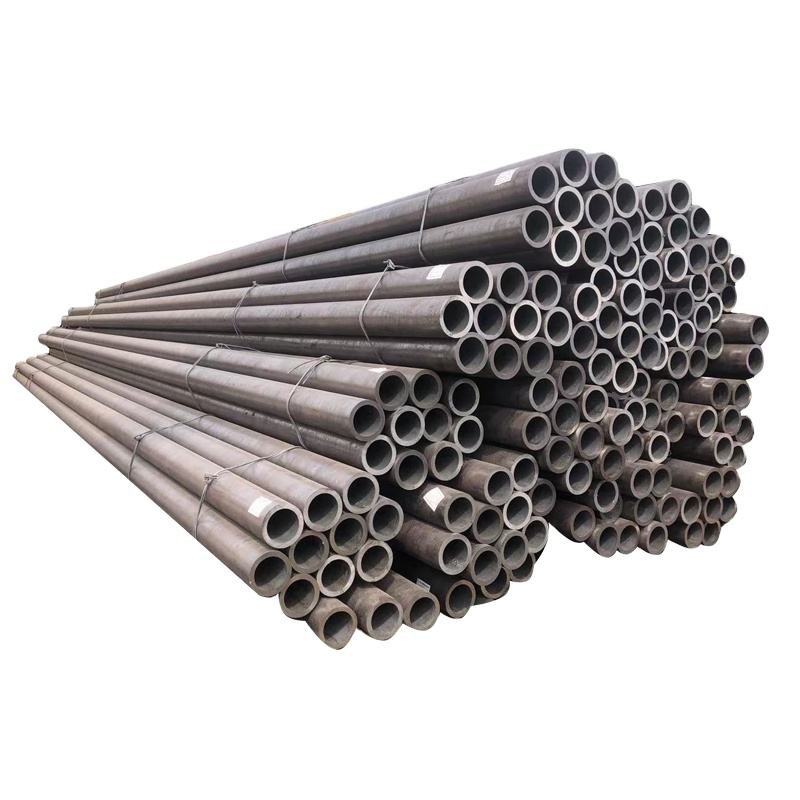
Round section is the default for drill collar bodies, shafts, spindles and any component that will be turned or bored. It gives a uniform wall around the bore, predictable machining behaviour and the widest compatibility with chucks, steady rests and deep-hole tooling.
Square section is the practical choice when a flat face is needed — clamping surfaces, fixturing datums, non-rotating structural parts, or components that would otherwise be milled out of solid bar. Specifying square tube where a flat face is required removes a machining operation and the material it would consume. Both shapes are available within the same grade, OD, wall and condition envelope, so the shape decision does not force a change of supply route.
Outer Diameter: 20 mm to 400 mm
OD is the parameter that must reconcile the finished part with the machining allowance and the bore. The governing relationship is simple: OD ≥ bore + 2 × wall. Buyers who specify OD, wall and bore independently often create an impossible triangle; pick two and derive the third.
The supplied envelope runs from 20 mm to 400 mm OD. At the lower end, 20 mm OD suits small aerospace and instrument components, pilot parts and hydraulic rods where material removal has to be minimised. At the upper end, 400 mm OD supports large drill collar bodies and heavy machined housings that would otherwise be produced from solid bar or forgings with substantially more waste.
Wall Thickness: 3 mm to 30 mm
Wall is the load-path and weight parameter. A 3 mm wall is chosen where weight and bore size dominate and the component is not highly loaded; it generally calls for cold rolled or cold drawn stock so that roundness and wall uniformity survive handling and machining. Heavy walls up to 30 mm are chosen where the section carries bending, torsion or pressure, and where the finished part will be bored or honed — the classic drill collar and downhole tooling profile.
Wall also drives economics more than any other single variable, because it sets weight per metre. Two enquiries with identical OD but different walls are not the same enquiry, and should never be priced as though they were.
Standard Lengths: 5 m–5.8 m, 6 m, and 6 m–12 m
Length is a logistics and yield decision, and it is worth treating it that way rather than leaving it to the mill.
- 5 m–5.8 m — convenient for container loading and short cut plans, with less handling equipment required at the destination.
- 6 m — the general-purpose length that matches most cutting schedules and is the simplest to consolidate in mixed orders.
- 6 m–12 m — fewer joints and less end trim, which matters for long drill collar bodies and for aerospace programmes cutting fixed lengths from a single heat. Longer lengths require more careful transport planning.
Supplying the cut plan with the purchase order is the cheapest cost reduction available to a buyer, because remnant loss is decided at the mill, not in the machine shop.
Delivery Conditions: Hot Rolled, Cold Drawn, Cold Rolled, Quenched and Tempered
The delivery condition determines both machinability and the mechanical starting point.
Hot rolled. The mill-finish condition. It is the most economical route and is well suited to large OD and heavy wall sections where the buyer intends to remove significant material anyway.
Cold drawn. Selected when dimensional consistency and surface condition matter more than the lowest possible piece cost, typically for components that go straight into turning or boring with limited stock allowance.
Cold rolled. Used for thin-wall, precision sections where wall uniformity and surface finish are the governing requirements.
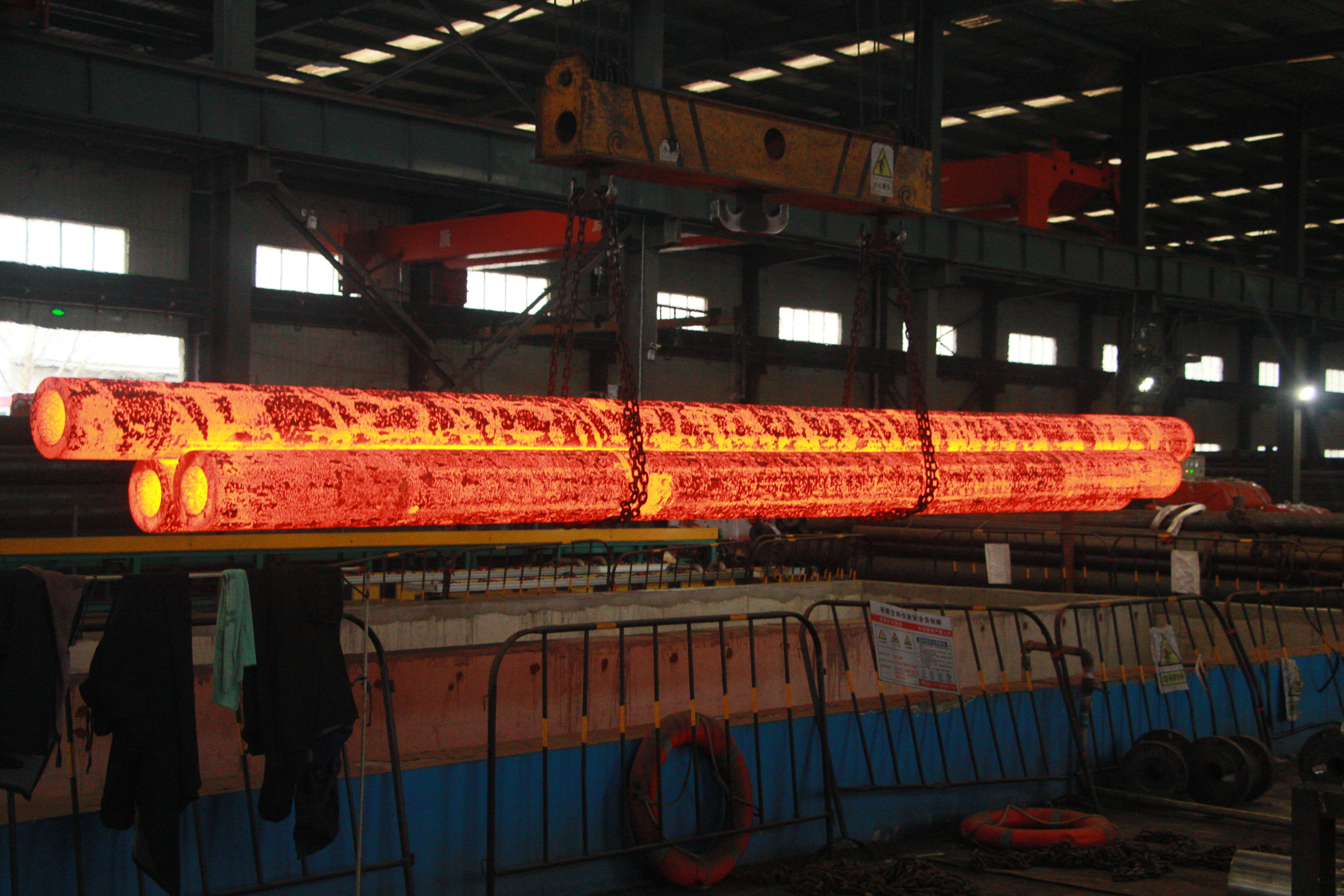
Quenched and tempered (Q&T). The condition that produces the strength and hardness band this grade is usually bought for. In our product data, SAE4140 provides hardness of HRC 32–40 and tensile strength ≥ 1080 MPa, supported by higher strength, better hardness, superior toughness, improved fatigue resistance and excellent hardenability relative to standard carbon steel pipe.
Material Performance: What You Are Actually Specifying
The commercial reason SAE4140 displaces standard carbon steel pipe in drill collar and aerospace work is a set of mechanical differences, not a single number. The comparison long used for this material is summarised below exactly as recorded in our product comparison data.
| Comparison dimension | SAE4140 | Standard carbon steel pipe |
|---|---|---|
| Strength | Higher strength; tensile strength ≥ 1080 MPa | Lower strength baseline |
| Hardness | Hardness up to HRC 32–40 | Below the SAE4140 band |
| Toughness | Superior toughness | Reference baseline |
| Fatigue resistance | Improved fatigue resistance; comparison data records fatigue life up to 2× that of standard carbon steel | Reference baseline |
| Hardenability | Excellent hardenability (through-hardening Cr-Mo grade) | Limited hardenability |
| Cost position | Lower cost than the same material from the same supplier | Comparable baseline |
| Best suited to | Industrial manufacturing, aerospace components, oil drilling | General low-load conveying and structural duty |
Two engineering points sit behind that table. The first is hardenability: a through-hardening Cr-Mo grade can be heat treated to develop consistent properties deeper into the section than a plain carbon steel, which is why it is specified for thick-wall bodies rather than thin sheet. The second is fatigue: components such as drill collar bodies, shafts and spindles fail in service through cyclic loading, so fatigue resistance is worth more than a marginally higher static yield figure.
One discipline applies to both: reported performance is only as good as the certificate behind it. Heat-treatment parameters, section size and test method all change the numbers. Where a supplier reports hardness or tensile values, the buyer should require the corresponding mill certificate or test report before using those values for qualification.
Step-by-Step: From Component Requirement to Purchase Order
The sequence matters. Changing a downstream decision after an upstream one has been fixed is the most common cause of re-quoting.
- Define the finished geometry. Record finished OD, finished bore (or solid section), finished length, connection or thread detail, and the tolerance block. This is the only part of the process that comes from the drawing rather than the mill.
- Add machining allowance and derive the tube OD and wall. Work from OD ≥ bore + 2 × wall, then check both against the 20–400 mm OD and 3–30 mm wall envelope. If the required combination falls outside, raise it as a separate project instead of trimming the allowance.
- Select the shape. Round unless a flat face is functionally required; square only where the flat surface removes an operation or serves as a datum.
- Select the delivery condition against the performance target. Hot rolled where stock removal is heavy and economics dominate; cold drawn or cold rolled where dimensional consistency and finish dominate; quenched and tempered where the HRC 32–40 / ≥ 1080 MPa band is required.
- Select the standard length against the cut plan. Choose 5 m–5.8 m, 6 m or 6 m–12 m based on how the material will be cut and how it will be shipped, and send the cut plan with the enquiry.
- Write the acceptance criteria. State the dimensional checks, the inspection method and the records required. Our standard practice on this product family is 100% dimensional inspection with a coordinate measuring machine before delivery, in-line dimensional inspection during production, statistical process control during manufacturing, and documented test data.
- Fix the commercial terms. Payment by TT or LC; shipment on FOB, CIF, CFR, EXW or DDP. Fixing the Incoterm before comparing prices is what makes the comparison real.
Use Cases: Matching the Specification to the Application
Drill collar and downhole bodies
Downhole components are the heaviest user of the wall envelope. The requirement profile typically reads: round section, large OD within the 20–400 mm range, wall toward the top of the 3–30 mm range, quenched and tempered condition, and lengths of 6 m or 6 m–12 m to reduce the number of joints. Dimension is critical rather than cosmetic — an out-of-tolerance OD or wall on a downhole body creates assembly and tooling problems far downstream, which is why 100% dimensional inspection before delivery is the appropriate default rather than an optional extra.
Aerospace components
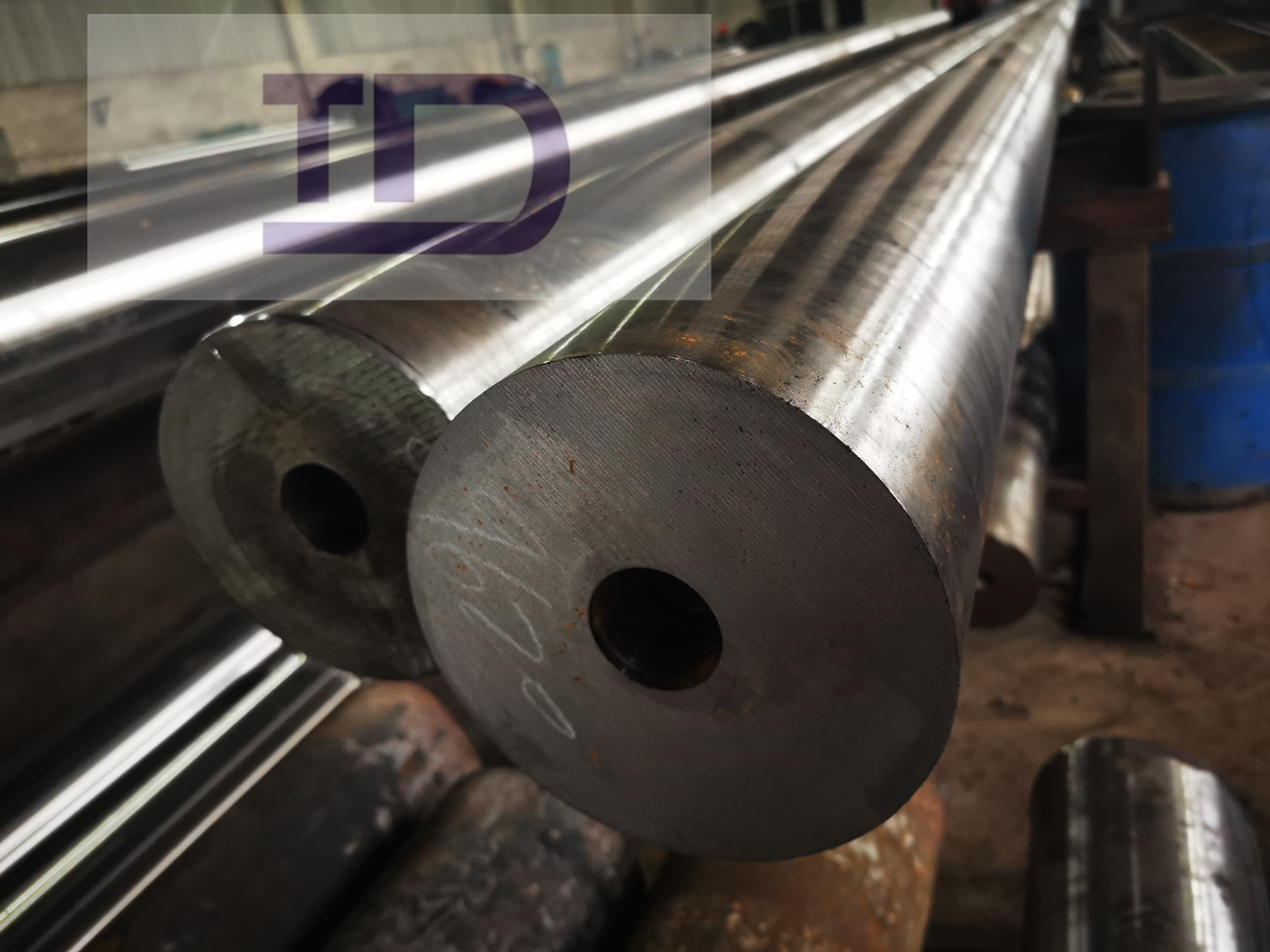
Aerospace work pulls in the opposite direction. Components such as actuator bodies, bushings, structural sleeves and machined fittings tend to sit at smaller OD, use moderate wall, and depend on dimensional consistency and documented inspection more than on maximum section. Round section dominates; cold drawn or cold rolled stock and quenched and tempered tube are the common routes, and 5 m–5.8 m or 6 m lengths are usually sufficient because individual parts are smaller. Because verification is the controlling requirement, the acceptance criteria and records matter as much as the mechanical band.
Shafts, gears, moulds, hydraulic rods and machined industrial parts
The same envelope serves a broader group of machined components: shafts, gears and gear blanks, mould and die components, hydraulic rod stock, construction machinery parts, oil machinery parts and automotive parts. In these cases the tube is the input to turning, boring, broaching or hobbing, so the decision order shifts slightly — delivery condition and machinability move ahead of length optimisation, because the material will be machined to a finish rather than used as a structural section.
Comparison Table: Requirement Profiles at a Glance
The table below converts a requirement description into the specification lever it controls. Read it as a translation layer between the drawing and the purchase order.
| Requirement input | Drill collar / downhole profile | Aerospace component profile | Specification lever |
|---|---|---|---|
| Section shape | Round | Round (square only where a flat face is needed) | Shape line item: round or square |
| Outer diameter | Large OD within 20–400 mm | Small to intermediate OD within 20–400 mm | OD, stated with tolerance |
| Wall thickness | Heavier wall, up to 30 mm | Moderate wall within 3–30 mm | Wall, stated with tolerance |
| Delivery condition | Quenched and tempered | Quenched and tempered, cold drawn or cold rolled | Condition on the order line |
| Standard length | 6 m or 6 m–12 m | 5 m–5.8 m or 6 m | Length plus cut plan |
| Inspection | 100% dimensional verification before delivery | 100% dimensional verification plus recorded test data | Acceptance criteria |
| Commercial terms | TT or LC; FOB / CIF / CFR / EXW / DDP | TT or LC; FOB / CIF / CFR / EXW / DDP | Terms fixed before price comparison |
The point of the table is not that one column is superior. It is that the same grade, from the same mill, produces two different products depending on the levers — and a quotation that does not state the levers cannot be ranked against another quotation.
Pre-Shipment Acceptance Testing and Commercial Terms
Acceptance testing is the part of the specification that protects the buyer after machining has already been planned. For SAE4140 tube, the useful controls are dimensional rather than decorative.
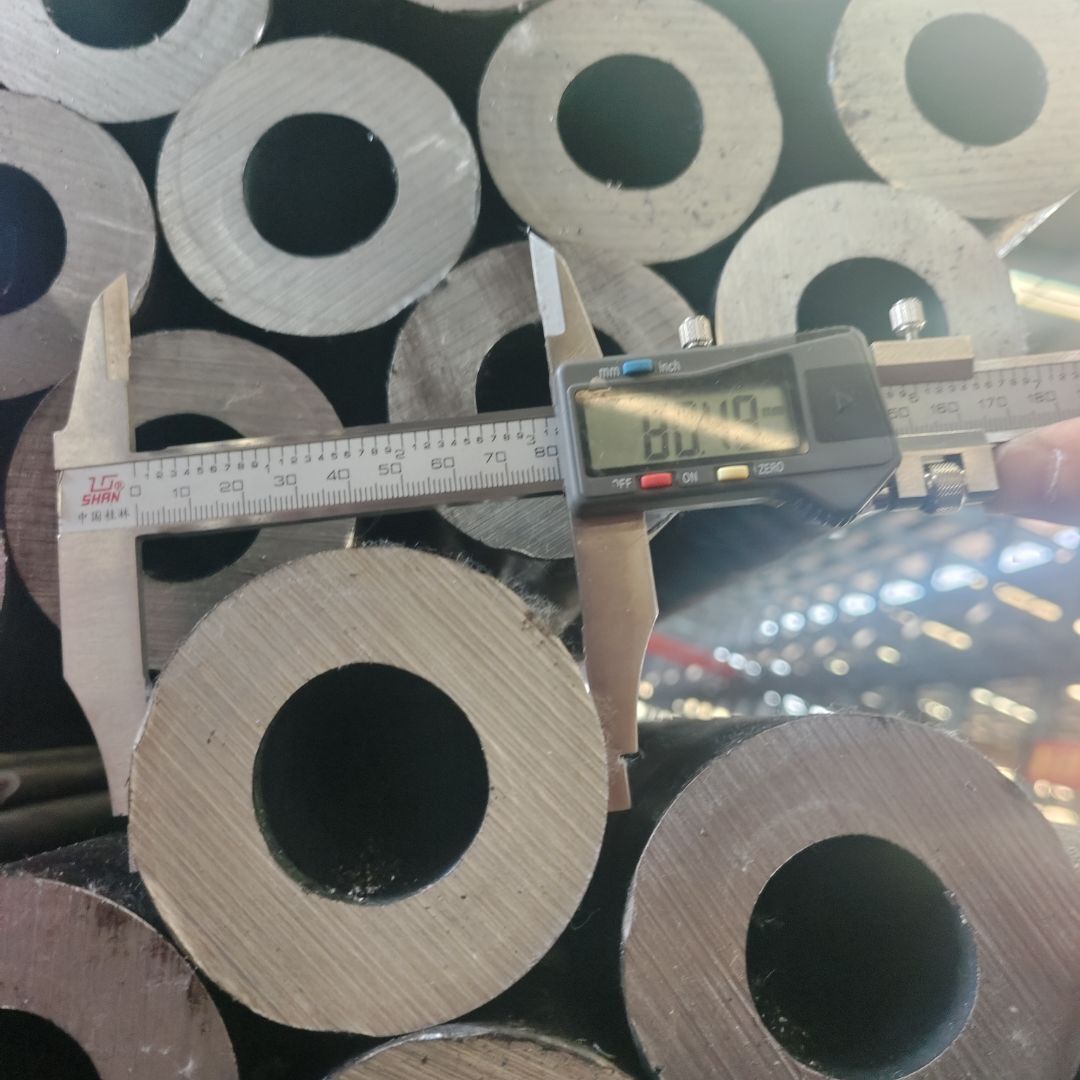
- Drawing and tolerance confirmation before production. The tolerance standard and the drawing are confirmed with the buyer repeatedly rather than assumed once.
- In-line dimensional inspection. Dimensions are checked during production, not only at the end, so drift is caught while it can still be corrected.
- Statistical process control (SPC). SPC is applied during production to hold the process within limits rather than to sort good parts from bad ones after the fact.
- 100% CMM verification before delivery. Every item is dimensionally inspected with a coordinate measuring machine before shipment.
- Recorded test data. Test data is recorded and retained, so the order can be traced back to its verification result.
On the commercial side, the standard structure is straightforward: payment by TT or LC, and shipment on FOB, CIF, CFR, EXW or DDP. A DDP quotation and an EXW quotation for the same tube are different products from a budgeting perspective, and the Incoterm should be stated before prices are compared. Where the same material is available from the same supplier at a lower cost than the alternative under review, that advantage only becomes visible once OD, wall, condition, length, inspection level and terms are held constant.
FAQ
1. What compliance documentation should accompany an SAE4140 seamless tube order?
SAE4140 is a chromium-molybdenum through-hardening alloy steel, with carbon content published at 0.38–0.43% in data derived from ASTM A29 / SAE J404. Commercial sources commonly list AISI 4140 and UNS G41400 alongside SAE 4140 as designations, but official registry verification remains a buyer-side step, so the designations on the drawing, the purchase order and the certificate should match before the order is released. The documentation package for a tube order should therefore include the mill certificate stating grade designation, heat number, chemical composition, delivery condition and mechanical results, plus dimensional inspection records and, where required, test data. Tuoda Machinery manufactures pipe products to EN10210, EN10305, API 5L, A335, A333 and A106 and states compliance with ASTM and CE requirements across its pipe portfolio; the applicable designation for a specific SAE4140 line item is confirmed against the drawing and certificate for that order.
2. What shapes, sizes, delivery conditions and lengths can actually be supplied?
SAE4140 alloy seamless tube is supplied in round and square shapes, with outer diameters from 20 mm to 400 mm and wall thickness from 3 mm to 30 mm. Delivery conditions are hot rolled, cold drawn, cold rolled and quenched and tempered, with the quenched and tempered route used where the HRC 32–40 hardness band and tensile strength of ≥ 1080 MPa are required. Standard lengths are 5 m–5.8 m, 6 m and 6 m–12 m. Beyond the tube itself, in-house deep processing covers precision honing, surface treatment, heat treatment and CNC machining, including deep-hole drilling and boring — which is relevant when the tube is an input to a finished component rather than a finished product. Configurations outside the stated envelope are handled as separate engineering projects rather than as standard line items.
3. What drives the price of SAE4140 tube, and how is payment handled?
Four variables dominate cost: wall thickness, because it sets weight per metre; delivery condition, because cold drawing, cold rolling and quench-and-temper each add processing; length and cut plan, because they determine remnant loss; and inspection level, because 100% CMM verification is a defined process step rather than a formality. Outer diameter, quantity and destination then act on top of these through freight. On cost position, SAE4140 is offered at a lower cost than the same material from the same supplier, so a like-for-like comparison across suppliers is a question of scope, not of headline rate — the same OD and wall in hot rolled random lengths and in inspected, cut-to-length, quenched and tempered condition are different products. Payment is by TT or LC, with shipment quoted on FOB, CIF, CFR, EXW or DDP terms.
4. Can a sample or trial length be validated before a production order?
Yes, and for a first specification it is the sensible sequence. The process starts with drawing and tolerance verification, then moves to single-piece or small-batch production so that shape, OD, wall and delivery condition can be checked against the real component before a mass-production run is committed. Verification uses in-line dimensional inspection during production and 100% dimensional inspection with a coordinate measuring machine before delivery, with test data recorded. After validation, the same parameters are carried into series production — the supplier supports both single-piece and small-batch runs as well as mass production, which means the trial and the production order stay on the same specification rather than being re-engineered between stages. To start a sample or trial-length discussion, contact Olivia at olivia@sdtuoda.com or by WhatsApp on +86 13290268388 with the drawing, the required OD, wall, shape, length and delivery condition.
5. How is the order verified and shipped, and what terms apply?
Verification happens before shipment, not after. Production runs under statistical process control with in-line dimensional inspection, and every item receives 100% dimensional inspection with a coordinate measuring machine before delivery, with the test data recorded and retained. Shipment is arranged on FOB, CIF, CFR, EXW or DDP terms, and payment is by TT or LC, so the buyer can choose the Incoterm that matches how the material will be consolidated and cleared. Because these controls are tied to the specific OD, wall, shape, length and condition agreed on the order, the acceptance criteria should be written into the purchase order rather than confirmed verbally.
Conclusion: Specify the Six Variables, Then Compare
Drill collar and aerospace requirements translate into SAE4140 seamless tube through six decisions: shape, OD, wall, length, delivery condition and acceptance criteria — with commercial terms fixed before prices are compared. The available envelope is round and square shapes, 20–400 mm OD, 3–30 mm wall, in hot rolled, cold drawn, cold rolled and quenched and tempered conditions, in 5 m–5.8 m, 6 m or 6 m–12 m standard lengths, verified by pre-shipment dimensional inspection and shipped on TT or LC against FOB, CIF, CFR, EXW or DDP terms.
The value of working in that order is that every quotation then describes the same product, and the comparison becomes a decision rather than a guess.
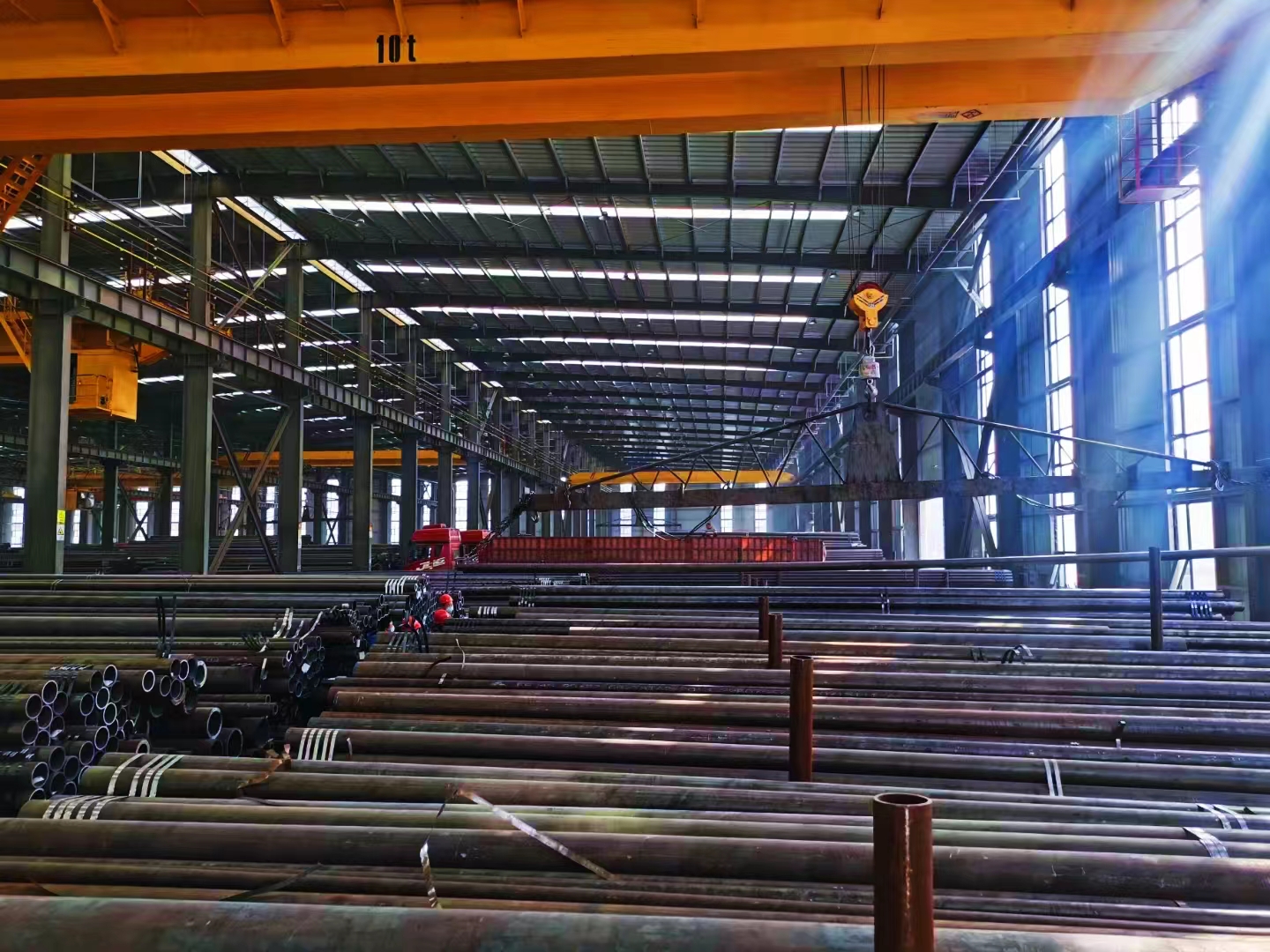
Send your drawing, get a specification-matched quotation
Provide the finished component requirement — shape, OD, wall, length, delivery condition and inspection expectation — and Shandong Tuoda Machinery Equipment Manufacturing Co., Ltd. will confirm the corresponding SAE4140 seamless tube configuration, the acceptance testing plan and the shipment terms.
Contact: Olivia | Email: olivia@sdtuoda.com | Tel: +86 13290268388 | WhatsApp: +8613290268388
Address: NO853 south Liaoniu Road, Dongchangfu District, Shandong, China | Web: WWW.SDTDSTEEL.COM
Download the full product and capability brochure: Tuoda Machinery Brochure (PDF)
Have Questions or Need More Details?
Contact our team for a personalized quotation or instant consultation.
Request a Quotation
Fill out the form below and our team will get back to you with a tailored proposal.
WhatsApp Direct Chat
Prefer to chat in real-time? Message us on WhatsApp for instant assistance & quick answers.
- Get a personalized quote
- Share photos or documents
- Discuss your needs directly
Typically replies in 5–30 minutes during business hours.