Compliance Guide: Heavy Duty Hydraulic Cylinder Standards for EU, Asia & South America Buyers
Compliance Guide: Heavy Duty Hydraulic Cylinder Standards for EU, Asia & South America Buyers
A heavy duty hydraulic cylinder can be engineered correctly and still stall at the port, because of the paperwork rather than the steel. This guide answers the compliance questions importers in the European Union, Asia and South America ask most often before releasing a purchase order: which standards the cylinder should be dimensioned to, which material grades and tolerances have to be documented, what a pre-shipment acceptance inspection must include, and how commercial terms such as MOQ, payment method, delivery conditions and lead time belong inside the same checklist. The reference points are published ISO standards, public market research and the documented manufacturing scope of Shandong Tuoda Machinery Equipment Manufacturing Co., Ltd. (Tuoda Machinery), a hydraulic cylinder and seamless steel tube manufacturer based in Liaocheng, Shandong, China.
What Counts as Compliance for a Heavy Duty Hydraulic Cylinder?
Compliance is not a single certificate. For a heavy duty hydraulic cylinder it is a document package that a buyer can check line by line against the drawing, plus one physical event — the pre-shipment pressure test — whose result is attached to the shipment. Three elements have to line up before the goods leave the factory:
- A standard reference. The mounting dimensions and the pressure class the cylinder was designed to, named explicitly rather than described as heavy duty.
- Material traceability. A mill certificate that connects the ordered grade to a heat number, and to the specific barrel, rod or gland that was machined from it.
- A test record. The pressure that was applied, how long it was held, and the acceptance criteria that were used to pass or reject the assembly.
Most import disputes trace back to one of three gaps. The first is an RFQ that says heavy duty without naming a standard series, so the supplier ships something that fits nothing on site. The second is a folder of mill certificates that cannot be linked to the components actually delivered. The third is a pressure test that was performed but never documented, leaving the buyer unable to prove anything to an end customer, an insurer or a customs authority.
It is worth separating two different things that are often confused. A published standard tells you which dimensions exist and how they should be interpreted; it does not certify any supplier. A cylinder datasheet that cites a standard is a claim about design intent, not evidence of dimensional conformity. That is why the checklist below asks for supplier records as well as standard references.
Why Standards Review Moved to the Front of Cylinder Sourcing
The commercial context explains why documentation has become a purchasing issue rather than an afterthought. The global hydraulic cylinder market was valued at USD 17.34 billion in 2025 and is projected at USD 18.11 billion in 2026, on a path to USD 27.19 billion by 2034, according to Fortune Business Insights. The same source reports that Asia Pacific accounted for 38.40% of market revenue in 2025. Double-acting cylinders, the configuration most heavy duty projects specify, held a 70% share of the market in 2024 according to Grand View Research.
Those figures carry a practical implication for buyers in Europe and South America: a large share of global production capacity sits in Asia, so the documents that matter are generated at the factory and then travel with the shipment. Market-size figures from commercial research houses also scope the category differently, so they are best read as direction rather than precision.
Which Standards Should Be on Your Checklist?
The most frequently referenced references are dimensional and interchangeability standards. They differ by pressure class and by application scope, and they should not be swapped for one another.
| Standard | Scope and pressure class | What it fixes for the buyer | What it does not prove |
|---|---|---|---|
| ISO 6022:2006 | Single-rod hydraulic cylinders, 25 MPa (250 bar) series | Mounting dimensions required for interchangeability of these cylinders | Durability, leakage performance, duty cycle or supplier certification |
| ISO 6020-1:2007 | Metric medium-series cylinders, 16 MPa (160 bar) | Mounting dimensions for commonly used hydraulic cylinders | Equivalent operating capability to the 25 MPa series |
| ISO 23778:2022 | Hydraulic cylinders that form part of the load-carrying structure of cranes | Application-specific design and verification scope | It is not a universal heavy-duty cylinder standard |
| ISO 2057:1981 | Hydraulic cylinders for agricultural tractors and trailing-type farm implements, covering three tractor categories | Dimensions and clearances for assembly | Nothing about construction, mining or industrial press cylinders |
Two cautions belong next to that table. First, ISO/CD 6022 appears as a committee draft and should not be quoted as a published standard until its status is confirmed. Second, the standards define dimensional and interchangeability requirements only; they say nothing about leakage, fatigue life, corrosion behaviour, low-temperature operation or seal life. Those properties have to be agreed as a test protocol in the purchase order, not assumed from a standard number.
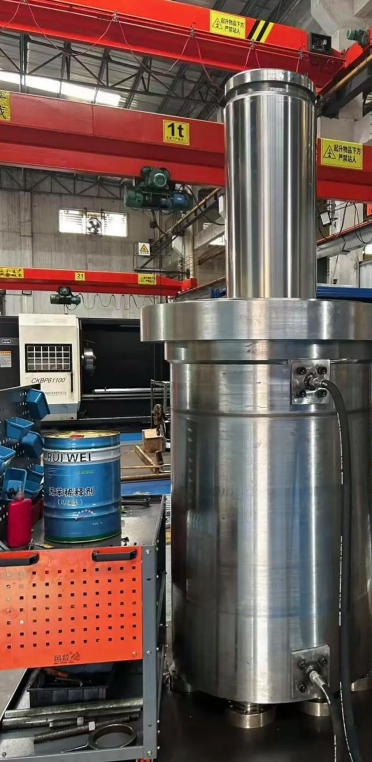
Pressure class also needs to be stated separately from the standard reference. The 25 MPa figure in ISO 6022 is an interchangeability baseline, not a performance ceiling. Tuoda Machinery builds high-pressure hydraulic cylinders in the 31.5–63 MPa range and ultra-high-pressure cylinders above 63 MPa. When a standard cylinder is being replaced or a load capacity is being upgraded, the mounting dimensions and the required pressure class should be specified as two independent lines in the RFQ.
Material Grades and Tolerances to Verify Before Machining Starts
Material selection is where a cylinder order becomes verifiable or stays a promise. Tuoda Machinery works with grades including ST52, S355, E355, C45, SAE1045 and 42CrMo4. Each grade answers a different question, and each requires a different document.
| Grade | Typical role in a heavy duty cylinder | Document to request |
|---|---|---|
| ST52, S355, E355 | Seamless tube and barrel stock for high-pressure bodies | Mill certificate showing grade, heat number, chemical composition, mechanical properties and wall-thickness tolerance |
| C45, SAE1045 | Medium-carbon grades typically specified for machined shaft-type components such as piston rods | Hardness and mechanical property report, straightness record, surface finish specification |
| 42CrMo4 | Alloy grade used where higher strength and hardenability are required | Heat-treatment condition, mechanical property report, non-destructive test record where the application requires it |
Geometry and surface quality are the second half of the material file. The tolerances a buyer should see documented on a heavy duty cylinder order are:
- Bore diameter tolerance to ISO H8/H9
- Internal bore arithmetic roughness of Ra ≤ 0.4 μm
- Tube outer diameter range of 20–800 mm
- Wall thickness range of 3–50 mm
- Standard lengths of 5.8 m, 6 m, 6–12 m or 12 m, or a custom length
- Weight tolerance of ±10%
Internal bore roughness is not a cosmetic figure. A bore finished to Ra ≤ 0.4 μm supports the sealing strategy, and Tuoda Machinery combines that surface with metal-to-metal sealing, high-performance polyurethane seals, forged valve bodies, thick-walled seamless steel pipe tubing and overpressure protection devices. Where a project has a history of oil leakage, roughness, bore tolerance and seal specification are the first three records to compare against the complaint.
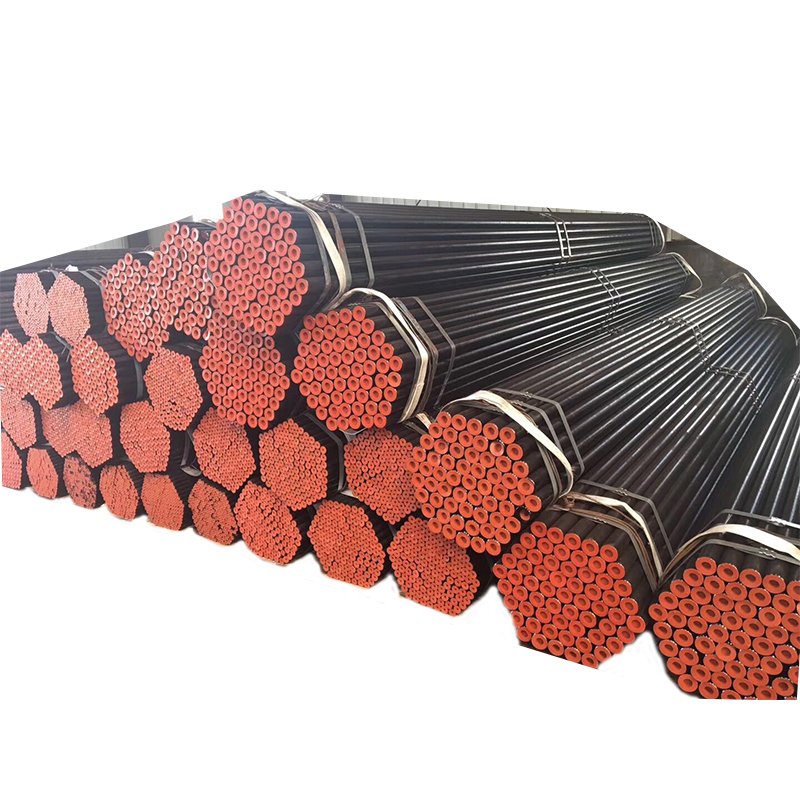
Because the barrel begins life as tube stock, the tube certificate is part of the cylinder file. Tuoda Machinery deep-processes seamless steel tube to specifications including EN 10210, EN 10305, API 5L, ASTM A106, A333 and A335, and applies honing, surface treatment and heat treatment in-house — which means the tube document and the cylinder document should be traceable to each other rather than filed separately.
Pre-Shipment Acceptance Inspection: Eight Steps
Acceptance inspection is a sequence, not a single visit. Run it in this order so that each step can rely on the previous one.
- Freeze the specification before the RFQ goes out. Record bore, stroke, rod diameter, mounting dimensions, pressure class and cylinder type on one approval drawing.
- Collect the material certificate before machining begins. Check that the grade, heat number and mechanical properties match the approved drawing, not just the order description.
- Review the honing and metrology record. Confirm the bore tolerance was measured against ISO H8/H9 and the internal roughness against Ra ≤ 0.4 μm.
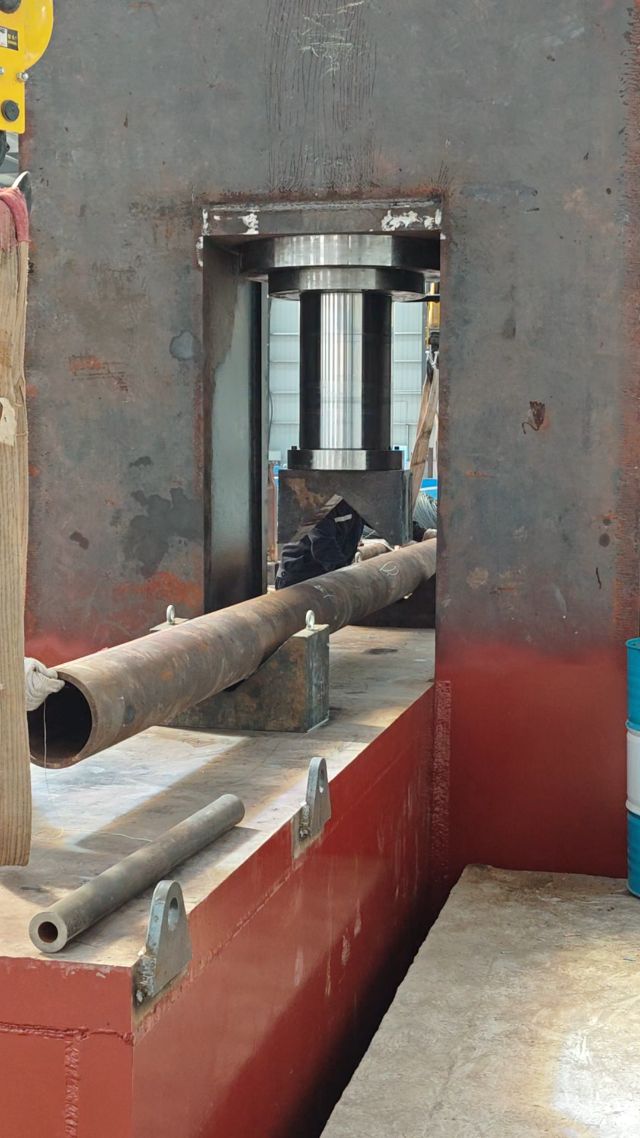
- Confirm the pressure test protocol in writing. Pressure testing is Tuoda Machinery's stated quality-control method; the buyer should still agree the test pressure, hold time, acceptance criteria and the certificate format in advance.
- Verify dimensions against the drawing. Include mounting dimensions where an ISO series applies, and custom mounting geometry where the cylinder is non-standard.
- Check the sealing and pressure-protection configuration. Seals, gland arrangement, ports and overpressure protection devices should match the approved configuration.
- Inspect marking, packaging and documentation before export packing closes. Nameplate data, traceability markings and the document pack should be checked while the cylinder is still accessible.
- Release the shipment only when the document pack is complete. A cylinder that arrives without its test record and material certificate is an open claim waiting to happen.
Pressure Class, Type and Mounting: What the Drawing Has to State
Three specification lines cause most compatibility problems, and all three belong on the approval drawing rather than in an email thread.
Pressure class. Tuoda Machinery classifies high-pressure hydraulic cylinders at 31.5–63 MPa, used on heavy-duty equipment such as hydraulic excavators, crushers, four-column hydraulic presses, marine steering gear and anchor winches, and ultra-high-pressure cylinders above 63 MPa for specialized equipment including high-pressure water jet cutting machines, material pressure-testing apparatus and artillery recoil systems.
Cylinder type. Piston, plunger, telescopic (multi-stage) and rotary (oscillating) cylinders behave differently under load and require different drawings. Double-acting cylinders held a 70% share of the market in 2024, so single-acting versus double-acting must be stated rather than implied. A conversion from single-acting to double-acting, or a high-load upgrade, changes porting and control logic and has to be reflected in the drawing before manufacturing starts.
Mounting and environment. Custom mounting geometry should be dimensioned on the drawing. Where the machine works in dust, slurry, marine air or cold climates, ask for the relevant protection and seal details. Low-temperature seal behaviour is not covered by the dimensional standards reviewed here, so it must be specified and tested rather than assumed.
Commercial Terms Belong in the Same Compliance File
Commercial terms decide who performs the inspection and where risk transfers, which makes them part of compliance rather than a separate negotiation.
| Term | Standard position | Why it belongs in the compliance checklist |
|---|---|---|
| Minimum order quantity | 1 unit | Allows a single validation unit to be built and inspected before any batch commitment |
| Payment | T/T or L/C | Under L/C, document release and payment release can be tied to the same document list |
| Delivery terms | FOB, CIF, CFR, EXW or DDP | Determines who controls pre-shipment inspection, export clearance and the point of risk transfer |
| Lead time | 30–45 days | Sets the window in which inspection has to be scheduled and documents finalized |
| Quality control | Pressure testing | The physical evidence that accompanies the documentation pack |
| Customization scope | Application, size, bore, stroke, pressure, load, system solution, logo printing | Defines what the drawing must capture and what cannot be changed later |
| After-sales | After-sale service, repair, spare parts and service network | Determines what happens when a cylinder is returned or repaired after delivery |
The delivery term deserves a sentence of its own. On EXW, the buyer's own representative or a third-party inspector normally performs the pre-shipment check, and the buyer carries the risk from the factory gate. On FOB, CIF or CFR, the loading and export steps are handled by the supplier but the inspection logic does not change. On DDP, the supplier absorbs the furthest-reaching obligations, which usually means the document pack has to be complete before departure because there is no intermediate party to fix it en route. Whichever term is chosen, the inspection clause and the document list should be written into the purchase order at the same time.
Region Notes: EU, Asia and South America
European Union. EU buyers most often name mounting-dimension interchangeability standards — ISO 6022:2006 for the 25 MPa series and ISO 6020-1:2007 for the 16 MPa medium series — because cylinders are frequently supplied as machine components into an existing design. The conformity route depends on whether the cylinder is delivered as a standalone component or as part of an assembled machine, so the declaration your integrator needs should be identified before the order is placed, not after delivery. Tuoda Machinery's export markets include Germany, the United Kingdom and Sweden.
Asia. Asian projects frequently work from the equipment OEM's own drawing rather than from a single regional standard, which makes the approval drawing the primary compliance document and the material certificate the second. Tuoda Machinery's export markets include India, Turkey, Vietnam and Indonesia.
South America. South America is listed among Tuoda Machinery's main markets alongside the EU and Asia. In practice the compliance baseline is the buyer's own drawing and the equipment specification, and the long shipping distance is the strongest argument for completing the pre-shipment inspection at the factory: resolving a dimensional or documentation issue before the container is loaded costs far less than resolving it after arrival. Canada is also among the documented export markets, which is useful when an equipment builder sources for more than one region.
Application Scenarios Where These Documents Matter Most
The checklist is not abstract; each application stresses a different part of it.
- Construction machinery and excavators. High pressure, dust and impact loading make the pressure test record and the bore roughness report the first documents to check.
- Mining equipment. Impact combined with slurry places wear and sealing at the centre of the specification, and makes the seal compound specification a required line on the drawing.
- Industrial presses and straightening machines. High load and long duty cycles usually call for double-acting, large-bore configurations where wall thickness tolerance and straightness records matter.
- Marine and offshore systems. Marine steering gear and anchor winches put corrosion behaviour at the front, so the surface treatment record is part of compliance.
- Forklifts and material handling. Compact, high-cycle duty rewards a documented seal and rod specification more than a high headline pressure rating.
One documented case illustrates why the file matters over time. A heavy machinery OEM in Vietnam ordered a single cylinder for a straightening machine. The unit has now been in service for more than ten years, with stable operation, reduced maintenance cost, energy savings and no major failures reported. The lesson for a compliance-minded buyer is not the headline result but the unit of measurement: one correctly specified and documented cylinder, traceable to its material and test records, is often enough to validate a supplier before a project-scale order. Where independent third-party confirmation is required, reference contacts should be requested directly, because manufacturer-reported results are not the same as audited results.
Frequently Asked Questions
Which standard should a heavy duty hydraulic cylinder be dimensioned to?
Three published ISO standards cover most requests. ISO 6022:2006 specifies mounting dimensions for single-rod cylinders in the 25 MPa (250 bar) series so that cylinders are interchangeable; ISO 6020-1:2007 does the same for the 16 MPa (160 bar) medium series. Application-specific standards sit separately: ISO 23778:2022 applies to cylinders that form part of a crane's load-carrying structure, and ISO 2057:1981 covers cylinders used with trailing-type farm implements across three tractor categories. None of these standards certifies a supplier or proves durability, leakage performance or duty cycle, so mounting dimensions and the required pressure class should be stated separately in the RFQ and confirmed again on the approval drawing. ISO/CD 6022 should be treated as a committee draft, not quoted as a published standard, until its status is confirmed.
How do you verify high-pressure and ultra-high-pressure capability from a manufacturing partner in China?
Ask for evidence rather than adjectives. Tuoda Machinery manufactures high-pressure hydraulic cylinders in the 31.5–63 MPa range, used on hydraulic excavators, crushers, four-column hydraulic presses, marine steering gear and anchor winches, and ultra-high-pressure cylinders above 63 MPa for equipment such as high-pressure water jet cutting machines and material pressure-testing apparatus. The build uses thick-walled seamless steel pipe tubing, metal-to-metal sealing, high-performance polyurethane seals, forged valve bodies and overpressure protection devices, with pressure testing as the stated quality-control method. Verification means receiving the test pressure and hold time, the material certificate with heat number, the bore metrology record (ISO H8/H9) and the roughness report (Ra ≤ 0.4 μm). Public manufacturer figures such as Yates Industries' reported welded cylinders rated to 3,000 PSI with bores up to 18 inches are company-reported claims and should be converted into test evidence before entering a specification.
What drives the cost of a custom heavy duty hydraulic cylinder, and is there a public price benchmark?
There is no public price benchmark for custom heavy duty hydraulic cylinders, and published sources do not provide comparable commercial terms. Cost is driven by the material grade and heat-treatment condition, wall thickness, bore and stroke, honing and machining time, the testing regime, and the volume of documentation the destination market requires. Because Tuoda Machinery's minimum order quantity is 1 unit, a single cylinder can be quoted and built as a validation unit before any batch commitment, which keeps the commercial risk of verifying a specification low.
Can a buyer order a sample or a single unit before a production batch?
Yes. Tuoda Machinery works on an OEM and custom basis with a minimum order quantity of 1 unit, and the customization scope covers application, size, bore, stroke, pressure, load, system solution and logo printing. A single-unit order is normally the cheapest way to verify three things at once: that the drawing matches the physical cylinder, that the material certificate matches the ordered grade, and that the documentation and packaging arrive in the form your engineering team and customs broker expect. Delivery time is 30–45 days.
What are the lead time and delivery terms, and how do they fit the compliance file?
Delivery time is 30–45 days. Payment is by T/T or L/C, and delivery terms can be FOB, CIF, CFR, EXW or DDP. The delivery term is a compliance decision, not only a price decision: it determines who controls the pre-shipment inspection, where risk transfers, and which party pays for inland transport and export clearance. Agree the Incoterm and the required document list in the purchase order at the same time so that payment release and goods release depend on the same checklist. To compare a document package against a live specification, the current Tuoda Machinery catalog can be downloaded from the Tuoda Machinery product brochure, and the sales team can be reached at olivia@sdtuoda.com.
Conclusion: Build the File First, Then Ship
For heavy duty hydraulic cylinders, compliance is a sequence of traceable facts. The standard reference fixes mounting dimensions and pressure class — ISO 6022:2006 for the 25 MPa series, ISO 6020-1:2007 for the 16 MPa series, with ISO 23778:2022 and ISO 2057:1981 applying only to their specific scopes. The material file fixes grades such as ST52, S355, E355, C45, SAE1045 and 42CrMo4, and tolerances such as ISO H8/H9 bore tolerance, Ra ≤ 0.4 μm roughness and ±10% weight tolerance. The test record and the commercial terms — MOQ 1 unit, T/T or L/C payment, FOB, CIF, CFR, EXW or DDP delivery, and 30–45 day lead time — decide how that evidence is verified and when risk moves.
Buyers who assemble the file before the RFQ goes out rarely discover problems at the port. Buyers who assemble it afterwards usually discover them in a claim.
Next Step: Request the Compliance Documentation Pack
Tuoda Machinery can supply the documents this guide describes with any quotation: approval drawings, material certificates with heat numbers, bore and roughness metrology records, and pressure test records for high-pressure (31.5–63 MPa) and ultra-high-pressure (above 63 MPa) cylinders, as well as custom and non-standard configurations from a minimum order quantity of 1 unit.
Download the Tuoda Machinery catalog and specification brochure (PDF), or send your drawing and target pressure class for a documented quotation.
Website:www.sdtdsteel.com
Contact: Olivia | Email: olivia@sdtuoda.com | Tel / WhatsApp: +86 13290268388
Address: NO853 South Liaoniu Road, Dongchangfu District, Liaocheng, Shandong, China
Have Questions or Need More Details?
Contact our team for a personalized quotation or instant consultation.
Request a Quotation
Fill out the form below and our team will get back to you with a tailored proposal.
WhatsApp Direct Chat
Prefer to chat in real-time? Message us on WhatsApp for instant assistance & quick answers.
- Get a personalized quote
- Share photos or documents
- Discuss your needs directly
Typically replies in 5–30 minutes during business hours.