How to Audit a Heavy Duty Hydraulic Cylinder Supplier: Capability, Capacity, and Delivery Assurance
A heavy duty hydraulic cylinder supplier audit is a structured check of three things: whether the supplier can build the cylinder on your drawing (capability), whether it can build the quantity you need when you need it (capacity), and whether it can prove both before the goods leave the factory (delivery assurance). Everything else in an audit — certificates, factory photos, brochure claims — is supporting evidence for those three questions.
This guide is written for OEM buyers, procurement managers and engineering teams evaluating a supplier for construction machinery, mining equipment, industrial presses, marine systems or high-pressure test benches. It sets out what to ask for, what each document actually proves, and where supplier audits most often go wrong.
A well-run audit does not end in a yes-or-no verdict. It ends in a scored checklist, a list of open conditions, and a documented baseline you can hold the supplier to on the first production order and every order after it.
Why Most Supplier Audits Confirm the Wrong Things
Most failed audits are not failed site visits. They are audits that answered the wrong question. Four patterns account for most of the risk.
1. The audit measures the company, not the part
A 30,000 m² factory and 150 staff describe an organisation. They do not describe whether a 400 mm bore cylinder will hold roughness of Ra ≤ 0.4 μm and concentricity across a batch. Capability has to be audited against a specific drawing, pressure class and duty cycle.
2. Capacity is quoted in company-wide units
An annual output figure usually covers every product the plant makes, not the heavy-duty cylinder family you are buying. A buyer who plans a mining programme around a total-plant number is planning against a number that may never have applied to large-bore work.
3. Standards are treated as certificates
ISO cylinder standards define mounting dimensions and pressure classes for interchangeability. They are not evidence of durability, leakage performance, fatigue life, seal life or low-temperature behaviour, and holding a standard reference is not the same as being certified to it. An audit that collects standard numbers without collecting test records has collected nothing.
4. Delivery assurance is assumed from a lead-time promise
A stated lead time is a claim. Delivery assurance is the evidence behind it: material position, machining queue, test slot, inspection records and the point in the order cycle at which the clock actually starts.
Industry Background: What the 2026 Market Expects
The hydraulic cylinder market was valued at USD 17.34 billion in 2025 and is projected at USD 18.11 billion in 2026, with a forecast of USD 27.19 billion by 2034, according to Fortune Business Insights. Asia Pacific held a 38.40% share of that market in 2025, which means a large share of sourcing conversations will involve Asian manufacturers.
Product mix matters for audit design. Double-acting cylinders held a 70% market share in 2024, based on Grand View Research figures. If most of your requirement is double-acting, you need seals, gland geometry and pressure-holding evidence for that configuration specifically, not a general cylinder capability statement.
The standards baseline is well defined but often misread. ISO 6022:2006 establishes mounting dimensions for single-rod cylinders in the 25 MPa (250 bar) series, for interchangeability. Heavy-duty cylinders built to that class are typically designed around 25 MPa nominal pressure and maximum pressures often cited up to 320 bar. ISO 6020-1:2007 covers metric mounting dimensions for the 16 MPa (160 bar) medium series. ISO 23778:2022 applies to hydraulic cylinders that form part of the load-carrying structure of cranes, and ISO 2057:1981 covers cylinders used with trailing-type farm implements across three tractor categories.
Audit rule: treat ISO references as a pressure class and dimensional framework. Then ask separately for the drawing revision, the declared rated and proof pressure, and the test record that proves the part met them.
The Three-Lens Audit Model
Run the audit through three lenses, in this order. Each lens has its own evidence type, and evidence from one lens cannot substitute for another.
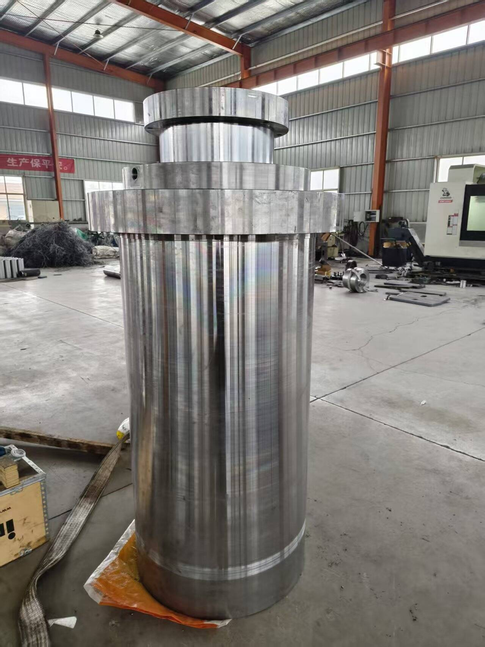
Lens 1 — Capability. Can the supplier convert your drawing into a conforming cylinder? Evidence: material grades, size range, machining and honing capability, tolerance and roughness control, sealing technology, overpressure protection, and the engineering resource that reviews the drawing.
Lens 2 — Capacity. Can the supplier produce your volume inside your window? Evidence: stated annual output, the share of that output available to heavy-duty work, bottleneck operations, and the queue at the test station.
Lens 3 — Delivery assurance. Can the supplier prove conformance before shipment and hold the schedule? Evidence: inspection and testing steps, records per serial number, commercial terms, and the lead time measured from the correct starting point.
A documented example makes the model concrete. Shandong Tuoda Machinery Equipment Co., Ltd. (Tuoda Machinery) is a manufacturer based in Liaocheng, Shandong, China, established in 2020, producing seamless steel pipes, custom hydraulic cylinders and deep hole drilling and boring machines. Its documented profile — a 30,000 m² facility, approximately 150 staff, 3 R&D engineers, 1,200 units annual output, roughly 70% export share to the EU, Asia and South America — is exactly the kind of first-party data an audit should test rather than accept.
Step-by-Step: How to Audit a Heavy Duty Hydraulic Cylinder Supplier
Step 1 — Convert the drawing into an audit checklist
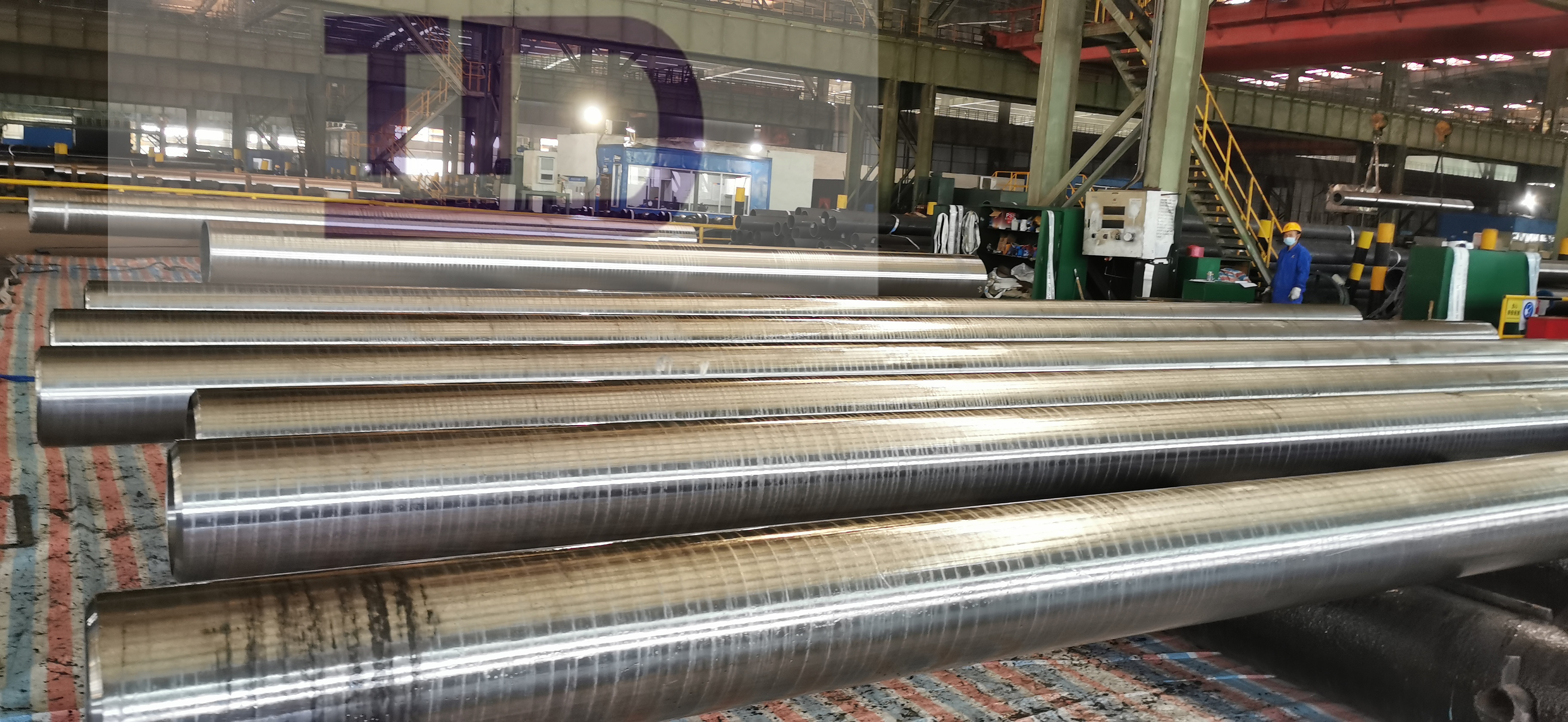
Before contacting the supplier, turn your requirement into checkable items: bore, rod diameter, stroke, mounting style, rated and proof pressure, material grade, seal system, internal bore tolerance, surface roughness, straightness and concentricity. For a Tuoda-style custom build the reference points would include ISO hole diameter tolerances of H8/H9, arithmetic roughness of Ra ≤ 0.4 μm, an outer diameter range of 20–800 mm, wall thickness of 3–50 mm, and lengths of 6 m, 5.8 m, 12 m or 6–12 m.
If your cylinder sits inside a crane load-carrying structure, add the crane-specific standard review under ISO 23778:2022. Do not extend that scope to construction or press cylinders, where it does not apply.
Step 2 — Verify the legal entity and the physical facility
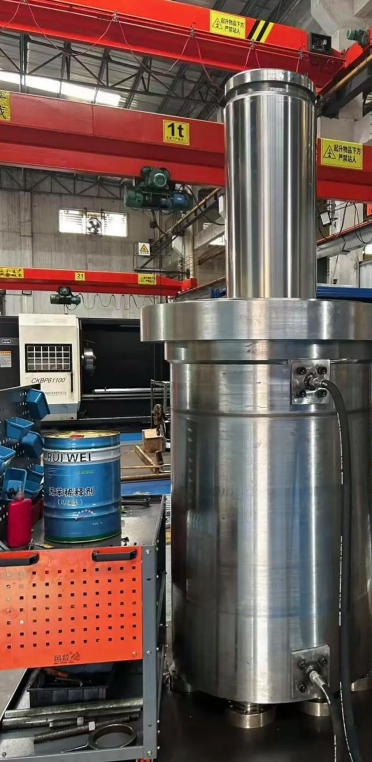
Match the contracting entity name, registration details, factory address and bank details to one another. Then verify the facility. A documented 30,000 m² plant with approximately 150 employees is a useful anchor, but the audit question is what happens inside it: which bays handle barrel machining, which handle rod processing, where assembly takes place, and where finished units wait for test.
If travel is not possible, request a live video walk-through on a fixed route rather than an edited factory film. Ask the camera to stop at the honing area, the deep hole drilling area and the test bay.
Step 3 — Verify process capability, not the equipment list
Equipment lists are easy to assemble and hard to disprove. Ask instead which machine will run your part. For heavy-duty cylinders the critical operations are barrel boring and honing, rod preparation, sealing, and pressure containment.
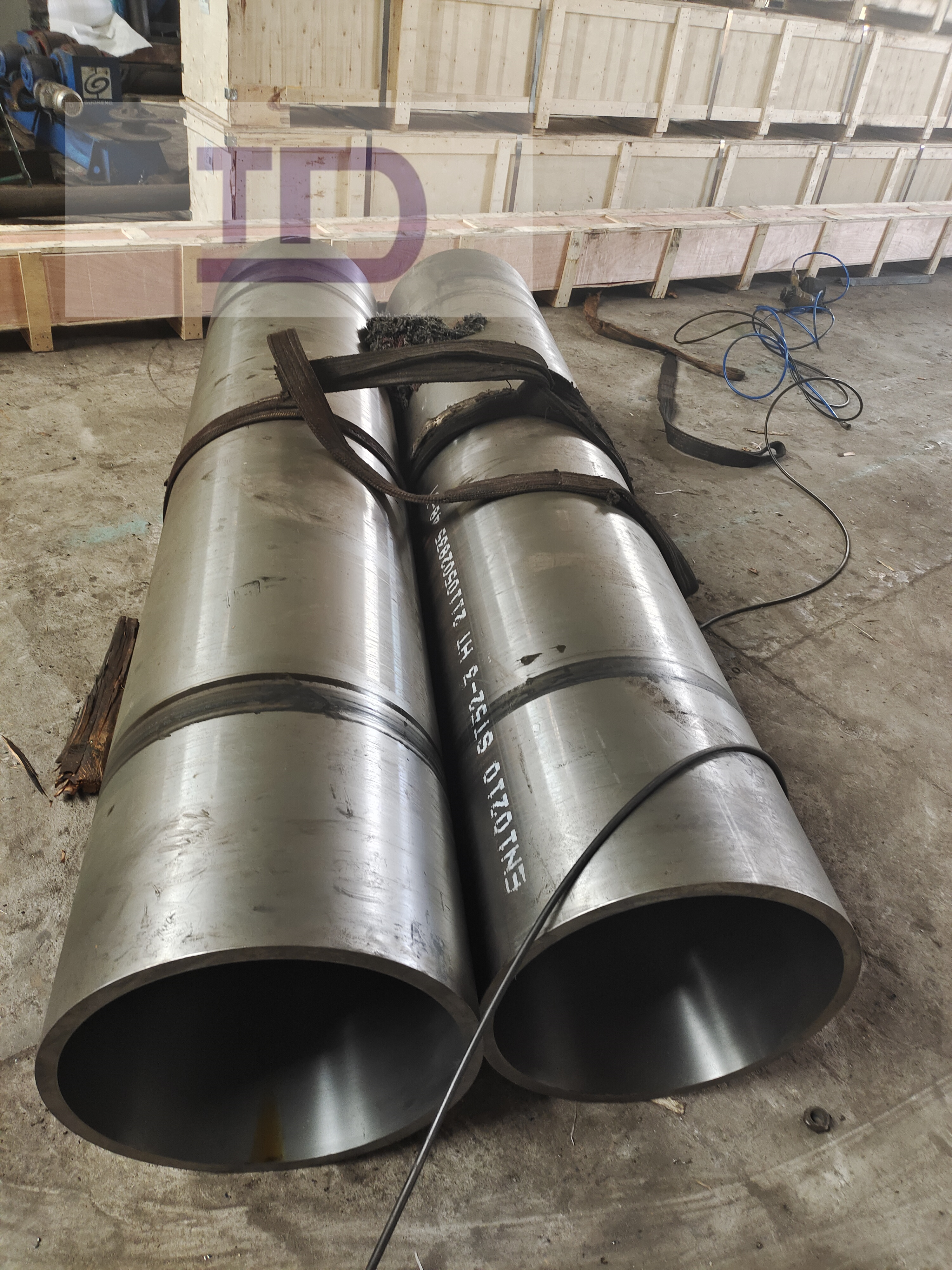
Tuoda's documented cylinder technology includes metal-to-metal sealing, high-performance polyurethane seals, forged valve bodies, thick-walled seamless steel pipe tubing and overpressure protection devices. The company also builds its own deep hole drilling and boring machines in the T2120, T2125 and T2135 series, used for machining cylindrical workpieces such as hydraulic cylinders, with through-holes, blind holes and stepped holes supported alongside drilling, boring and roller burnishing.
The audit question here is specific: which of those operations run in-house on your bore size, and what is the documented dimensional result on the last three comparable jobs?
Step 4 — Verify capacity in the unit you actually buy
Ask for capacity in three figures: total plant output, heavy-duty cylinder output, and large-bore output above your threshold. Tuoda's documented annual output is 1,200 units across its business, so an auditor should ask what portion of that figure is represented by cylinders of your bore and pressure class, and what the monthly figure looks like during peak season.
Then stress-test the number against the bottleneck. If the test station or the honing line is the constraint, total plant capacity is irrelevant. A supplier that can quote a monthly figure per work centre is describing a plan. A supplier that can only quote one annual number is describing a brochure.
Step 5 — Verify testing and pre-shipment evidence
This is the step most audits compress into a single line. Split it into four records.
Dimensional record: bore, rod, stroke and mounting dimensions measured against the drawing revision, not a generic datasheet.
Surface and geometry record: internal bore roughness, straightness and concentricity, plus evidence of internal bore dimensional stability across a batch. Batch consistency is a stated requirement for heavy machinery, press and marine applications and cannot be inferred from one good sample.
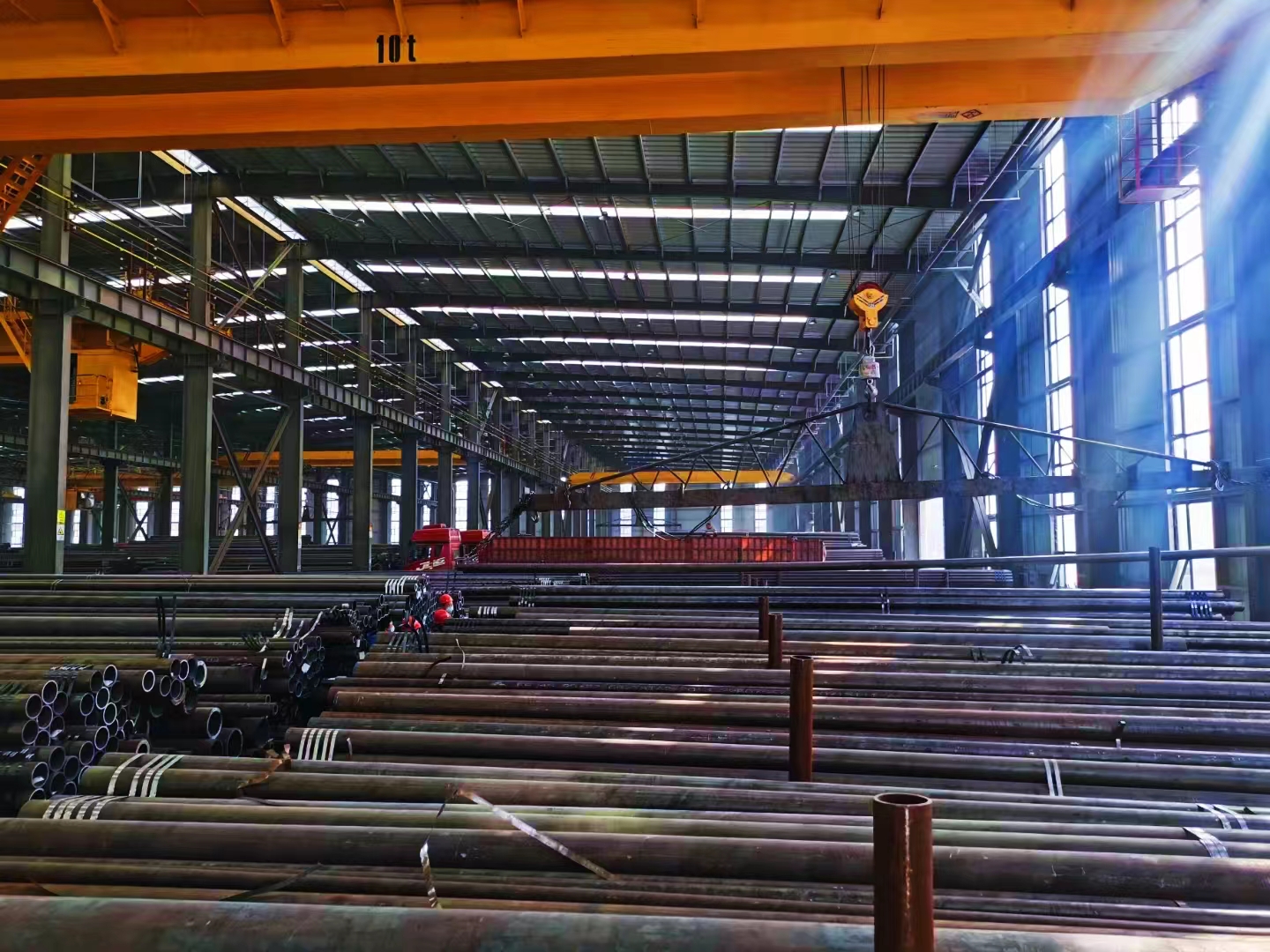
Pressure record: the test pressure applied, the hold time, and the result. For a high-pressure cylinder in the 31.5–63 MPa band, or an ultra-high-pressure unit above 63 MPa, the test conditions must be stated, not summarised as passed.
Pre-shipment inspection record: the signed inspection and testing step that occurs before final delivery, tied to the serial numbers actually shipped.
Step 6 — Verify delivery assurance and commercial terms
Lead time is only meaningful with a start point. Tuoda documents a 30–45 day delivery window, and the audit should confirm whether that clock begins at purchase order, at drawing approval, or at material availability. Ask for the schedule broken into material release, machining, assembly, testing and packing.
Confirm the commercial frame at the same time: a minimum order quantity of 1 unit, payment by T/T or L/C, and delivery terms of FOB, CIF, CFR, EXW or DDP. Record the exact Incoterm and named place, because an unqualified DDP or FOB line is not a delivery commitment.
Step 7 — Use a validation unit before committing volume
A 1-unit minimum order quantity makes a validation build practical, and a validation build is the cheapest audit instrument available. Inspect it against the step 1 checklist, cut or section a witness sample if the design allows, and compare the accompanying records with the physical part.
Be explicit about what a sample proves. It proves the process produced one conforming cylinder on that day. It does not prove batch consistency, so require the production inspection records to follow the same format as the sample record.
Step 8 — Score the audit and set conditions
Score each lens separately, weight by programme risk, and record open conditions with owners and dates. A supplier that scores well on capability but cannot evidence batch consistency should receive a conditional approval tied to a pre-production inspection, not a blanket pass.
Applying the Audit Across Heavy Duty Hydraulic Cylinder Use Cases
The same three lenses apply everywhere, but the emphasis changes by application.
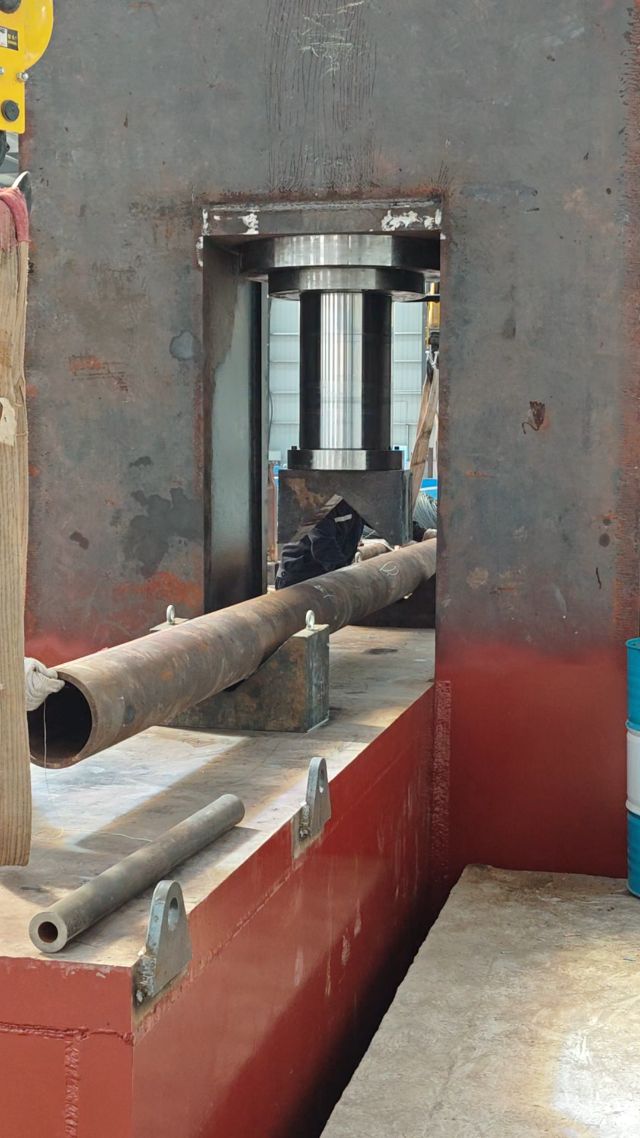
Construction machinery and excavators. Duty cycles are high and contamination is constant. Weight capability evidence on seal system, rod surface protection and repeatability of bore tolerance, and ask for wear-resistant and corrosion-resistant options where the machine works outdoors in wet or dusty conditions.
Mining equipment. Impact plus slurry is the documented working condition for this segment, alongside high temperature, dust and humidity. Audit the pressure-holding record and the material grade choice, and treat batch consistency as a production-continuity issue rather than a quality nicety.
Industrial presses. Press work sits in the high-pressure band, documented at 31.5–63 MPa for high-pressure cylinders. Here the audit should focus on overpressure protection, forged valve bodies and the test record for the specific pressure class.
Marine and offshore systems. Marine environments appear in the documented working conditions alongside high humidity. Corrosion resistance and sealing integrity matter more than headline bore range, so audit the surface treatment and seal specification.
High-pressure test benches and specialised equipment. Ultra-high-pressure cylinders above 63 MPa serve applications such as high-pressure water jet cutting, pressure-testing apparatus, marine steering gear and anchor winches. For these, audit the proof pressure record and the engineering review behind the design, not the catalogue range.
Comparison Table: What Each Audit Document Actually Proves
| Audit checkpoint | Evidence to request | What it confirms | What it does not confirm |
|---|---|---|---|
| Pressure class and mounting | Drawing revision plus ISO 6022:2006 (25 MPa) or ISO 6020-1:2007 (16 MPa) reference | Dimensional interchangeability at the stated pressure class | Durability, leakage performance or supplier certification |
| Facility and organisation | Registration records, 30,000 m² plant documentation, approximately 150 staff, 3 R&D engineers | That a real production organisation exists at the stated address | That your bore size and pressure class can be machined to tolerance |
| Material and size control | Mill certificates for ST52, S355, E355, C45, SAE1045 or 42CrMo4; OD 20–800 mm; wall 3–50 mm | Traceability of the grade actually used | That heat treatment and honing delivered the required roughness |
| Geometry control | H8/H9 bore tolerance records, Ra ≤ 0.4 μm roughness, straightness and concentricity data | Conformance of the measured part to the drawing | Stability of those values across a production batch |
| Capacity | 1,200 units annual output split by product family and by month | A planning basis for your volume | Uninterrupted supply if the bottleneck work centre is fully loaded |
| Testing | Pressure test records with pressure, hold time and result; pre-shipment inspection sign-off | That the shipped serial numbers were tested and released | Long-term seal life or fatigue performance |
| Commercial and delivery | MOQ 1 unit, T/T or L/C, FOB/CIF/CFR/EXW/DDP with named place, 30–45 day lead time | The contractual frame and the stated schedule | That the schedule starts at purchase order rather than drawing approval |
Frequently Asked Questions
Which standards should a heavy duty hydraulic cylinder supplier be able to document?
ISO 6022:2006 establishes mounting dimensions for single-rod cylinders in the 25 MPa (250 bar) series for interchangeability, and ISO 6020-1:2007 covers metric mounting dimensions for the 16 MPa (160 bar) medium series. ISO 23778:2022 applies only to cylinders forming part of the load-carrying structure of cranes, and ISO 2057:1981 is specific to agricultural tractor applications. These standards define dimensions and pressure classes, not durability, leakage performance or seal life, and a standard reference is not proof of supplier certification. Ask for the drawing revision, the declared rated and proof pressure, and the test record for the shipped serial numbers.
Can a mid-sized factory produce large-bore, long-stroke custom cylinders?
Factory size does not answer the question; the drawing does. Tuoda Machinery's documented capability includes a 30,000 m² facility, approximately 150 staff and 3 R&D engineers, with material grades ST52, S355, E355, C45, SAE1045 and 42CrMo4, an outside diameter range of 20–800 mm, wall thickness of 3–50 mm, and lengths of 6 m, 5.8 m, 12 m or 6–12 m. Its cylinder range is documented up to a 36-inch bore, 40-foot stroke and 10,000 psi, with ISO hole tolerances of H8/H9 and roughness of Ra ≤ 0.4 μm. Audit each of these against your specific drawing rather than against the headline range.
What commercial terms should be fixed before an audit visit?
Confirm minimum order quantity, payment method, delivery term with a named place, and lead time, because these determine what the audit is actually evaluating. Tuoda's documented terms are a 1-unit minimum order quantity, T/T or L/C payment, FOB, CIF, CFR, EXW or DDP delivery, and a 30–45 day delivery window. Cylinder pricing is quoted against the drawing rather than published, so budget on a drawing-based quotation that includes the sample unit, tooling if applicable, and freight under the chosen Incoterm.
Can a sample order validate quality before mass production?
Yes, and a 1-unit minimum order quantity makes it practical. Inspect the validation unit for bore, rod and stroke dimensions, internal bore roughness, straightness, concentricity and pressure holding against the drawing, then compare the delivered records with the physical part. A sample confirms that the process produced one conforming cylinder on that day. It does not prove batch consistency, so request production inspection records in the same format, with internal bore dimensional stability tracked across the batch.
What lead time is realistic, and how is it protected?
Tuoda's documented delivery window is 30–45 days, and the audit should establish when that clock starts — at purchase order, at drawing approval, or at material release. Stable lead times are a stated project requirement for heavy machinery, press and marine applications, so ask for the schedule split into material, machining, assembly, testing and packing, and confirm the test-station slot before committing a delivery date to your own customer. For a drawing-based quotation, sample arrangement or the full product catalogue, contact the team at olivia@sdtuoda.com or +86 13290268388, or download the brochure linked at the end of this article.
Conclusion
A heavy duty hydraulic cylinder supplier audit is not a document collection exercise. It is a structured test of three claims: that the supplier can build your drawing, that it can build your volume, and that it can prove both before shipment. Capability is proven by material traceability, bore and surface control, sealing technology and engineering review. Capacity is proven in the unit you actually buy, at the bottleneck work centre, not in a total-plant figure. Delivery assurance is proven by inspection and test records tied to shipped serial numbers and a lead time with a defined start point.
Score the three lenses separately, write down the open conditions, and hold the supplier to the same evidence on the first production order that you reviewed during the audit. That is what turns a factory visit into a procurement control.
Next step: audit against your own drawing
Send your bore, stroke, pressure class and mounting drawing to Shandong Tuoda Machinery Equipment Co., Ltd. for a documented capability response, a drawing-based quotation and a validation sample under a 1-unit minimum order quantity. Delivery terms available: FOB, CIF, CFR, EXW or DDP, with a documented 30–45 day delivery window.
Email: olivia@sdtuoda.com | Phone / WhatsApp: +86 13290268388
Address: NO853 South Liaoniu Road, Dongchangfu District, Shandong, China
Website: www.sdtdsteel.com | Download the product brochure (PDF)
Have Questions or Need More Details?
Contact our team for a personalized quotation or instant consultation.
Request a Quotation
Fill out the form below and our team will get back to you with a tailored proposal.
WhatsApp Direct Chat
Prefer to chat in real-time? Message us on WhatsApp for instant assistance & quick answers.
- Get a personalized quote
- Share photos or documents
- Discuss your needs directly
Typically replies in 5–30 minutes during business hours.