Heavy Duty Hydraulic Cylinders: Decoding Types, Grades & Tolerances
Heavy Duty Hydraulic Cylinders: Decoding Types, Grades & Tolerances
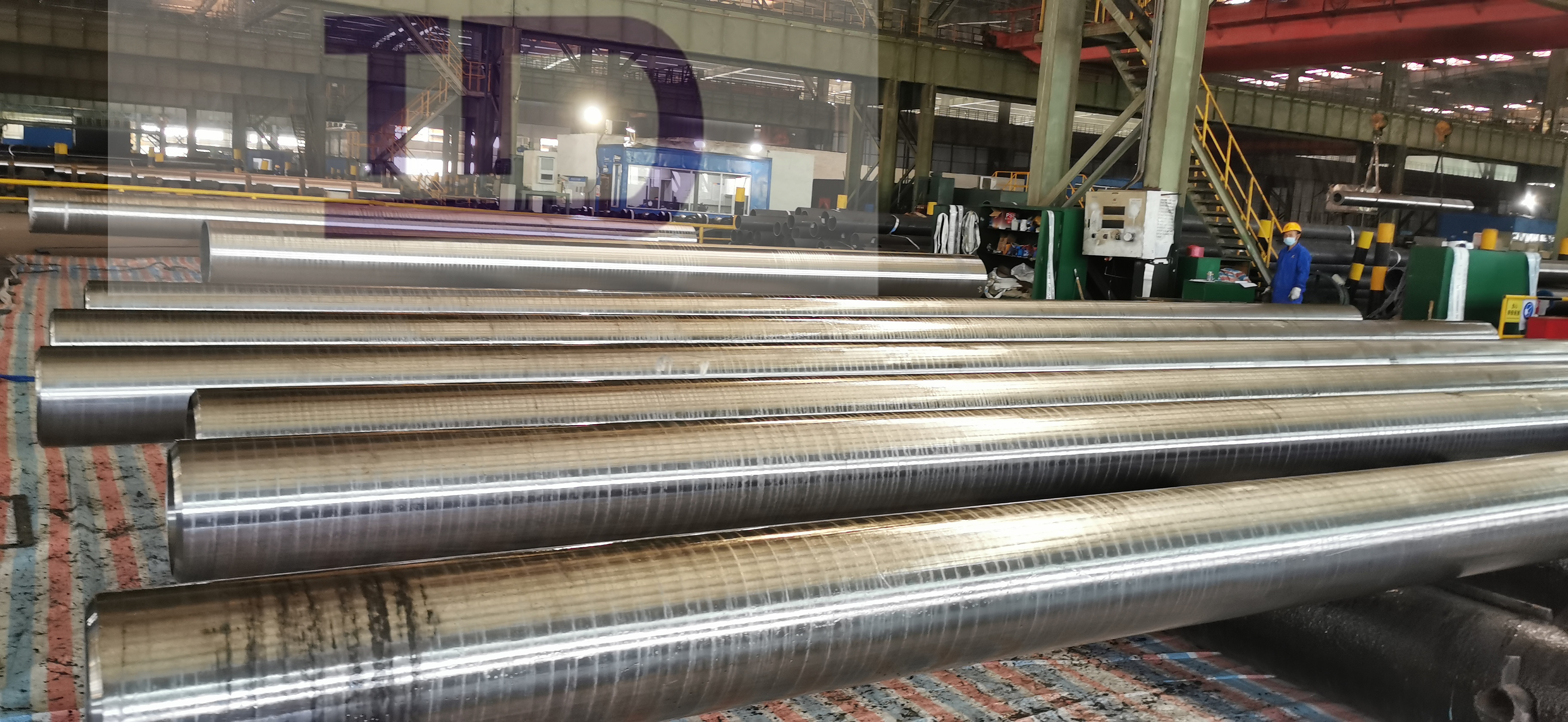
This article is written for first-time and cross-functional buyers — procurement, design and maintenance staff — who receive the same specification sheet and have to reach the same conclusion. It uses the datasheet of a working custom build as the reference: Tuoda Machinery (Shandong Tuoda Machinery Equipment Manufacturing Co., Ltd.), a manufacturer of custom hydraulic cylinders and carbon seamless steel tube based in Liaocheng, Shandong, China, which supplies buyers in India, Turkey, Vietnam, Indonesia, Canada, Germany, the United Kingdom and Sweden. Its heavy duty cylinder range is quoted with an outer diameter of 20–800 mm, wall thickness of 3–50 mm, tube lengths of 6 m, 5.8 m, 12 m or 6–12 m, ISO hole diameter tolerances of H8/H9, arithmetic roughness of Ra ≤ 0.4 μm and a weight tolerance of ±10%. Every section below explains one part of that sheet.
What Separates a Heavy Duty Cylinder From a Standard One
The purchase problem is definitional before it is technical. 'Heavy duty' is not a controlled class in the way '25 MPa series' is, so two suppliers can use the same phrase for products built to different assumptions. A buyer comparing quotations by price per unit, or by bore and stroke alone, can end up with a cylinder that fits the drawing but not the duty.
The practical separation happens in four places:
- Wall thickness. On the Tuoda range this runs from 3 mm to 50 mm. A thin wall suits a low-pressure, large-bore body; a thick wall is what carries a high-pressure class. Two cylinders with the same bore and stroke but different wall thickness are different products.
- Bore tolerance. The ISO hole diameter tolerance is stated as H8 or H9. The tolerance class fixes how the piston, gland and guide bush are fitted and how much the seal is allowed to squeeze.
- Bore roughness. The honed bore is specified at Ra ≤ 0.4 μm. Roughness affects seal life, friction and the leakage path far more than most buyers expect.
- Material grade. A build in ST52 and a build in 42CrMo4 can share dimensions and still behave differently under load and over time.
Anything a supplier cannot state in these terms is a conversation starter, not a specification.
Industry Background: The Standards Behind the Pressure Classes
Pressure classes exist because cylinders must be interchangeable, and interchangeability is a standards question before it is a performance question.
- ISO 6020-1:2007 establishes metric mounting dimensions for medium-series hydraulic cylinders at 16 MPa (160 bar), as required for interchangeability of commonly used cylinders.
- ISO 6022:2006 establishes mounting dimensions for single-rod hydraulic cylinders for use at 25 MPa (250 bar). Heavy duty cylinders following the ISO 6022 series are designed for a nominal pressure of 25 MPa (250 bar), with typical maximum pressures up to 320 bar.
- ISO 23778:2022 applies specifically to hydraulic cylinders that form part of the load-carrying structure of cranes.
- ISO 2057:1981 covers dimensions and clearances for cylinders used with trailing-type farm implements across three tractor categories.
Market context explains why buyers meet so many variants. The global hydraulic cylinder market was valued at USD 17.34 billion in 2025 and projected at USD 18.11 billion in 2026, moving toward USD 27.19 billion by 2034, according to Fortune Business Insights. Asia Pacific held 38.40% of that market in 2025, which matches the concentration of cylinder and tube production around steel-pipe clusters such as Liaocheng in Shandong — the supply base Tuoda draws on for its seamless tube. On the product side, double-acting cylinders held a 70% market share in 2024, per Grand View Research, which is why most custom enquiries assume powered motion in both directions.
The Four Configurations of Heavy Duty Cylinders
Configuration decides what the cylinder can physically do, so it should be settled before bore, stroke or pressure class are discussed. Tuoda's heavy duty and custom range is organised into four types.
Piston cylinder
A piston separates two chambers inside the barrel, so pressure can be applied to either side. This is the standard route to double-acting operation and to controlled force in both directions. Because double-acting designs dominate demand, the piston cylinder is the configuration most buyers actually specify.
Plunger cylinder
In a plunger design the ram itself acts as the working element rather than a separate piston. The result is a simple, robust cylinder, usually single-acting, where retraction comes from the load, from gravity or from a return spring rather than from hydraulic pressure. It is a good fit where the return stroke does not need to be powered.
Telescopic (multi-stage) cylinder
Nested stages extend in sequence to produce a long stroke from a short retracted length — the reason this type appears where installation space is limited but travel is not. The trade-off is mechanical: more stages means more seals and more wear points to inspect over the service life.
Rotary (oscillating) cylinder
A rotary or oscillating cylinder converts hydraulic pressure into a limited angular movement rather than a straight-line push. It is specified when the machine needs partial rotation in a compact envelope, not when it needs linear force.
Pressure Classes: High-Pressure and Ultra-High-Pressure
Pressure class is the field that most often gets copied from an old drawing without being re-checked. Two naming systems sit side by side, and they are not equivalents.
The standards-based bands are the interchangeability references: 16 MPa (160 bar) for the medium series under ISO 6020-1, and 25 MPa (250 bar) nominal for the single-rod 25 MPa series under ISO 6022, with typical maximum pressures up to 320 bar. Above those, manufacturers quote their own operating bands. Tuoda's cylinder programme is divided into high-pressure hydraulic cylinders at 31.5–63 MPa and ultra-high-pressure hydraulic cylinders above 63 MPa.
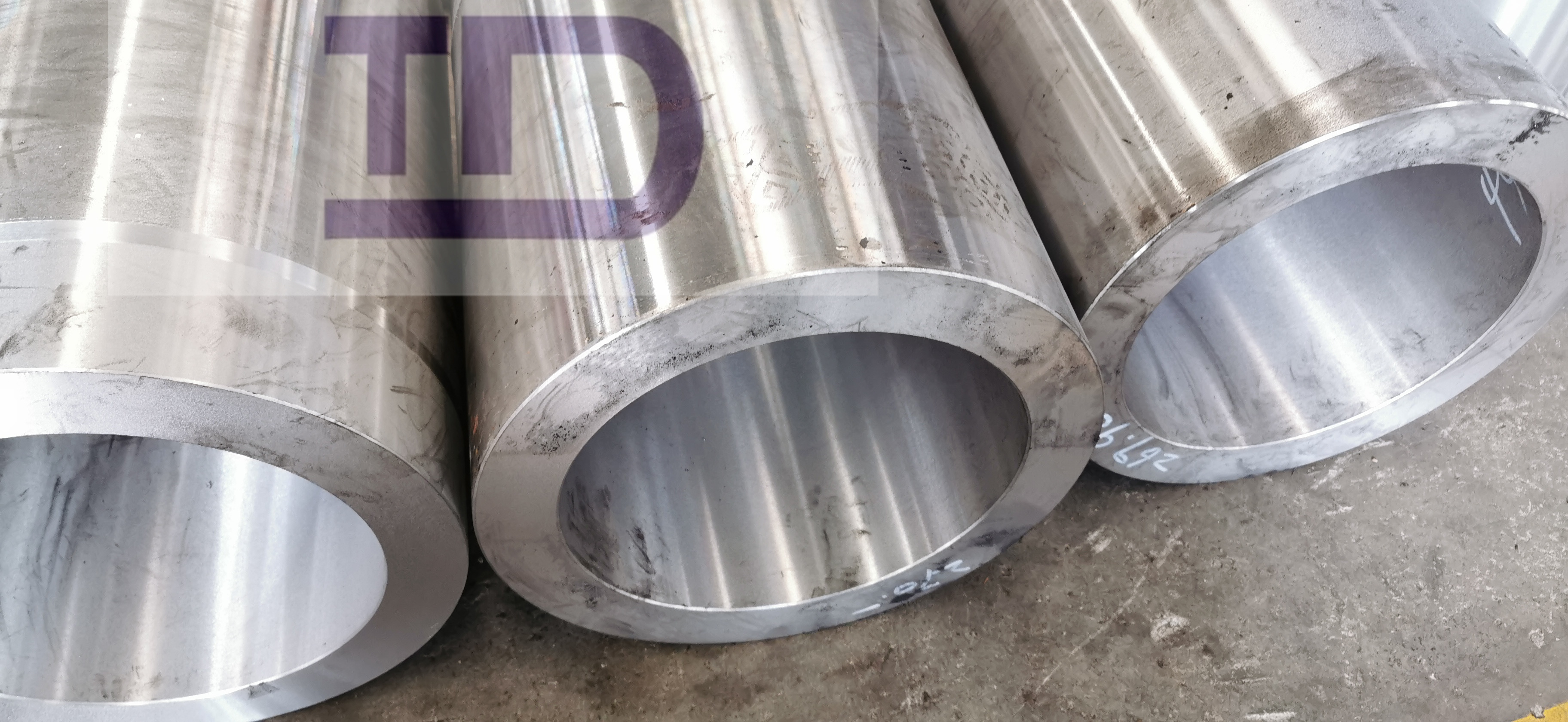
What changes as the class rises is not one number but a chain of them: wall thickness moves toward the upper end of the 3–50 mm range, material choice moves toward alloy grades such as 42CrMo4, and the internal design adds features such as metal-to-metal sealing, high-performance polyurethane seals, forged valve bodies, thick-walled seamless tube and overpressure protection devices. A higher class is therefore not automatically a better purchase — it is a different duty envelope, and matching it to the actual cycle is the buyer's job.
The Datasheet Parameters That Decide Fit
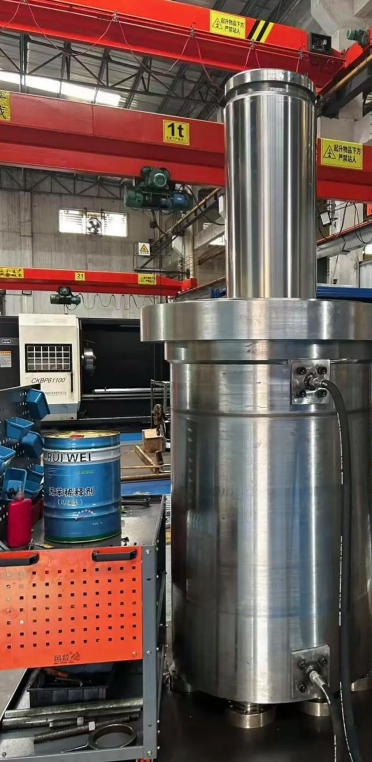
Once configuration and pressure class are fixed, the remaining fields are dimensional and quality parameters. Each one has a job.
| Parameter | Datasheet range | What it controls |
|---|---|---|
| Outer diameter (OD) | 20–800 mm | The barrel envelope and how much wall thickness is available around a given bore. |
| Wall thickness (WT) | 3–50 mm | Pressure containment and stiffness. Thin walls suit low-pressure, large-bore bodies; thick walls carry the high-pressure classes. |
| Stock length | 6 m / 5.8 m / 12 m / 6–12 m | Cut yield: how many cylinder bodies come out of one tube, and therefore how much material is scrapped. |
| Bore | Up to 36 in on custom builds | Force at a given pressure. Large bores are supported by tube supply that runs to 1080 mm OD in Tuoda's seamless pipe range. |
| Hole diameter tolerance | ISO H8 / H9 | Fit of piston, gland and guide bush; seal squeeze; whether a replacement part will interchange. |
| Arithmetic roughness | Ra ≤ 0.4 μm | Seal life, friction, leakage path and bore wear. A rough bore shortens seal life regardless of pressure class. |
| Weight tolerance | ±10% | Freight buying, lifting plans, mounting loads and acceptance weighing. |
| Delivery | 30–45 days | Project scheduling and installation windows. |
Two of these deserve a note. The H8/H9 hole tolerance is a fit decision, not a quality badge: H8 is the tighter of the two and is normally requested where the piston and gland fit has to be tightly controlled, while H9 leaves slightly more clearance. And Ra ≤ 0.4 μm is only meaningful together with the honing process that produces it — a bore roughness figure on a quotation without a corresponding inspection step is a promise, not a measurement.
Materials: Where ST52, S355, E355, C45, SAE1045 and 42CrMo4 Come From
Material grades look like alphabet soup because they come from several different naming systems, and each system answers a different question. Tuoda's custom heavy duty cylinder builds use ST52, S355, E355, C45, SAE1045 and 42CrMo4.
| Grade | Naming system | Typical role in a cylinder | Why it matters to the buyer |
|---|---|---|---|
| ST52 | German / DIN St-series structural steel designation | Barrel and body tube | Widely available structural grade; a common baseline for general high-pressure bodies. |
| S355 | European EN structural steel designation (S = structural) | Bodies, flanges and mounting components | A structural designation that keeps body and mounting material supply consistent across a batch. |
| E355 | European designation used for seamless precision steel tube | Honed cylinder barrels | Tube-duty grade: consistent wall and bore condition, which is what makes a Ra ≤ 0.4 μm hone achievable and repeatable. |
| C45 | European medium-carbon steel | Piston rods, pistons, gland components | Machines well and responds to heat treatment — the reason it appears on rod and machined-part drawings. |
| SAE1045 | SAE / AISI carbon steel designation | Rods and machined parts on drawings written to US practice | The SAE designation closest to C45, so a US-facing drawing can be quoted without a grade substitution argument. |
| 42CrMo4 | European chromium-molybdenum alloy, quenched and tempered | High-load rods, high-pressure and ultra-high-pressure cylinder components | Specified when load or section size exceeds what carbon grades comfortably carry — the grade behind many >63 MPa builds. |
The origin story is geographic as much as metallurgical. Liaocheng, where Tuoda is based, is a seamless steel pipe cluster, and the company's tube portfolio follows specifications including EN10210, EN10305, API 5L, A335, A333 and A106, supplied hot-rolled, cold-drawn, cold-rolled or quenched and tempered. That matters commercially: a cylinder manufacturer sitting inside a tube cluster can quote E355 or ST52 bodies without a long inbound lead time on raw material, which is one reason the 30–45 day delivery window holds.
What the buyer should take from this table is narrower and more useful: grade substitution is a specification change. If a drawing calls for 42CrMo4 and a quotation offers ST52 at the same dimensions, the offer is for a different cylinder, not a cheaper one.
Step-by-Step: Decoding a Heavy Duty Cylinder Spec
The sequence below is the order in which the fields actually constrain each other. Working out of order is how mismatches happen.
- Fix the configuration and the action. Piston, plunger, telescopic or rotary — and single-acting or double-acting. Everything downstream depends on this choice.
- Fix the mounting interface. Either an ISO pattern (ISO 6022 at 25 MPa or ISO 6020-1 at 16 MPa) or a custom mounting defined by drawing. Crane applications that carry structural load should be checked against ISO 23778:2022 scope.
- Set bore and stroke. Bore comes from the force required at the working pressure; stroke comes from the machine geometry. Large-bore builds run to 36 in on custom orders.
- Choose the pressure class. Standards band (16 or 25 MPa nominal), high-pressure band (31.5–63 MPa) or ultra-high-pressure band (>63 MPa). Do not assume a class upgrade is free or necessary.
- Select the tube. Outer diameter within 20–800 mm, wall thickness within 3–50 mm, and a stock length from 6 m, 5.8 m, 12 m or 6–12 m that gives an economic cut yield.
- Set bore quality. State the hole tolerance (H8 or H9) and the honed roughness (Ra ≤ 0.4 μm) explicitly, and require them to be inspected rather than assumed.
- Select grades for body and rod. Body tube in ST52, S355 or E355; rod and machined parts in C45, SAE1045 or 42CrMo4 depending on load.
- Define sealing and protection. Metal-to-metal sealing, polyurethane seals and overpressure protection are design choices that belong in the specification, not in a footnote.
- Agree acceptance and logistics. Pre-shipment pressure testing as part of acceptance inspection, weight checked against the ±10% tolerance, 30–45 day delivery, and the Incoterm that matches your freight arrangements.
Where Heavy Duty Cylinders Are Used
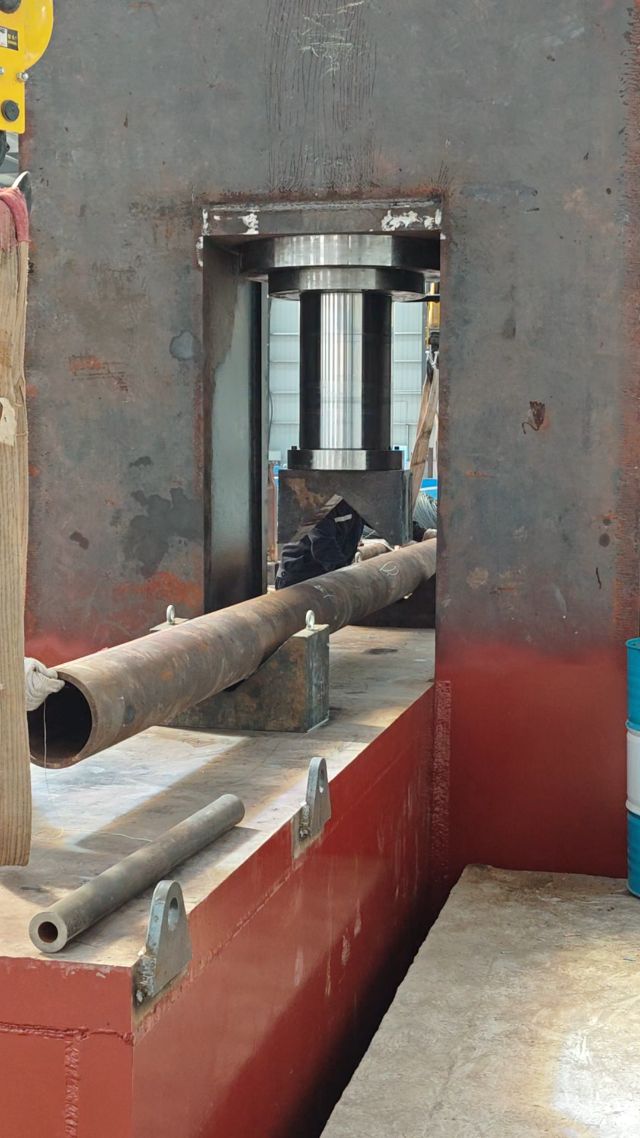
The applications listed for Tuoda's cylinder range fall into three industries — engineering machinery, the automobile industry and manufacturing — plus specialised equipment where standard cylinders do not reach the required pressure.
- Engineering machinery: hydraulic excavators and crushers, where shock, dust and continuous cycling are normal.
- Manufacturing: four-column hydraulic presses, straightening machines and press-driven production equipment.
- Marine hydraulic systems: steering gear and anchor winches, where salt exposure and load-holding matter together.
- Specialised and ultra-high-pressure equipment: high-pressure water jet cutting machines, recoil systems and material pressure-testing apparatus — the applications that sit above the 63 MPa line.
Field evidence exists in a specific case: a heavy machinery OEM in Vietnam ordered a single cylinder for a straightening machine. According to that buyer, the unit has run for more than ten years with stable operation, zero major failures, reduced maintenance cost and energy savings. A single unit is not a statistical sample, but it is a real acceptance test on a real drawing.
Comparison Tables
Pressure classes side by side
| Class | Reference point | Typical application | What the reference does and does not prove |
|---|---|---|---|
| Medium series | ISO 6020-1:2007 — 16 MPa (160 bar) | Metric medium-series cylinders | Fixes mounting dimensions for interchangeability. Does not certify durability, leakage or fatigue performance. |
| 25 MPa series | ISO 6022:2006 — 25 MPa (250 bar) nominal, typical maximum up to 320 bar | Single-rod heavy duty cylinders | Fixes mounting dimensions at 25 MPa. The class is not interchangeable with the 16 MPa series by assumption. |
| High-pressure | Tuoda specification — 31.5–63 MPa | Excavators, crushers, four-column presses, marine steering gear, anchor winches | A manufacturer operating band, not a published standard. Ask for the per-unit pressure test record. |
| Ultra-high-pressure | Tuoda specification — above 63 MPa | Water jet cutting, recoil systems, material pressure testing | A manufacturer operating band. Confirm the seal system and overpressure protection in the drawing. |
The four configurations compared
| Configuration | Motion | Typical action | Strength | Watch-out |
|---|---|---|---|---|
| Piston cylinder | Linear, both directions | Usually double-acting | Controlled force in both directions; double-acting types held 70% of the market in 2024 | Requires sealing on both sides and a defined rod-to-bore ratio |
| Plunger cylinder | Linear, one direction | Usually single-acting, returns by load or gravity | Simple and robust; fewer sealing surfaces | No powered retraction — the return force must come from elsewhere |
| Telescopic (multi-stage) | Linear, long stroke from a short closed length | Single or double acting depending on build | Long extension where installation space is limited | More stages means more seals and more wear points to inspect |
| Rotary (oscillating) | Limited angular output | Usually double-acting | Delivers rotation in a compact envelope | Rotation range is limited; not a substitute for a linear cylinder |
Frequently Asked Questions
1. Which standards actually apply to a heavy duty hydraulic cylinder?
It depends on the application, not on the phrase 'heavy duty'. ISO 6022:2006 fixes mounting dimensions for single-rod cylinders at 25 MPa (250 bar), the pressure-class reference that heavy duty datasheets usually quote. ISO 6020-1:2007 does the same at 16 MPa (160 bar) for the medium series. If the cylinder forms part of a crane's load-carrying structure, ISO 23778:2022 applies by scope; for agricultural tractors and trailing implements, ISO 2057:1981 covers dimensions and clearances across three tractor categories. None of these standards certify durability, leakage, fatigue life, seal life or corrosion resistance — so pair the standard with a pre-shipment pressure test and a written material and tolerance specification.
2. Can a non-standard size, a custom mounting, or a change from single-acting to double-acting be built?
Yes. Tuoda's customization scope covers application, size, bore, stroke, pressure, load, system solution, cylinders and logo printing, under an OEM/custom production mode with a minimum order quantity of one unit. Mounting is defined per drawing rather than forced into an ISO pattern, which is what custom mounting work means in practice. If the original unit is single-acting and the machine needs powered return in both directions, the change belongs at specification stage — and it is a mainstream request, since double-acting cylinders accounted for 70% of the hydraulic cylinder market in 2024. What to send with the enquiry: duty cycle, mounting drawing, port positions, bore and stroke, pressure class, and the hydraulic fluid.
3. What determines the price of a custom heavy duty cylinder?
There is no universal price band for a custom build, because the cost is built up per drawing. The variables that move the number are: material grade (ST52, S355 or E355 bodies versus 42CrMo4 for high-load components), bore and wall thickness (more steel, more machining), the tolerance and honing scope (H8 versus H9, and whether Ra ≤ 0.4 μm is inspected), stage count on telescopic builds, the sealing system, the test scope (pre-shipment pressure testing), order quantity from the one-unit minimum upward, and the Incoterm. The ±10% weight tolerance has a commercial effect too, because freight is bought on weight.
4. Can I validate a cylinder with one unit before committing to volume?
Yes — the minimum order quantity is one unit, and a single unit is how most buyers validate. Check the pre-shipment pressure test record, measure the hole diameter against the stated H8/H9 tolerance, verify the bore roughness against Ra ≤ 0.4 μm, weigh the unit against the ±10% tolerance, and confirm the mounting interface. There is a working example: a heavy machinery OEM in Vietnam ordered a single cylinder for a straightening machine, and according to that buyer it has run for more than ten years with stable operation, zero major failures, reduced maintenance cost and energy savings. A single unit is not statistical proof, but it is a genuine acceptance test on your own drawing.
5. What lead time, payment and shipping terms should I plan for?
The standard delivery window is 30–45 days, with heavily customised builds scheduled individually at quotation stage. Payment is by T/T or L/C. Shipping terms offered are FOB, CIF, CFR, EXW and DDP, so the Incoterm should be fixed before the order is placed rather than after. Pre-shipment testing is treated as part of acceptance inspection, which means the test record travels with the shipment. If you want to move from reading a datasheet to checking one against your own drawing, the product brochure is available for download: Tuoda Machinery product brochure (PDF).
Conclusion
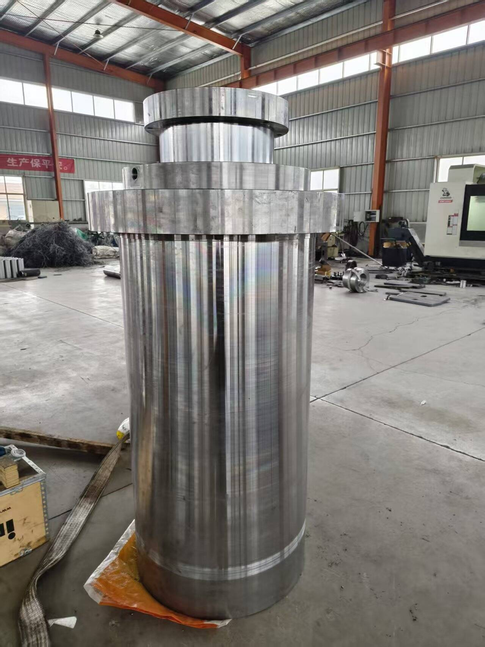
A heavy duty hydraulic cylinder is defined by four readable fields — wall thickness, bore tolerance class, bore roughness and material grade — sitting on top of a configuration and pressure-class decision. The datasheet values that carry the most weight are ordinary ones: outer diameter 20–800 mm, wall thickness 3–50 mm, stock lengths of 6 m, 5.8 m, 12 m or 6–12 m, bores up to 36 in on custom builds, ISO H8/H9 hole tolerance, Ra ≤ 0.4 μm bore roughness and a ±10% weight tolerance. The materials behind those numbers come from different naming systems — ST52 and S355 for structural bodies, E355 for honed tube, C45 and SAE1045 for machined parts, 42CrMo4 for high-load work — and substituting one for another is a specification change, not a discount.
Read in that order, a quotation stops being a price and becomes a set of commitments you can check. The commercial frame around it is equally plain: MOQ of one unit, a 30–45 day delivery window, T/T or L/C payment, FOB/CIF/CFR/EXW/DDP terms, and pre-shipment testing as part of acceptance inspection.
Check your drawing against a real datasheet
Send the bore, stroke, mounting drawing and pressure class, and Tuoda Machinery will respond with a specification line-by-line — including material grade, hole tolerance, bore roughness and the pre-shipment test scope. Single-unit samples and custom mountings are quoted from MOQ 1.
Email: olivia@sdtuoda.com | Tel / WhatsApp: +86 13290268388 | Website: www.sdtdsteel.com
Brochure: Download the Tuoda Machinery product catalogue (PDF)
Have Questions or Need More Details?
Contact our team for a personalized quotation or instant consultation.
Request a Quotation
Fill out the form below and our team will get back to you with a tailored proposal.
WhatsApp Direct Chat
Prefer to chat in real-time? Message us on WhatsApp for instant assistance & quick answers.
- Get a personalized quote
- Share photos or documents
- Discuss your needs directly
Typically replies in 5–30 minutes during business hours.