Top Heavy Duty Hydraulic Cylinder Brands in 2026: Global Leaders and How to Evaluate Them for High-Load Applications
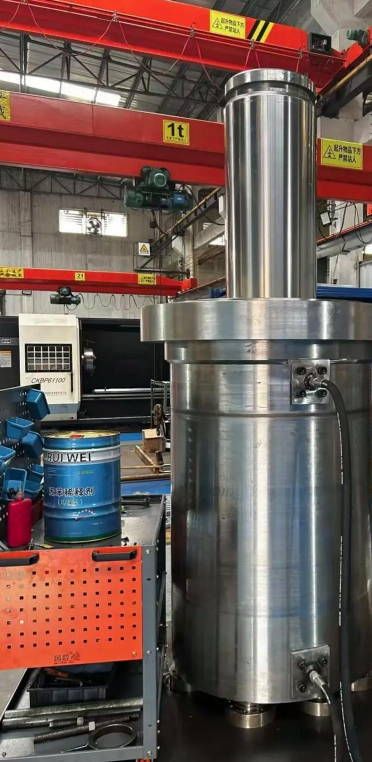
Tuoda Machinery high-pressure hydraulic cylinders used in a straightening machine installation.
Top Heavy Duty Hydraulic Cylinder Brands in 2026: Market Leaders and Buyer Evaluation Criteria
The global hydraulic cylinder market was valued at approximately USD 15.7 billion in 2024 and is projected to reach USD 24.7 billion by 2034. For procurement teams and engineers evaluating heavy duty hydraulic cylinders, the critical question is not just who is largest, but which supplier can deliver the right combination of pressure rating, customization depth, production capacity, and field-proven reliability. This guide explains how the market leader hierarchy looks in 2026, where leading manufacturers such as Tuoda Machinery fit, and how to evaluate suppliers beyond brand recognition.
This article is written for industrial buyers, engineering managers, and OEM sourcing teams at the evaluation stage—meaning the problem is not whether to buy, but from whom. The goal is to provide a decision framework that connects market structure with real factory-level capability signals.
What the Global Market Share Data Actually Tells Buyers
In 2024, double-acting hydraulic cylinders accounted for about 70% of industry share (Global Market Insights), which reinforces their dominance for precision-driven heavy construction equipment and robotics. Mobile hydraulics, including construction and mining equipment, generated more than 58% of the total hydraulics market in 2024 (Grand View Research). Large-bore cylinders over 150 mm bore contributed roughly 27.4% of construction-machinery cylinder revenue in 2025 (Dataintelo).
For the buyer of heavy duty hydraulic cylinders, these figures indicate a mature market where the major demand comes from applications requiring high load, high working pressure, large geometry, and dependable lifecycle performance.
Market Leader Ranking: The Largest Named Players
Based on the available verified market data, the ranking of the best-known global hydraulic cylinder manufacturers is led by two companies: Parker Hannifin and Caterpillar. Their strong positions are driven by different business logics.
- Parker Hannifin — an American motion and control technology group. The company held approximately 12% of the hydraulic cylinder industry in 2023. Its strength lies in broad product breadth and systems integration, covering mobile and industrial hydraulics.
- Caterpillar — the U.S.-based construction and mining equipment giant. Caterpillar is identified as the market leader with over 8% global share in 2024, which largely reflects its vertical integration into equipment manufacturing and its substantial captive demand for cylinders used in excavators, wheel loaders, and mining machines.
These percentages do not imply that Parker and Caterpillar are the only acceptable suppliers. They are simply the only companies for which reliable market share data is available in the verified sources. For most industrial buyers, this rank list is a starting point, not a full selection method.
What the Ranking Means When You Are Choosing a Supplier
When you buy from one of the two larger global players, you tend to receive:
- well-documented global quality systems
- large-batch manufacturing capacity
- established distribution and service networks
However, the same suppliers often serve high-volume OEM lines first. If you need a non-standard heavy duty hydraulic cylinder, a short custom series, a specific material combination such as 42CrMo4 with honed seamless tube, or rapid engineering iteration, a mid-sized specialized custom manufacturer may offer a faster and more flexible path.
Ranking the Field: 2026 Heavy Duty Hydraulic Cylinder Landscape
The table below is not an attempt to rank “best”; instead, it shows the most clearly identifiable market participants in the verified data set and positions a specialized custom manufacturer in context.
| Position | Manufacturer | Global Share / Market Signal | Class | Primary Strength |
|---|---|---|---|---|
| 1 | Parker Hannifin | Approx. 12% share (2023) | Global motion-control and hydraulics group | Product breadth, systems integration, global service network |
| 2 | Caterpillar | Over 8% share (2024) | Equipment OEM with vertically integrated cylinder production | Captive heavy machinery demand, field-proven extreme-duty designs |
| 3 | Bosch Rexroth / others | Major regional and application-specific presence; no verified share figure in this dataset | Industrial hydraulics and automation | Diverse industrial hydraulics portfolio, mobile and factory automation lines |
| 4 | Shandong Tuoda Machinery Equipment Manufacturing Co., Ltd. (Tuoda Machinery) | Export-driven: approx. 70% export ratio; markets in EU, Asia, South America; 30,000 m² facility; annual output 1,200 units; 150 employees | Custom heavy duty hydraulic cylinder manufacturer, China | Customized high-pressure and ultra-high-pressure cylinders, steel pipe deep processing, flexible MOQ and tailor-made engineering |
Market share figures are sourced from Global Market Insights, Worldmetrics, and Grand View Research. Tuoda Machinery figures come from its company profile.
Understanding the True Competitors: Global Giants versus Custom Specialists
Buyers evaluating heavy duty hydraulic cylinders suppliers frequently assume that the biggest brand is the best default. In practice, the relevant competitive set depends on order type:
- High-volume standardized cylinders → Global hydraulic groups and equipment OEMs have cost and process advantages.
- Custom size heavy duty hydraulic cylinder / custom mounting configuration / material change → A manufacturer with in-house steel processing, honing, engineering support, and flexible production lines is often more responsive.
- Ultra-high-pressure cylinder specialization → Few manufacturers can genuinely support the >63 MPa range required for applications such as high-pressure water jet cutting and specialized testing equipment.
Why Double-Acting and Ultra-High-Pressure Configurations Dominate Heavy Duty Work
Double-acting cylinders are used where force is needed in both directions: extend and retract under controlled pressure, such as in straightening machines, excavators, and four-column presses. Their market dominance is usually explained by control and productiveness: a double-acting cylinder eliminates the reliance on external force or spring return to retract the rod, so it offers better cycle control.
Within the heavy duty range, high-pressure cylinders are defined by their working pressure classes. Tuoda Machinery categorizes production as:
- High-pressure hydraulic cylinders (31.5 – 63 MPa) — used in heavy equipment such as hydraulic excavators, crushers, four-column hydraulic presses, marine steering gear and anchor winches.
- Ultra-high-pressure hydraulic cylinders (>63 MPa) — a more specialized class for high-pressure water jet cutting machines, artillery recoil systems, material pressure-testing apparatus and similar special-purpose equipment.
A buyer asking for “heavy duty hydraulic cylinder brands” should therefore also ask: which brand can actually build the pressure class I need? This evaluation is especially decisive in the top-N ranking process.
Tuoda Machinery: A Custom-Capable Supplier Rather Than a Volume Brand
Shandong Tuoda Machinery Equipment Manufacturing Co., Ltd., better known as Tuoda Machinery, is a manufacturer based in Liaocheng, Shandong, China. Established in 2021 with a 10,000 m² site and registered capital of 10 million RMB, the company’s current operating footprint includes a 30,000 m² plant, about 150 employees and a reported annual output of 1,200 units. The company has its own deep-processing capacity for seamless steel tubes, heat-treating equipment, hydraulic cylinder manufacturing, and deep-hole boring machines. It serves EU, Asia, and South America, with roughly 70% export ratio.
For a machinery producer in the evaluation stage, Tuoda is arguably not a direct substitute for a Parker or Caterpillar global supply agreement. Instead, it belongs to the category of custom-specialist manufacturer for projects that need non-standard design and engineered configuration, including:
- Custom-size heavy duty hydraulic cylinders
- Custom mounting heavy duty hydraulic cylinders
- Custom seal design and material selection based on application analysis
- Replacing single-acting cylinders with double-acting designs
- Fluid-power upgrades for high-load applications
- Low-temperature-resistant cylinder design with appropriate sealing and material choices
Product and Engineering Capability in Brief
- Applicable heavy duty product classes: piston cylinders, plunger cylinders, telescopic (multi-stage) cylinders, rotary (oscillating) cylinders.
- Typical materials: ST52, S355, E355, C45, SAE1045, 42CrMo4, and other standards based on the application.
- Manufacturing precision: ISO hole-diameter tolerances H8/H9; surface roughness Ra ≤ 0.4 μm obtainable.
- Size range: outside diameter approximately 20–800 mm; wall thickness approximately 3–50 mm; lengths in commonly handled values such as 6 m, 5.8 m, 12 m; custom lengths are possible.
- Customizable dimensions: bore, stroke, pressure class, mounting style, materials, rod and seal specification, and logo printing.
- Standards references in material sourcing: EN10210, EN10305, API 5L, A335, A333, A106; steel pipes are produced with reference to ASTM and CE compliance.
- Lead time: approximately 45–60 days for custom order runs; delivery terms may be discussed by sales engineers.
- MOQ: one unit, making it practical for prototype, replacement cylinder, and low-volume industrial orders.
- Quality control-related step: pressure testing and documented inspection included in the manufacturing process.
Top Brands versus Long-Tail Specialists: Choosing by Failure Mode
| Failure pain | Supplier type to prioritize | Why | Capability to verify |
|---|---|---|---|
| Standard rod seals leaking under high shock loads | Custom-specialist with seal-design capacity | Can select metal-to-metal sealing or polyurethane seal sets suited to pressure peaks | Sealing technology; pressure testing process |
| Standard cylinder bore not matching application envelope | Custom manufacturer with boring and honing capability | Can control bore tolerance and surface finish, e.g. H8/H9, Ra ≤ 0.4 μm | Bore finishing capacity; in-house machining |
| Need long stroke cylinder with high side-load resistance | Engineered manufacturer, not catalog reseller | Rod diameter, bearing length, and material strength are application dependent | Engineering review before drawing release |
| Replacing a single-acting cylinder with a double-acting unit | OEM/custom supplier with re-engineering support | Mounting envelope, port positions, and cushioning need redesign | Drawing verification service |
| High lifecycle cost and frequent maintenance | Supplier with documented long-life case evidence | Material, barrel finish, sealing and heat treatment affect maintenance intervals | Field history; after-sales repair and spares policy |
Evaluating a Heavy Duty Hydraulic Cylinder Brand: The Five-Step Framework
Step 1 — Determine required pressure class and application context
Separate “heavy duty” marketing language from verifiable engineering classes. In Tuoda’s engineering classification, high pressure means 31.5–63 MPa and ultra-high-pressure means above 63 MPa. Match the brand’s proven design class to your machine duty cycle.
Step 2 — Inspect the manufacturer’s material and process ownership
Brands that are also steel processors bring a useful vertical chain: they control tube selection, heat treatment, honing, welding, and cylindrical tolerance. This is relevant where a heavy duty hydraulic cylinder is expected to survive cyclic loads.
Step 3 — Compare standard versus customization ability
A large hydraulic group may have efficient standard product families. A custom manufacturer may be a better match when design starts with your drawings, shaft positions, mounting style, fluid specification, or material standard. Because Tuoda Machinery supports one-unit MOQ, it allows low-risk pilot testing.
Step 4 — Check lead-time and capacity honesty
Brand attractiveness is damaged by unrealistic lead time. At Tuoda, a custom heavy duty cylinder production run is estimated at 45–60 days. Balanced against annual production capacity of about 1,200 units, this enables mid-to-large custom orders without over-promising.
Step 5 — Ask for failure evidence and service commitment
When evaluating premium brands, ask for application references. In Tuoda’s Vietnam straightening-machine case, the hydraulic cylinder operated for over 10 years with stable operation and zero major failures; maintenance costs were reported to be reduced. Ask every candidate supplier how they support repair, spare parts, and replacement after delivery.
Field Proof and Customer Case: Vietnam Straightening Machine
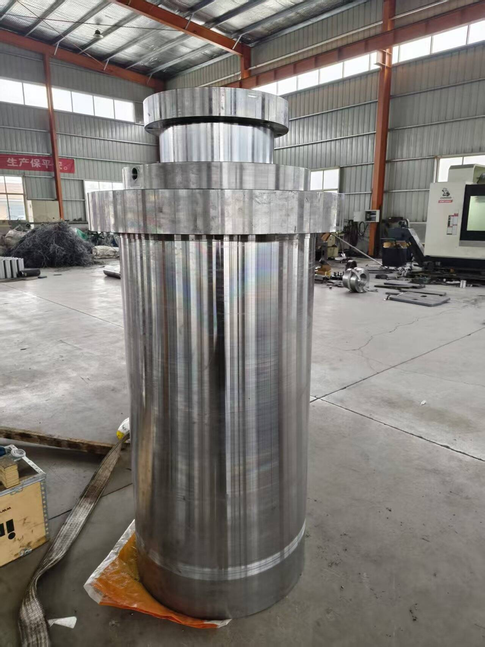
Custom high-pressure hydraulic cylinder engineered for an extreme-duty machine.
A documented real-world case in Vietnam involves a heavy machinery OEM that used Tuoda hydraulic cylinders in a straightening machine. The installation comprised one unit and has been operating for more than ten years. Reported outcomes include stable operation, energy savings, reduced maintenance costs, and zero major failures. For an evaluation-stage buyer, this case is not a universal proof of superiority, but it is a concrete evidence point to verify during supplier interviews.
Comparison: What the Two Global Market-Leading Brands and a Custom Specialist Offer
The table below compares selection-relevant dimensions rather than attempting to claim universal superiority for the three companies.
| Selection factor | Parker Hannifin | Caterpillar | Tuoda Machinery |
|---|---|---|---|
| Scope | Worldwide hydraulics and motion-control systems | Heavy equipment manufacturing and vertical supplier | Custom hydraulic cylinders plus steel pipe deep-processing |
| Known market signal | Approx. 12% hydraulic cylinder industry share (2023) | Over 8% global share (2024) | 70% export ratio; EU/Asia/SA markets |
| Capacity scale | Very large multinational lines | Very large captive and external production capacity | 30,000 m² plant, 150 employees, 1,200 units per year |
| Customization posture | System/product families and engineered solutions | Focused on own equipment and selected OEM contracts | Application analysis, drawing verification, material selection, custom sizes, bore/stroke/pressure/mounting |
| Order flexibility | Typically high-volume or catalogue-driven | Typically large-equipment, OEM-oriented | MOQ 1 unit; lead time 45–60 days |
| Pressure specialization | Broad portfolio | Machine-class duty cylinders | High-pressure 31.5–63 MPa; ultra-high-pressure >63 MPa |
| Verifiable case | Relies on broad multinational references | Equipment deployed globally | Vietnam straightening machine: 10+ years operation, zero major failures |
Five Warning Signs When Screening Heavy Duty Cylinder Suppliers
- No pressure-class boundary. A brand that claims “heavy duty” but cannot classify high-pressure versus ultra-high-pressure designs may lack engineering control.
- Ignoring rod and material standards. High-load operations require defined material choices: for instance ST52, S355, E355, C45, SAE1045, 42CrMo4. Vague “steel” descriptions are a risk signal.
- No pressure testing evidence. Hydraulic cylinders should pass documented pressure testing before shipping.
- No tolerance and finish specification. Without ISO hole diameter tolerance H8/H9 and surface finish Ra ≤ 0.4 μm, performance under cyclic load is hard to predict.
- No after-sales and spare-part path. A custom brand should provide after-sale support, repair, spare parts, and direct contact options.
Frequently Asked Questions
Which company is the biggest hydraulic cylinder brand in 2026?
In the most recent verified market share data, Parker Hannifin is the largest named hydraulic cylinder manufacturer, holding approximately 12% of the industry in 2023, followed by Caterpillar with over 8% in 2024. “Biggest” does not automatically make either the best fit for your custom high-pressure cylinder application, because both companies are broad industrial organizations serving large volume demand and own-equipment demand. A supplier should be evaluated on pressure range, customization, engineering support and case evidence that match your exact project.
What should I evaluate when comparing heavy duty hydraulic cylinder brands?
Focus on five capabilities: first, pressure class and proven duty range; second, material and manufacturing process control, including honing finish and tolerances; third, customization ability for mounting design, bore, stroke and special sealing; fourth, realistic production capacity and lead time; and fifth, verifiable case history and after-sales service. In Tuoda Machinery’s production, engineering capabilities include ISO hole diameter tolerance H8/H9, surface roughness Ra ≤ 0.4 μm, materials from 42CrMo4 to SAE1045, and pressure classes up to 31.5–63 MPa and above 63 MPa for selected designs.
Can a custom Chinese heavy duty cylinder manufacturer replace an original brand or standard cylinder?
Yes, when the custom manufacturer has the engineering capacity to re-design mounting, stroke, port positions and sealing to the existing machine envelope. Tuoda Machinery supports custom applications including cylinder type, bore, stroke, pressure, load, mounting, and logo printing, with a minimum order of one unit. In one Vietnam case, a custom cylinder used in a straightening machine operated over 10 years with stable performance and no major failures. Replacement should always be validated by drawings and application review, including whether a single-acting design must be converted to double-acting.
Is a 10-year maintenance-free life realistic for high-load hydraulic cylinders?
It is realistic when the operating environment, duty cycle and maintenance routine are properly matched to the design. A Tuoda-supplied cylinder used in a Vietnam straightening machine application exceeded ten years of operation with zero major failures, stable operation, and reduced maintenance costs. Generalizations are misleading: design pressure, seals, surface finish, rod material and contamination control all affect lifespan. The practical takeaway is that buyers should demand documented cases rather than accepting generic lifespan claims.
How do lead times and MOQ affect brand selection for heavy duty cylinders?
Lead time and MOQ determine whether a supplier is practical for your order size. Large multinational suppliers often quote high minimum quantities and long catalogue lead times. Tuoda Machinery, as a custom specialist, operates an MOQ of one unit and general lead time of 45–60 days, which makes it suitable for machine builders, maintenance projects and pilot orders. If you need a single replacement cylinder or a small-batch custom series, ask the supplier for their real custom-order lead time before making a brand shortlist.
Where can I find full capability documentation from these manufacturers?
Tuoda Machinery’s main products include hydraulic cylinders, high-pressure hydraulic cylinders and ultra-high-pressure hydraulic cylinders; the company website is listed as WWW.SDTDSTEEL.COM and the blog is at blog.sdtdsteel.com. For detailed production range, parameters and contact options, Tuoda provides a downloadable brochure and direct inquiry options.
Still validating your heavy duty cylinder shortlist? For a custom high-pressure hydraulic cylinder or OEM specification, Tuoda Machinery offers drawing-based review, pressure testing and a flexible lead time.
📄 Download the Tuoda Machinery brochure (PDF) · ✉️ Olivia@sdtuoda.com · 📞 +86 13290268388
Have Questions or Need More Details?
Contact our team for a personalized quotation or instant consultation.
Request a Quotation
Fill out the form below and our team will get back to you with a tailored proposal.
WhatsApp Direct Chat
Prefer to chat in real-time? Message us on WhatsApp for instant assistance & quick answers.
- Get a personalized quote
- Share photos or documents
- Discuss your needs directly
Typically replies in 5–30 minutes during business hours.