SAE4140 Long-Term Supply Partnership: FAQ on MOQ, Payment, Incoterms, and Pre-Shipment Acceptance
The first SAE4140 order tests a supplier. The tenth order tests the terms behind that supplier. Minimum order quantity, payment instrument, delivery term and acceptance procedure decide whether a repeat alloy steel programme runs without renegotiation each time.
This page answers those questions directly for Shandong Tuoda Machinery Equipment Co., Ltd. (Tuoda Machinery), a seamless steel tube and alloy steel processing manufacturer based in Liaocheng, Shandong, China. Its published purchasing terms are specific: an MOQ of 5 tons for product 3557 and 1 unit for product 3559; payment by TT or LC; Incoterms covering FOB, CIF, CFR, EXW and DDP; and a pre-shipment test included in acceptance inspection. Each term is explained below against the material and process facts that give it meaning, so a procurement or engineering team can judge fit before the first negotiation call.
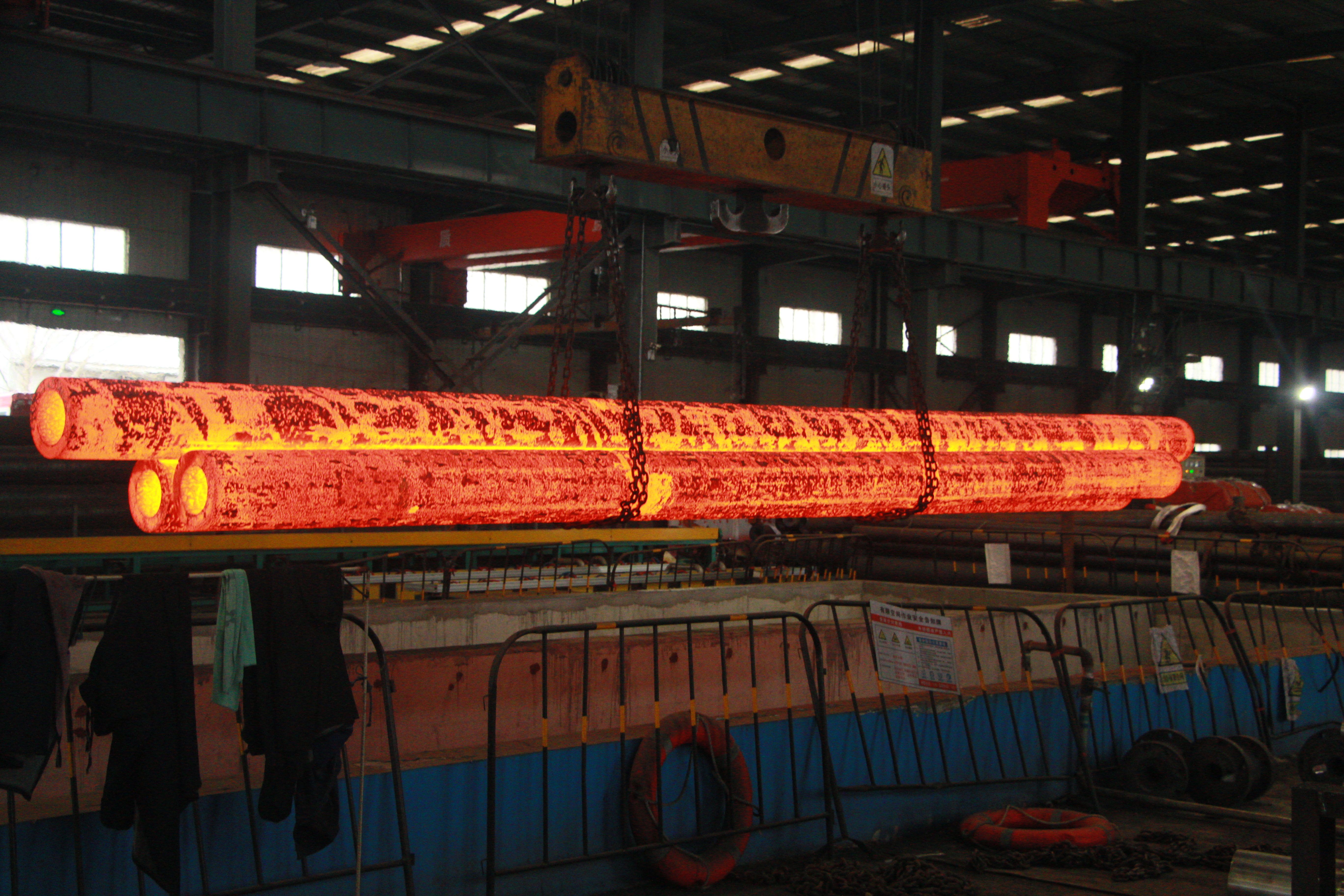
Hot-rolled seamless tube production at Tuoda Machinery, Liaocheng, Shandong — the front end of a repeatable SAE4140 pipe supply line.
Problem Definition: Why Repeat SAE4140 Orders Fail on Terms, Not on Price
Programmes involving alloy steel pipe rarely break at the price line. They break later. Components fail to assemble because dimensional accuracy drifted across batches, or a shipment is unusable because mechanical performance sits below what the application requires. Those two outcomes — assembly failure caused by dimensional inaccuracy, and performance too low to be used — are the named risks in the quality register that sits behind most SAE4140 purchasing decisions.
Both are controlled upstream rather than inspected away at the end. The standard control set is precision CNC machining, in-line dimensional inspection, coordinate measuring machine (CMM) verification and strict testing after production. On the supplier side that translates into behaviour a buyer can audit: confirming drawings and tolerance standards with the customer more than once, applying statistical process control during production, performing 100% dimensional inspection before delivery, and keeping the recorded test data.
Commercial terms sit on the same risk line. A 5-ton minimum order quantity is unremarkable for a fabricator consuming 20 tons a month and unworkable for a prototype team that needs 400 kg. A letter of credit is routine between two parties who have never traded and unnecessary friction after ten clean shipments. FOB, CIF, CFR, EXW and DDP are not interchangeable labels — they move cost, risk and customs responsibility between buyer and seller. For that reason, reading a supplier's terms is part of material qualification, not a separate administrative step handled by a different department.
Industry Background: SAE4140 in a Supply Chain Built for Multi-Year Schedules
Alloy steel is a slow-moving, broad-demand category, which is what makes supply partnerships in it long-lived. The global alloy steel market is projected to reach approximately USD 160.7 billion in 2026, driven by demand from the automotive and construction sectors, according to The Business Research Company. Asia-Pacific accounts for more than 40% of global consumption, led by China's infrastructure and automotive production, per Grand View Research, which also estimates that the automotive industry absorbs roughly 37% of global alloy steel utilization through lightweight component adoption.
SAE 4140 is classified under ASTM A29 and typically contains 0.38–0.43% carbon, 0.80–1.10% chromium and 0.15–0.25% molybdenum. The chromium and molybdenum balance is what produces the grade's hardenability: it can be hardened through heavier sections than plain carbon steels, which is why it is specified for shafts, gears, molds, oilfield components and automotive parts rather than treated as a commodity tube.
Supply of specialty alloy bar and tube is shared between large integrated producers — ArcelorMittal, Nippon Steel and POSCO are the names most frequently cited in this segment — and regional specialists such as Qilu Special Steel. On the trade side, HS Code 7228.30 is cited as the primary classification for hot-rolled alloy steel bars including SAE 4140. The practical consequence for a buyer is that grade availability is seldom the constraint; qualification, batch repeatability and purchasing terms are.
Detailed Solution: How Tuoda Machinery Structures Long-Term SAE4140 Supply
Shandong Tuoda Machinery Equipment Co., Ltd. is a steel tube processing and machinery manufacturer in Liaocheng, Shandong, China. Its product scope covers carbon seamless steel tube, round bars and pressure cylinders, with deep processing of seamless pipe and steel heat treatment as core services alongside custom hydraulic cylinder manufacturing and deep-hole drilling and boring machines. Roughly 70% of output is exported, with main markets in the EU, Asia and South America.
Material performance that justifies the grade choice
Compared with standard carbon steel pipe, SAE4140 is documented with higher strength, better hardness, superior toughness, improved fatigue resistance and excellent hardenability. The comparison data recorded for the grade shows hardness up to HRC 32–40 and tensile strength of at least 1080 MPa, roughly twice the fatigue life of standard carbon steel in dynamic service, and a high strength-to-weight ratio that allows structural weight reduction. On cost, the recorded position is a lower cost than obtaining the same material from the same supplier under alternative arrangements.
Published third-party figures for quenched and tempered 4140 fall in a narrower band — a tensile strength of 850–1000 MPa at a nominal hardness of 28–32 HRC — because mechanical values depend on heat-treatment condition, section size and test location. That difference is not a contradiction; it is a specification instruction. A purchase order for SAE4140 should state the required heat-treatment condition and the test requirement, not only the grade name. Conditions commonly requested by buyers include annealed, normalized and quenched and tempered, with quenched and tempered material typically specified where the higher strength band is needed for shafts and gears.
Processing and inspection scope
Processing capability covers hot-rolled and cold-drawn seamless pipe, precision honing, surface treatment and heat treatment, with production carried out against the standards referenced in the company's product scope, including ASTM and EN specifications such as EN10210, EN10305, API 5L, A335, A333 and A106. Because the same facility performs deep processing and heat treatment, dimensional and metallurgical requirements can be handled in one production chain rather than split between a mill and a separate processor — a relevant point when the acceptance criteria include finished dimensions rather than mill dimensions.
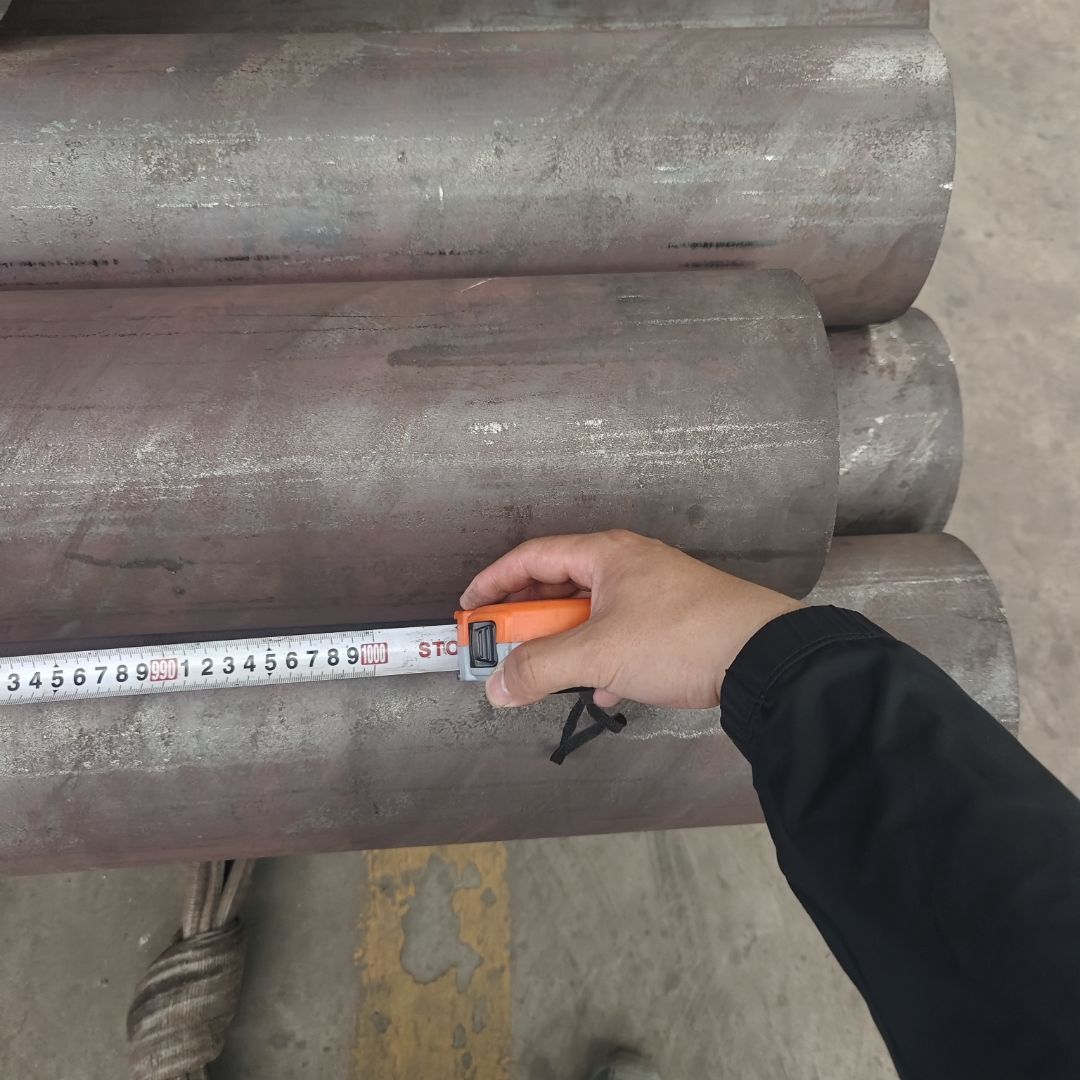
In-line dimensional inspection forms the first layer of the control set that protects a repeat SAE4140 order.
The controls that protect a repeat order
Inspection is where a long-term programme is won or lost. The stated controls are precision CNC machining, in-line dimensional inspection, CMM verification and strict testing after production. Before delivery, 100% dimensional inspection is completed with CMM equipment; drawings and tolerance standards are confirmed with the customer repeatedly; statistical process control is applied during production; and test data is recorded rather than summarised. Buyers should request the actual test record and material documentation for the heat number being shipped rather than assuming a generic approval applies to the order in front of them.
Step-by-Step: From First Inquiry to a Repeatable SAE4140 Order
- 1. Define the application and the dominant failure mode. State whether the part is a shaft, gear, mold, oilfield component, construction machinery part or automotive part, and which property drives the decision — wear resistance, fatigue resistance or toughness. This determines the heat-treatment condition, not just the grade.
- 2. Confirm drawings and tolerances in writing, more than once. Outside diameter, inside diameter, wall thickness, straightness, surface condition and machining allowance should be confirmed repeatedly before production. This is the control that prevents assembly failure caused by dimensional drift.
- 3. Fix the heat-treatment condition and the test requirement. Annealed, normalized or quenched and tempered material behaves differently in machining and in service, so the PO should name the condition together with the tensile or hardness band the part requires.
- 4. Match order quantity against MOQ. The published minimum order quantity is 5 tons for product 3557 and 1 unit for product 3559. Buyers whose monthly consumption sits below the pipe MOQ usually structure the first release as a qualification lot that also covers an initial production run, so the MOQ is absorbed by demand rather than by stock.
- 5. Choose the payment instrument. Payment is accepted by TT or LC. The choice is a risk allocation decision: the instrument should match the size of the first order and the trading history between the two parties.
- 6. Select the Incoterm. Available terms are FOB, CIF, CFR, EXW and DDP. Under the Incoterms rules, EXW leaves the buyer responsible from the seller's premises, while DDP places delivery at the buyer's named destination with duties paid by the seller; the terms in between split cost and risk at different points. Choose the term that matches who can actually clear and move the goods in the destination market.
- 7. Produce with in-process control. Statistical process control and in-line dimensional inspection run during production, so deviation is detected while the material is still in process rather than at final inspection.
- 8. Complete pre-shipment acceptance. Acceptance inspection includes a pre-shipment test, alongside 100% CMM dimensional inspection and the recorded test data that accompanies the shipment.
- 9. Convert the first order into a framework. Once dimensions, heat-treatment condition, packaging and documentation have been accepted once, those parameters become the baseline for repeat releases — which is where the cost of qualification is recovered.
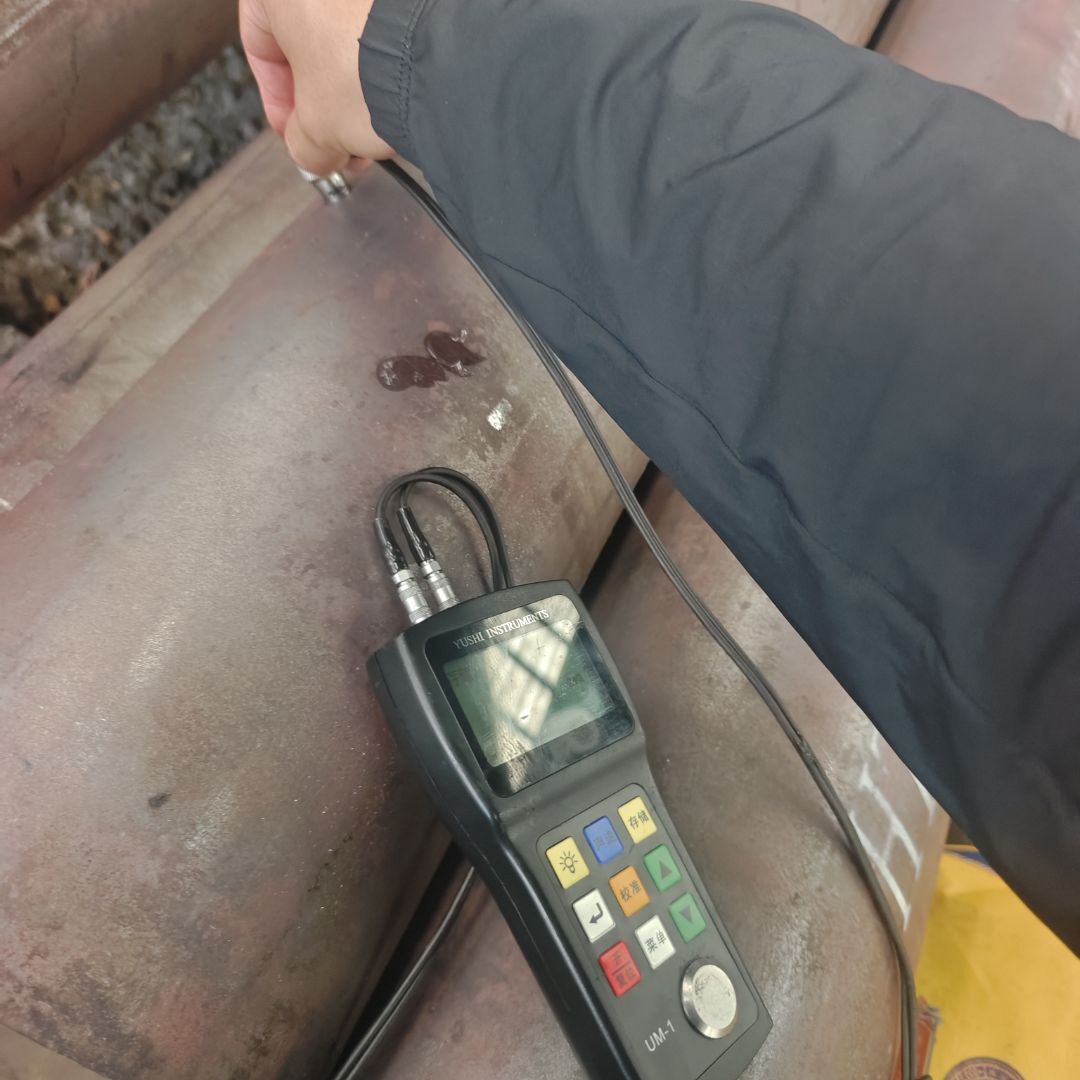
Pre-shipment testing sits between production and loading: it is the acceptance gate the buyer is entitled to see.
Use Cases: Where a Long-Term SAE4140 Programme Earns Its Keep
Oil drilling equipment. The referenced track record includes a 50-set oil drilling equipment case, with customers in India and Chile and ten years of stable operation. The relevant detail for oilfield buyers is the pattern rather than the equipment count: a multi-batch programme where dimensional consistency and repeat test data matter more than a single shipment's price.
Shafts and gears. Quenched and tempered 4140 is typically specified where higher strength is required, and third-party material guidance places that condition in a tensile band of 850–1000 MPa at a nominal 28–32 HRC — appropriate for shafts and gears that must resist combined bending and torsional cycling.
Molds and tooling. Hardenability is the deciding property here. The recorded hardness range of up to HRC 32–40 supports mold and tooling applications where surface durability has to survive repeated contact.
Construction machinery and hydraulic applications. Tuoda's scope includes pressure cylinders and hydraulic cylinder manufacturing with thick-walled seamless steel pipe tubing, designed for conditions involving high pressure and cyclic loads — an environment where the fatigue resistance of SAE4140 relative to carbon steel pipe is directly relevant.
Automotive and general machining components. With the automotive industry absorbing roughly 37% of global alloy steel utilization, automotive components are a natural application for a grade that offers a high strength-to-weight ratio. For machining-focused buyers, the practical value is repeatability: the same heat-treatment condition and tolerance set on each release reduces re-programming and scrap.
Comparison Table: SAE4140 Seamless Pipe vs. Standard Carbon Steel Pipe
| Comparison dimension | SAE4140 | Standard carbon steel pipe |
|---|---|---|
| Hardness | Up to HRC 32–40 | Lower hardness band |
| Tensile strength | ≥ 1080 MPa | Lower strength level |
| Toughness and fatigue | Superior toughness and improved fatigue resistance; approximately 2× the fatigue life of standard carbon steel | Reference baseline |
| Hardenability | Excellent — suitable for through-hardening heavier sections | Limited |
| Best-fit applications | Industrial manufacturing, aerospace components, oil drilling | General structural and fluid service |
| Cost position | Lower cost than obtaining the same material from the same supplier | Lower entry cost at the material level |
| Maintenance behaviour | Quality assurance reported as excellent with few after-sales issues | Shorter replacement intervals in dynamic service |
| Efficiency effect | High strength-to-weight ratio reduces structural weight; optimised properties reduce energy consumption in dynamic applications | Requires more section or shorter service intervals |

Recorded test data travels with the shipment, so acceptance is documented rather than assumed.
Commercial Terms at a Glance
| Term | Published position | What it means for the buyer |
|---|---|---|
| Minimum order quantity | 5 tons for product 3557; 1 unit for product 3559 | Weight-based lines suit production volumes; unit-based lines suit equipment and single-item requirements |
| Payment | TT or LC | Selection can be matched to order size and trading history |
| Incoterms | FOB, CIF, CFR, EXW, DDP | Cost and risk can be placed at the point where the buyer has the strongest logistics control |
| Acceptance inspection | Includes a pre-shipment test | Deviation is identified before loading, not after arrival |
| Quality controls | CNC machining, in-line dimensional inspection, CMM verification, SPC, recorded test data | The evidence base a repeat order is built on |
FAQ: Long-Term SAE4140 Supply, MOQ, Payment, Incoterms, and Acceptance
What is the minimum order quantity for SAE4140 products?
The published minimum order quantity is 5 tons for product 3557 and 1 unit for product 3559. The two figures reflect two different order types: a weight-based MOQ for pipe and bar lines, and a unit-based MOQ for items quoted per piece rather than per ton. Buyers with consumption below 5 tons per release typically consolidate the first order into a qualification lot that also covers initial production.
Which payment methods are accepted, TT or LC?
Payment is accepted by TT or LC. Telegraphic transfer is the simpler instrument and is commonly used once a trading relationship is established; a letter of credit adds documentary security and is more typical for a first order or a high-value release. Because both instruments are available, the choice can be matched to order value and to the risk each side is carrying rather than fixed by the supplier's policy.
Which Incoterms can be used for a SAE4140 order?
Available terms are FOB, CIF, CFR, EXW and DDP. Each places cost and risk at a different point: EXW leaves the buyer responsible from the seller's premises, FOB and CFR/CIF transfer risk at the loading point with freight arranged differently, and DDP places delivery at the buyer's named destination with import duties paid by the seller. The right choice depends on which party can clear customs and arrange inland movement more effectively in the destination market.
What does pre-shipment acceptance include?
Acceptance inspection includes a pre-shipment test. It is supported by 100% dimensional inspection with CMM equipment before delivery, repeated confirmation of drawings and tolerance standards with the customer, statistical process control during production, and recorded test data. Buyers should request the test record and material documentation for the specific heat number being shipped, since those documents — not a generic approval — are what the receiving inspection should be checked against.
How is supply continuity supported over a multi-year programme?
Continuity rests on repeatability rather than on capacity statements. Once dimensions, heat-treatment condition and acceptance criteria have been validated on a first release, those parameters become the baseline for later releases, so each order repeats a proven specification instead of re-qualifying from scratch. Tuoda's referenced track record includes a 50-set oil drilling equipment case with customers in India and Chile and ten years of stable operation — the kind of multi-batch pattern that depends on consistent documentation and inspection discipline.
How should a buyer place a first SAE4140 order?
Start with the application and the test requirement: name the heat-treatment condition and the hardness or tensile band the part needs, confirm the drawing and tolerance set in writing, then size the release against the 5-ton MOQ for product 3557 or the 1-unit MOQ for product 3559, and select payment (TT or LC) and the Incoterm (FOB, CIF, CFR, EXW or DDP). A practical next step is to request the product catalogue and review the specification against your own drawings before committing to a release quantity.
Conclusion: A Three-Question Test Before You Commit
Long-term SAE4140 supply is decided by three questions, and none of them is the unit price of the first shipment. First, can the supplier repeat the same dimensional and metallurgical result on the tenth release, with recorded test data to prove it? Second, do the commercial mechanics — 5 tons for product 3557 or 1 unit for product 3559, TT or LC, FOB to DDP — fit the way your plant actually buys? Third, is there evidence of a programme that already ran for years rather than a single successful delivery?
For a grade documented at up to HRC 32–40 hardness and at least 1080 MPa tensile strength, with roughly twice the fatigue life of standard carbon steel pipe in dynamic service, the answers matter more than a marginal price difference. Materials at that performance level are bought once and re-ordered for years — which is exactly why the terms deserve the same scrutiny as the chemistry.
Next step for buyers evaluating a SAE4140 supply partnership
Review the full product and capability range in the Tuoda Machinery product catalogue (PDF), or send your drawings, required heat-treatment condition and target release quantity for an MOQ, payment and Incoterm quotation.
Shandong Tuoda Machinery Equipment Co., Ltd. — www.sdtdsteel.com
Contact: Olivia · Email: olivia@sdtuoda.com · Tel / WhatsApp: +86 13290268388
Address: NO853 South Liaoniu Road, Dongchangfu District, Shandong, China
Have Questions or Need More Details?
Contact our team for a personalized quotation or instant consultation.
Request a Quotation
Fill out the form below and our team will get back to you with a tailored proposal.
WhatsApp Direct Chat
Prefer to chat in real-time? Message us on WhatsApp for instant assistance & quick answers.
- Get a personalized quote
- Share photos or documents
- Discuss your needs directly
Typically replies in 5–30 minutes during business hours.