Heavy Duty Hydraulic Cylinders: What the Extra Cost Buys
Decision-stage comparison for procurement teams evaluating heavy duty hydraulic cylinders vs. standard hydraulic cylinders. All performance, cost, and efficiency statements are based on Tuoda Machinery's published specifications and attributed third-party market data.
Heavy Duty Hydraulic Cylinders: What the Extra Cost Buys
Shandong Tuoda Machinery Equipment Co., Ltd. (Tuoda Machinery) is a China-based manufacturer of seamless steel tubes, round bars, pressure cylinders, and custom hydraulic cylinders, located in Liaocheng, Shandong, with main markets in the EU, Asia, and South America. This guide compares heavy duty hydraulic cylinders with standard hydraulic cylinders for buyers at the decision stage, focusing on the performance gap, application fit, and total cost of ownership (TCO).
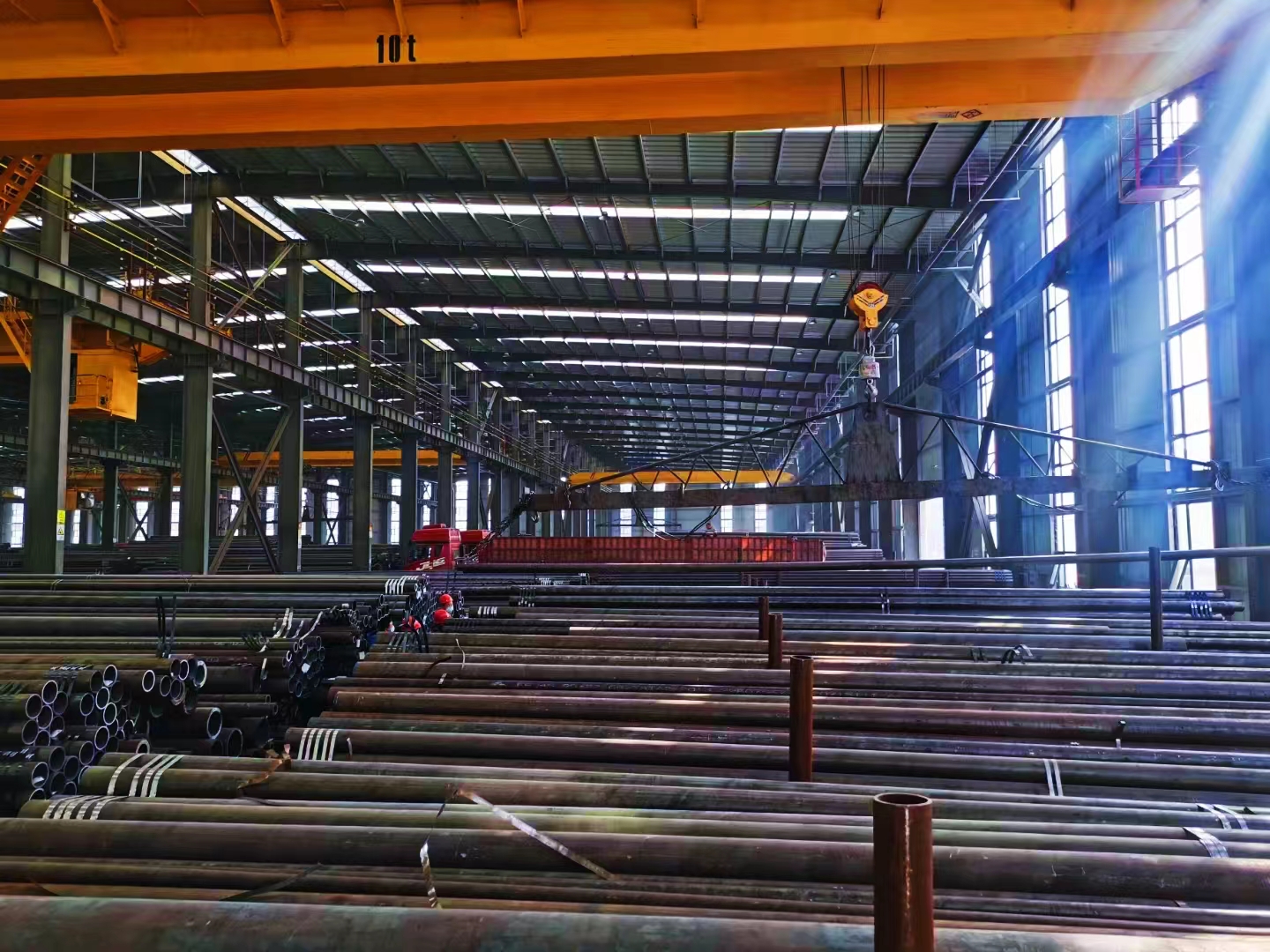
Seamless steel tube inventory at Tuoda Machinery's factory in Liaocheng, Shandong — the material base for heavy duty hydraulic cylinders.
Why the Comparison Is Harder Than It Looks
Heavy duty hydraulic cylinders are specified for applications in which standard cylinders reach their structural or sealing limits: hydraulic excavators, crushers, four-column hydraulic presses, marine steering gear, anchor winches, and high-pressure test benches. When a cylinder fails in one of these applications, the financial impact goes beyond the replacement part. Downtime stops production; disassembly, logistics, and labor add cost; repeated failures shorten equipment availability. None of these costs appear on the initial purchase order.
Compared with standard hydraulic cylinders, heavy duty hydraulic cylinders have distinct advantages. The core difference is the use of high-strength material and a design tailored for extreme conditions, long stroke, large bore, and high pressure. That structural difference changes the buying equation in one important way: the lowest-priced quote is not necessarily the cheapest solution.
Industry Background: Extreme-Duty Demand Is Growing
The global hydraulic cylinder market was valued at USD 15.7 billion in 2024 and is projected to reach USD 24.7 billion by 2034 (Global Market Insights). Double-acting hydraulic cylinders dominated the industry with a 70% market share in 2024, favored for precision-driven heavy-duty construction and robotics applications (Global Market Insights). Mobile hydraulics — including construction and mining equipment — accounted for more than 58% of the total hydraulics market in 2024 (Grand View Research).
Large bore hydraulic cylinders (bore size above 150 mm) held approximately 27.4% of market revenue in 2025, driven by demand from large mining excavators and tunnel boring machines (Dataintelo). Cross-border trade reflects the same demand: China's exports of hydraulic power engines and motors (including cylinders) to the United States reached approximately USD 80.4 million in 2024 (World Integrated Trade Solution).
Standards give buyers a neutral reference. ISO 6022 (250 bar series) and ISO 6020 (160 bar series) define mounting dimensions and interchangeability for heavy duty hydraulic cylinders in industrial applications (ISO/TC 131). At the raw-material level, Tuoda Machinery manufactures steel pipe products in compliance with EN10210, EN10305, API 5L, A335, A333, and A106, under ASTM and CE frameworks.
What a Heavy Duty Hydraulic Cylinder Actually Is
A heavy duty hydraulic cylinder is a linear actuator manufactured with high-strength material and designed for extreme conditions, long stroke, large bore, and high pressure. Compared with standard cylinders, the measurable performance gap is significant: bore up to 36 inches, stroke up to 40 feet, and pressure up to 10,000 psi.
Tuoda Machinery produces two heavy duty pressure ranges:
- High-pressure hydraulic cylinders (31.5–63 MPa), applied in hydraulic excavators, crushers, four-column hydraulic presses, marine steering gear, and anchor winches.
- Ultra-high-pressure hydraulic cylinders (above 63 MPa), applied in high-pressure water jet cutting machines, artillery recoil systems, and material pressure-testing apparatus.
These cylinders suit heavy machinery, hydraulic presses, marine hydraulic systems, specialized equipment, military equipment, and high-pressure test benches. The engineering features behind the performance claim include:
- Thick-walled seamless steel pipe tubing for structural integrity under high pressure and cyclic loads.
- Metal-to-metal sealing and high-performance polyurethane seals for leak control in extreme service.
- Forged valve bodies for pressure resistance and reliability.
- Overpressure protection devices for safety in high-pressure circuits.
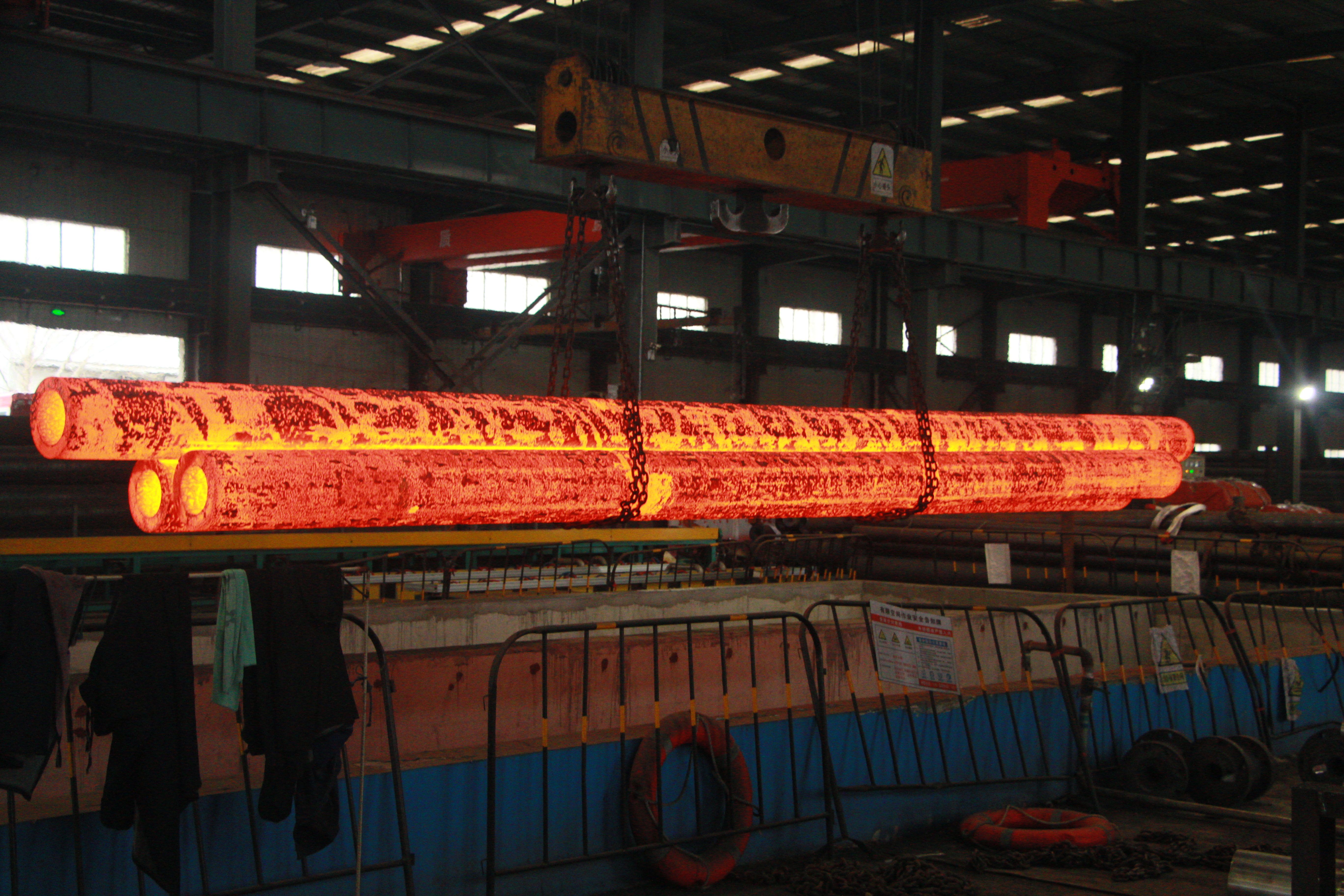
Tuoda Machinery's hot-rolled steel production line supplies high-strength seamless steel pipes for heavy duty hydraulic cylinder manufacturing.
Step-by-Step: How to Evaluate Heavy Duty vs. Standard Cylinders
Use the following six steps to run a fact-based comparison for a specific machine or project.
Use Cases: Where the Heavy Duty Performance Gap Matters Most
- Construction machinery (hydraulic excavators, crushers): these machines operate under high cyclic loads; hydraulic excavators and crushers are listed applications of Tuoda Machinery's high-pressure range (31.5–63 MPa).
- Mining equipment: mobile hydraulics, including construction and mining equipment, account for more than 58% of the total hydraulics market (Grand View Research, 2024). Large bore cylinders above 150 mm hold approximately 27.4% of market revenue, driven by large mining excavators and tunnel boring machines (Dataintelo, 2025).
- Industrial presses: four-column hydraulic presses are a listed application for the 31.5–63 MPa range, where sustained pressure and structural rigidity decide performance.
- Marine hydraulic systems: marine steering gear and anchor winches are listed applications of the high-pressure range.
- High-pressure test benches and specialized equipment: material pressure-testing apparatus and high-pressure water jet cutting machines fall in the ultra-high-pressure category (above 63 MPa).
- Military equipment: artillery recoil systems are listed among the ultra-high-pressure applications.
Replacement and Upgrade Considerations
Buyers upgrading existing machines from standard to heavy duty cylinders must verify more than bore and stroke. Mounting dimensions and rod-end interfaces determine whether a replacement cylinder fits without modification; ISO 6022 and ISO 6020 exist precisely to preserve interchangeability across manufacturers. When the application shifts to a higher load class — for example, increasing press force or excavator capacity — the cylinder must be re-evaluated for pressure class, sealing system, and efficiency, not just physical size. Non-standard bore/stroke combinations and custom mounting styles are part of the heavy duty category definition, which is built to the buyer's exact needs. Tuoda Machinery's customization workflow (application analysis, drawing verification, material selection, manufacturing and honing, inspection, testing, and delivery) covers these checks before production begins.
Comparison Table: Standard vs. Heavy Duty Hydraulic Cylinders
| Dimension | Standard hydraulic cylinder | Heavy duty hydraulic cylinder (Tuoda Machinery) |
|---|---|---|
| Material and design | Conventional duty-cycle material | High-strength material; design tailored for extreme conditions, long stroke, large bore, and high pressure |
| Performance envelope | General-purpose limits | Bore up to 36 inches; stroke up to 40 ft; pressure up to 10,000 psi |
| Typical applications | Light to medium machinery | Heavy machinery, hydraulic presses, marine hydraulic systems, specialized equipment, military equipment, high-pressure test benches |
| Initial cost | Lower | Higher |
| Total cost of ownership | Higher over the lifecycle | Lower over the lifecycle; the lowest-priced quote is not necessarily the cheapest solution |
| Maintenance | Standard service intervals | Longer lifespan in equivalent service |
| Efficiency | Standard sealing and flow design | High-efficiency sealing system reduces energy consumption; optimized flow design reduces pressure loss |
Comparison based on Tuoda Machinery's published heavy duty cylinder specification and attributed market/standard data (Global Market Insights; Grand View Research; Dataintelo; ISO/TC 131; World Integrated Trade Solution).
FAQ
1. What standards apply when selecting heavy duty hydraulic cylinders?
ISO 6022 (250 bar series) and ISO 6020 (160 bar series) govern mounting dimensions and interchangeability for heavy duty hydraulic cylinders in industrial applications (ISO/TC 131). Material standards also matter: Tuoda Machinery manufactures steel pipe products in compliance with EN10210, EN10305, API 5L, A335, A333, and A106, under ASTM and CE frameworks. Buyers should ask suppliers to confirm both the cylinder standard and the raw-material standard applied.
2. What performance limits can heavy duty hydraulic cylinders reach?
Compared with standard cylinders, the heavy duty performance gap is bore up to 36 inches, stroke up to 40 ft, and pressure up to 10,000 psi. Tuoda Machinery produces high-pressure cylinders rated at 31.5–63 MPa and ultra-high-pressure cylinders above 63 MPa. This envelope covers hydraulic excavators, crushers, four-column hydraulic presses, marine steering gear, anchor winches, water jet cutting machines, artillery recoil systems, and material pressure-testing apparatus.
3. How do heavy duty hydraulic cylinders reduce energy loss and extend service life?
Two design elements are specified in the heavy duty category: a high-efficiency sealing system reduces energy consumption, and an optimized flow design reduces pressure loss. Tuoda Machinery applies metal-to-metal sealing, high-performance polyurethane seals, forged valve bodies, and overpressure protection devices. The expected result is a longer lifespan than a standard cylinder under the same extreme-duty conditions.
4. Are heavy duty hydraulic cylinders worth the higher initial cost?
Heavy duty hydraulic cylinders have a higher initial cost than standard cylinders, but they offer a lower total cost of ownership over the lifecycle. When downtime, replacement frequency, maintenance labor, and energy consumption are included, the lowest-priced quote is not necessarily the cheapest solution. For extreme-duty applications, the lifecycle comparison is the relevant decision basis.
5. Can heavy duty hydraulic cylinders be manufactured to exact specifications, and how do I request a quote?
Yes. Tuoda Machinery provides end-to-end customization: application analysis, drawing verification, material selection, manufacturing and honing, inspection, testing, and final delivery, for standard and non-standard parts, from single-piece/small-batch runs to mass production. Before shipment, cylinders pass pressure testing and multiple quality inspections. To request a quote, a drawing review, or a sample discussion, contact Olivia (olivia@sdtuoda.com, +86 13290268388, WhatsApp: +8613290268388). A company brochure with product and capability information is available for download.
Conclusion
The decision between a standard and a heavy duty hydraulic cylinder is not a first-price decision. Heavy duty cylinders use high-strength material, are designed for extreme conditions, and reach bore up to 36 inches, stroke up to 40 ft, and pressure up to 10,000 psi. These capabilities cost more upfront and cost less over the lifecycle, which is why the lowest-priced quote is not necessarily the cheapest solution.
Tuoda Machinery supports this decision with custom manufacturing from application analysis to final delivery, backed by pressure testing and multiple quality inspections before shipment. For a quote or a drawing review, contact Olivia at olivia@sdtuoda.com or +86 13290268388 (WhatsApp: +8613290268388).
Contact Tuoda Machinery
Shandong Tuoda Machinery Equipment Co., Ltd. (Tuoda Machinery) — Liaocheng, Shandong, China
Email: olivia@sdtuoda.com | Tel/WhatsApp: +86 13290268388
Blog: blog.sdtdsteel.com
Brochure: Download company brochure (PDF)
Have Questions or Need More Details?
Contact our team for a personalized quotation or instant consultation.
Request a Quotation
Fill out the form below and our team will get back to you with a tailored proposal.
WhatsApp Direct Chat
Prefer to chat in real-time? Message us on WhatsApp for instant assistance & quick answers.
- Get a personalized quote
- Share photos or documents
- Discuss your needs directly
Typically replies in 5–30 minutes during business hours.