Heavy Duty Hydraulic Cylinders 101: Types, Applications, and Selection Fundamentals
Heavy Duty Hydraulic Cylinders 101: Types, Applications, and Selection Fundamentals
Every piece of heavy equipment that lifts, digs, presses, or steers relies on a component most people never see—the hydraulic cylinder. A heavy duty hydraulic cylinder converts hydraulic energy into mechanical energy through linear reciprocating motion. It is a core component for linear drives in construction machinery, mining equipment, hydraulic presses, marine hydraulic systems, specialized equipment, and high-pressure test benches. This guide is written for buyers at the awareness and research stage: it explains what makes a cylinder heavy duty, how heavy-duty cylinders differ from standard designs, what performance levels are possible, and how to begin specifying one.
Why Standard Cylinders Fall Short in Extreme-Duty Applications
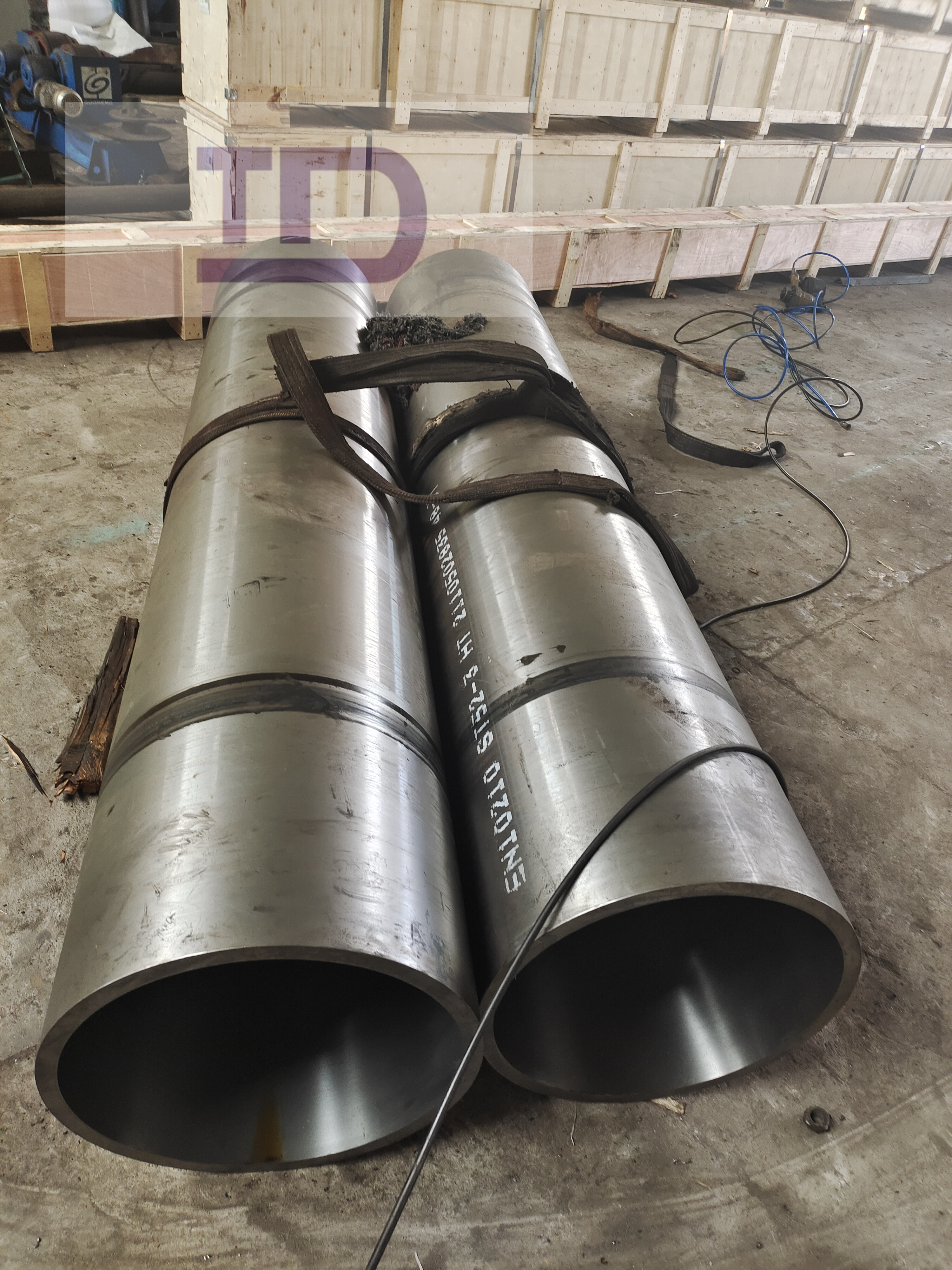
Standard hydraulic cylinders are designed for controlled, relatively predictable working conditions. In heavy industry, conditions are rarely controlled. High temperature, dusty, high humidity, marine environments, outdoor exposure, mining debris, impact, and slurry can push a standard cylinder beyond its limits. The core difference in a heavy duty hydraulic cylinder is the use of high-strength material and design tailored for extreme conditions, long stroke, large bore, and high pressure. Heavy-duty designs can offer bore up to 36 inches, stroke up to 40 feet, and pressure up to 10,000 psi—a significant performance gap over standard cylinders.
Buyers evaluating replacement cylinders should also understand what manufacturing quality means. Special requirements for extreme-duty applications include internal bore dimensional stability (batch consistency), straightness, internal bore roughness, concentricity, and stable lead times. These factors determine whether a cylinder will run smoothly under heavy side loads, high cycle counts, and contaminated environments. Premature seal wear, scoring, and oil leakage are often the first signs that these specifications were not met.
Industry Background: The Growing Demand for Heavy Duty Cylinders
The heavy duty cylinder segment is growing along with mobile and industrial equipment. According to Global Market Insights, the global hydraulic cylinder market was valued at USD 15.7 billion in 2024 and is projected to reach USD 24.7 billion by 2034. Double-acting hydraulic cylinders dominated the industry with a 70% market share in 2024, favored for precision-driven heavy-duty construction and robotics. Grand View Research reports that mobile hydraulics, including construction and mining equipment, accounted for over 58% of the total hydraulics market share in 2024. Dataintelo data shows that large bore hydraulic cylinders with bore size greater than 150 mm held approximately 27.4% of market revenue in 2025, driven by demand for large mining excavators and tunnel boring machines.
For buyers, these figures reinforce a practical point: heavy duty cylinders are a core, growing segment, not a niche product. The market also has clear reference standards. Heavy-duty hydraulic cylinders for industrial applications are governed by ISO 6022 (250 bar series) and ISO 6020 (160 bar series) for mounting dimensions and interchangeability. In addition, large global players such as Caterpillar and Parker Hannifin operate in this market; according to Global Market Insights, Caterpillar held over 8% of global share in 2024, while Worldmetrics estimated Parker Hannifin at approximately 12% share in 2023. China is also integrated into this supply chain: exports of hydraulic power engines and motors, including cylinders, from China to the US reached approximately USD 80.4 million in 2024, according to WITS.
What Defines a Heavy Duty Hydraulic Cylinder?
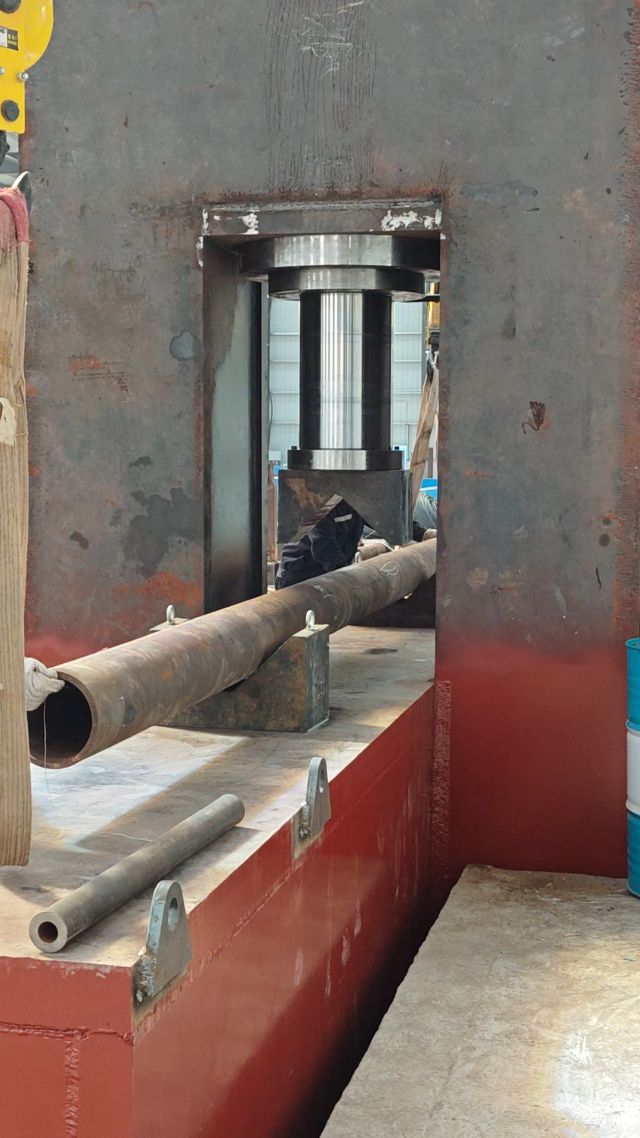
A heavy duty hydraulic cylinder is a linear actuator designed to operate under sustained high pressure, shock loads, and environmental stress. In a complete hydraulic system, the cylinder works together with the cylinder barrel, piston rod, piston, gland/head, end cap, sealing system, guide bush, and ports. The barrel must contain the pressure and absorb mechanical shock; the piston converts pressure into force; the rod transmits that force to the machine; and the sealing system prevents leakage and contamination ingress.
Materials are a major differentiator. Common heavy-duty cylinder materials include ST52, S355, E355, C45, SAE1045, and 42CrMo4, all of which can be selected and customized according to the application. In manufacturing, cylinder barrels are often produced from thick-walled seamless steel pipe. When evaluating a supplier, technical parameters such as ISO hole dimension tolerances H8/H9 and arithmetic roughness Ra ≤ 0.4 μm are useful indicators of internal bore quality. In the Tuoda Machinery product range, hydraulic cylinder barrels can be manufactured with outer diameters from 20 mm to 800 mm and wall thicknesses from 3 mm to 50 mm, depending on the design requirement.
Cylinder Types and Motion Control
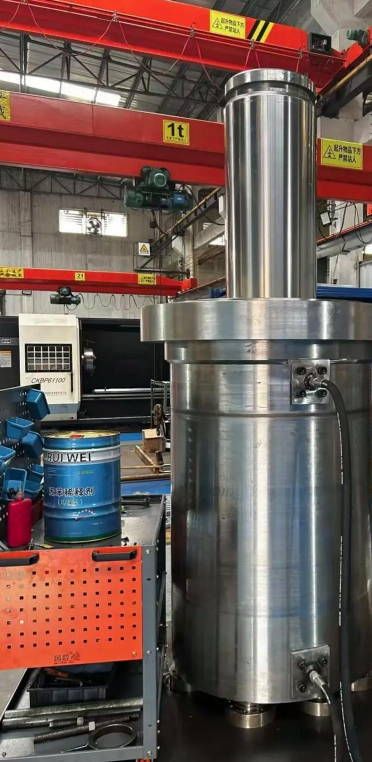
Heavy duty cylinders are available in several configurations. Piston cylinders are widely used in industrial machinery; they generate linear push/pull force through a piston attached to a rod. Plunger cylinders often serve long-stroke pushing applications where rod buckling must be minimized. Telescopic (multi-stage) cylinders nest multiple stages, allowing a long total stroke in a compact retracted length. Rotary (oscillating) cylinders produce limited angular motion instead of linear motion, which suits specialized rotating equipment. Many heavy-duty applications use double-acting cylinders, which use hydraulic fluid for both extension and retraction; double-acting operation is common in construction and robotics, and it held 70% of the hydraulic cylinder market in 2024 according to Global Market Insights. Upgrading from single-acting to double-acting is a common high-load upgrade; the conversion requires changes to porting, seals, and sometimes the control valve.
Pressure Classes
Pressure rating is one of the clearest technical thresholds. In the Tuoda Machinery product line, high-pressure hydraulic cylinders are designed for 31.5 MPa to 63 MPa, while ultra-high-pressure cylinders exceed 63 MPa. Ultra-high-pressure versions are used in specialized equipment such as high-pressure water jet cutting machines and material pressure-testing apparatus. When comparing quotes, do not rely on a single pressure number alone; confirm that the cylinder design, seals, and barrel material match the pressure class and the shock loads in the actual duty cycle.
How to Specify a Heavy Duty Hydraulic Cylinder: Step-by-Step
Use the following steps to translate an application requirement into a cylinder specification.
Step 1: Define Load and Operating Pressure
Calculate the force needed for the application. Force is a function of effective piston area and system pressure. Then confirm the maximum working pressure and any transient pressure peaks that can occur during operation.
Step 2: Select Bore Size and Stroke Length
The bore size determines the theoretical force output; the stroke determines the travel distance. Heavy-duty applications may require long strokes and large bores, so confirm that the chosen design can handle rod deflection and side loading.
Step 3: Choose the Cylinder Type
Match the motion profile to the cylinder type: piston, plunger, telescopic, or rotary. For machines with limited mounting space and long travel, telescopic cylinders are often the preferred option.
Step 4: Analyze the Operating Environment
Identify whether the cylinder will face high temperature, dust, high humidity, marine conditions, outdoor exposure, mining debris, impact, or slurry. For corrosive, abrasive, or low-temperature environments, additional sealing and material specifications may be required.
Step 5: Specify Materials and Sealing
Select materials such as ST52, S355, E355, C45, SAE1045, or 42CrMo4 based on strength, toughness, and corrosion resistance. For sealing, heavy-duty cylinders often need high-performance sealing systems that can handle pressure spikes and contamination.
Step 6: Verify Manufacturing Quality
Ask the supplier about internal bore dimensional stability, straightness, internal bore roughness, and concentricity. These parameters are especially important when cylinders are produced in batches or integrated into complete hydraulic systems. Check ISO hole dimension tolerances and surface roughness values in the manufacturer's specification.
Step 7: Confirm Lead Time and Support
Stable lead time is a special requirement in many heavy-duty applications. Confirm the delivery schedule, drawing approval process, and after-sales support before placing an order. For custom cylinders, lead time often depends on the complexity of the barrel, sealing, and mounting configuration.
Use Cases for Heavy Duty Hydraulic Cylinders
Heavy duty hydraulic cylinders are applied in heavy machinery, hydraulic presses, marine hydraulic systems, specialized equipment, military equipment, and high-pressure test benches. They also supply components for construction machinery and mining equipment, including hydraulic excavators, crushers, four-column hydraulic presses, marine steering gear, and anchor winches. These are linear actuation tasks that require high force, precise guidance, and reliable sealing under harsh conditions.
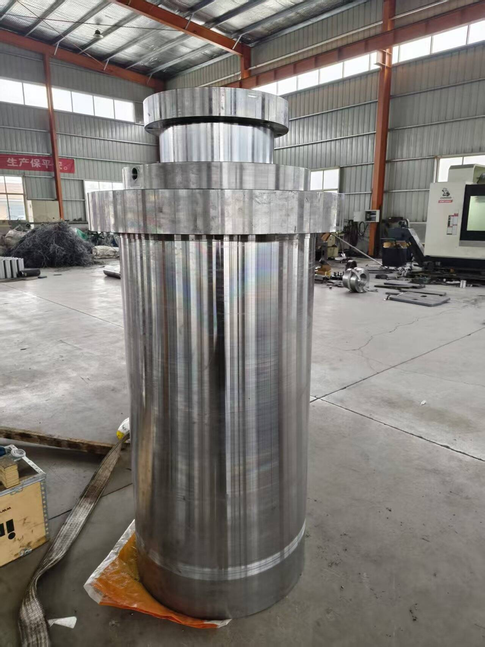
The operating environment is typically severe: high temperature, dusty, high humidity, marine, outdoor, mine, impact, and slurry conditions. These environments are present across a wide geographic range; typical application regions include China, India, Turkey, Vietnam, Indonesia, Canada, Germany, the United Kingdom, and Sweden. For a buyer, this means the cylinder must be specified not only for the maximum force but for the full cycle of environmental stress it will encounter.
Heavy Duty Cylinder Types at a Glance
| Cylinder Type | Operating Principle | Typical Heavy-Duty Use |
|---|---|---|
| Piston Cylinder | Piston attached to a rod produces linear push/pull force. | Hydraulic presses, construction machinery, industrial equipment. |
| Plunger Cylinder | Rod acts as plunger; often optimized for long-stroke pushing. | Lifting equipment, press systems, specialized linear drives. |
| Telescopic (Multi-stage) Cylinder | Nested stages extend sequentially; long stroke in compact retracted length. | Dump trucks, mobile equipment, lifting platforms. |
| Rotary (Oscillating) Cylinder | Converts hydraulic pressure into limited angular motion. | Specialized attachments, rotating or steering systems. |
Note: operating mode also matters. Single-acting cylinders use pressure in one direction and return by gravity, spring, or external force. Double-acting cylinders use pressure for both extension and retraction. Double-acting designs are especially common in heavy-duty construction and robotics applications.
Frequently Asked Questions
Are heavy duty hydraulic cylinders covered by international standards?
Yes. Heavy-duty hydraulic cylinders for industrial applications are governed by ISO 6022 (250 bar series) and ISO 6020 (160 bar series) for mounting dimensions and interchangeability. When comparing suppliers, confirm that the cylinder mounting dimensions and interfaces follow the applicable ISO standard for your machine's pressure class.
What performance limits can heavy duty hydraulic cylinders reach?
Heavy-duty designs can reach bore sizes up to 36 inches, stroke lengths up to 40 feet, and pressures up to 10,000 psi, which is a significant gap over standard cylinders. In the Tuoda Machinery product range, high-pressure hydraulic cylinders are built for 31.5 MPa to 63 MPa, and ultra-high-pressure cylinders exceed 63 MPa. The achievable combination depends on material, design, and manufacturing precision.
What materials are commonly used for heavy duty hydraulic cylinders?
Common materials include ST52, S355, E355, C45, SAE1045, and 42CrMo4. These materials are chosen for strength, toughness, and compatibility with high-pressure fluid power systems. Material selection should be customized to the operating environment and pressure requirement.
Can heavy duty hydraulic cylinders be customized to existing mounting dimensions?
Yes. Manufacturers such as Shandong Tuoda Machinery Equipment Co., Ltd. offer customized hydraulic cylinders. The customization process typically includes application analysis, drawing verification, material selection, manufacturing and honing, inspection, testing, and final delivery. Custom mounting and non-standard designs are common in replacement and OEM projects.
What is the typical lead time for custom heavy duty hydraulic cylinders?
Lead time depends on design complexity, barrel size, and order quantity. In the Tuoda product range, standard delivery time is approximately 30–45 days, with customized scheduling available for special projects. Stable lead time is a key requirement for heavy-duty applications, so confirm the production schedule and drawing approval process with the manufacturer before ordering. For an application-specific recommendation, contact Olivia at olivia@sdtuoda.com or call +86 13290268388.
Next Steps: Building a Specification You Can Trust
The fundamentals are clear: define the load, pressure, stroke, environment, and motion; choose the right cylinder type and materials; and verify the manufacturer's precision and stability. A supplier with in-house manufacturing and material knowledge can simplify this process. Shandong Tuoda Machinery Equipment Co., Ltd. is an example of a manufacturer with an integrated approach. Established in 2020, the company operates a 30,000 m² facility with approximately 150 employees. Its annual production capacity reaches 1,200 units, and export business accounts for about 70% of sales, serving the EU, Asia, and South America. The company's main products include carbon seamless steel tubes, round bars, pressure cylinders, and custom hydraulic cylinders, along with deep-hole drilling and boring machines.
Need help defining your heavy duty hydraulic cylinder specification?
Contact Olivia: olivia@sdtuoda.com or +86 13290268388.
Visit the official website: www.sdtdsteel.com
Download the company brochure: Tuoda Machinery Brochure (PDF)
Have Questions or Need More Details?
Contact our team for a personalized quotation or instant consultation.
Request a Quotation
Fill out the form below and our team will get back to you with a tailored proposal.
WhatsApp Direct Chat
Prefer to chat in real-time? Message us on WhatsApp for instant assistance & quick answers.
- Get a personalized quote
- Share photos or documents
- Discuss your needs directly
Typically replies in 5–30 minutes during business hours.