Custom Heavy Duty Hydraulic Cylinder Materials & Tolerances Guide
Custom Heavy Duty Hydraulic Cylinder Materials & Tolerances Guide
Choosing the steel grade and the tolerance class is the decision that determines whether a custom heavy duty hydraulic cylinder survives a decade of cyclic load or returns to the workshop within a season. The two choices are inseparable: a bore finished to ISO H8/H9 with an arithmetic roughness of Ra ≤ 0.4 μm only delivers its designed seal life if the tube underneath it was produced from a grade that can hold that geometry under pressure.
Shandong Tuoda Machinery Equipment Co., Ltd. (Tuoda Machinery) is a custom hydraulic cylinder and seamless steel tube manufacturer based in Liaocheng, Shandong, China. Its custom cylinder programme covers six material grades as standard — ST52, S355, E355, C45, SAE1045 and 42CrMo4 — with other grades quoted on request. Bores are machined to ISO H8/H9 hole diameter tolerances, honed surfaces are specified at Ra ≤ 0.4 μm, and tube stock runs from 20 mm to 800 mm outside diameter with wall thickness from 3 mm to 50 mm.
This guide is written for the engineers and procurement specialists who have to turn an application into a purchasable specification. It sets out what each material grade is for, what each tolerance actually controls, the pressure classes those choices support, and the sequence that keeps material, bore, finish, mounting and sealing decisions aligned in one drawing.
Custom heavy duty hydraulic cylinder specification at a glance
- Materials: ST52, S355, E355, C45, SAE1045, 42CrMo4 (others customized)
- Bore tolerance: ISO H8 / H9 hole diameter tolerances
- Surface finish: arithmetic roughness Ra ≤ 0.4 μm
- Tube size range: outside diameter 20–800 mm; wall thickness 3–50 mm; wall thickness tolerance ±10%
- Lengths: 6 m, 5.8 m, 12 m and 6–12 m
- Pressure classes: 31.5–63 MPa high pressure; above 63 MPa ultra-high pressure
- Commercial framework: MOQ 1 unit; custom cylinder lead time 45–60 days; tube delivery 30–45 days
Why “Heavy Duty” Is Not a Specification
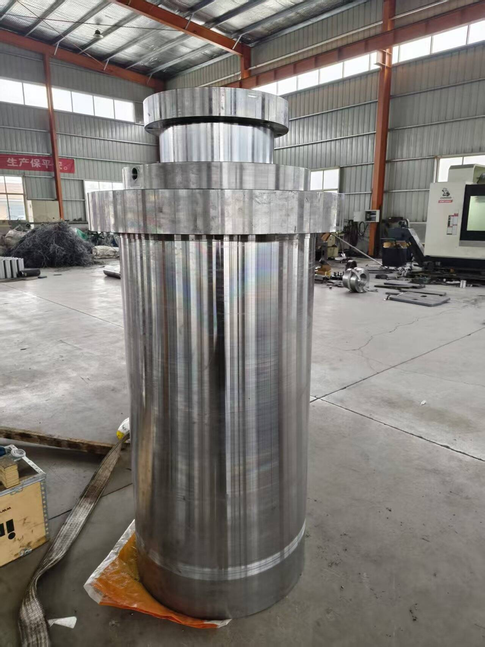
A purchase order that reads “heavy duty hydraulic cylinder, 200 mm bore, 800 mm stroke” leaves the two most consequential variables open. Material grade decides how the barrel behaves under working pressure and how a rod behaves under side load; tolerance class and surface finish decide whether the seal keeps oil where it belongs or lets it past the gland.
The ambiguity usually surfaces later in service. Oil leakage at the sealing interface, scoring on a running surface, ovality or taper after honing, a mounting pattern that will not interchange with the machine's original interface — these are not isolated material failures. They are specification failures that were locked in before the first cut.
Duty conditions raise the stakes further. Wear exposure, corrosion exposure, ambient temperature, load profile and cyclic frequency each push the material and finish decision in a different direction, which is why the same “heavy duty” label can describe a cylinder suited to a low-temperature outdoor duty and another suited to a high-pressure industrial press.
The practical rule is to name five things on one drawing: the material grade, the bore tolerance class, the surface roughness, the pressure class, and the applicable mounting standard. When any of the five is missing, the supplier fills the gap with a default — and the default is rarely the optimum for the application.
Industry Background: Why These Choices Carry More Weight in 2026
The hydraulic cylinder market was valued at USD 15.7 billion in 2024 and is projected to reach USD 24.7 billion by 2034, according to Global Market Insights. Growth of that scale concentrates in exactly the segments where material and tolerance decisions matter most.
Double-acting hydraulic cylinders dominated the industry with a 70% market share in 2024, favoured for precision-driven heavy-duty construction and robotics (Global Market Insights). Mobile hydraulics — construction and mining equipment among them — accounted for more than 58% of the total hydraulics market share in 2024 (Grand View Research). Within the segment, large bore hydraulic cylinders with a bore size above 150 mm held approximately 27.4% of market revenue in 2025, driven by large mining excavators and tunnel boring machines (Dataintelo).
The standards landscape is equally specific. Heavy-duty hydraulic cylinders for industrial applications are governed by ISO 6022 (250 bar series) and ISO 6020 (160 bar series) for mounting dimensions and interchangeability, published through ISO/TC 131 Fluid Power Systems. Those two documents are the reason a cylinder can be replaced without re-machining a machine frame — and the reason an unspecified mounting interface is a procurement risk rather than a detail.
Supply is concentrated. Caterpillar held over 8% of the global hydraulic cylinder market in 2024 (Global Market Insights), and Parker Hannifin approximately 12% of the hydraulic cylinder industry in 2023 (Worldmetrics). For buyers sourcing custom and non-standard cylinders, that concentration matters less as a competitive fact than as a durability benchmark: a custom build is measured against platform cylinders, and durability traces back to grade and tolerance discipline.
Sourcing patterns reflect the same pressure. China's exports of hydraulic power engines and motors, including cylinders, to the United States reached approximately USD 80.4 million in 2024 (World Integrated Trade Solution, World Bank) — a reminder that cross-border cylinder supply is routine, and that specification documents, not relationships, carry technical intent across a supply chain.
The Material Palette: Six Grades and Where Each Fits
A custom cylinder programme is only flexible if the material list is deliberate. Tuoda Machinery works with six grades as standard — ST52, S355, E355, C45, SAE1045 and 42CrMo4 — and quotes additional grades when a drawing calls for them. The six fall into three steel families, and the family usually settles the question before any individual property comparison begins.
| Grade | Steel family | Common role in a heavy duty cylinder | Why it is selected | What to confirm before ordering |
|---|---|---|---|---|
| ST52 | Structural steel (legacy German designation) | Barrels, tubes and general fabricated parts | Widely available, weldable structural grade with predictable machining behaviour | Supply condition, wall thickness tolerance (±10%) and impact requirement for the duty |
| S355 | Structural steel | Barrels, end caps and welded assemblies | Broad availability and good weldability for fabricated cylinder bodies | Whether a normalised condition is required for the load case |
| E355 | Structural seamless tube steel | Honed cylinder barrels and tube stock | Produced for tube applications and suited to honing to Ra ≤ 0.4 μm | Bore tolerance class (H8/H9), straightness and wall thickness tolerance |
| C45 | Medium-carbon steel | Rod-type and shaft-type components, pins | Higher strength than structural grades where a section carries concentrated load | Heat treatment condition; welding requires a controlled procedure |
| SAE1045 | Medium-carbon steel (SAE designation) | Rod-type and shaft-type components, pins | Same engineering family as C45, with SAE documentation familiar to North American buyers | Equivalence statement against the designation on the drawing |
| 42CrMo4 | Chrome-molybdenum alloy steel | High-stress rods, pins and load-bearing components | Highest hardenability and strength potential of the six standard grades | Heat treatment specification and tighter production control |
Family and role descriptions reflect general engineering practice for these standard grades; the governing selection is the project drawing, load case and required supply condition. Tuoda Machinery quotes all six grades, plus additional grades on request.
Turning that palette into a preference order is the fastest way to close a specification discussion. The shortlist below reflects how the six grades are usually ranked by duty severity:
- General-duty barrels and welded bodies — ST52 or S355. Choose these when the barrel is a fabricated assembly and weldability plus availability matter more than peak strength.
- Honed barrels where seal life is the priority — E355. Name this grade when the tube itself is the performance-critical component and the bore will be honed to Ra ≤ 0.4 μm.
- Rods and shaft-type components above structural strength — C45 or SAE1045. Specify one of these when the section is loaded beyond what a structural grade is expected to carry, and state the designation your documentation system recognises.
- Highest-stress rods, pins and load-bearing parts — 42CrMo4. The alloy grade is the preference when duty severity, not cost, drives the decision.
The Tolerance Palette: H8/H9, Ra ≤ 0.4 μm and the Dimensions Around Them
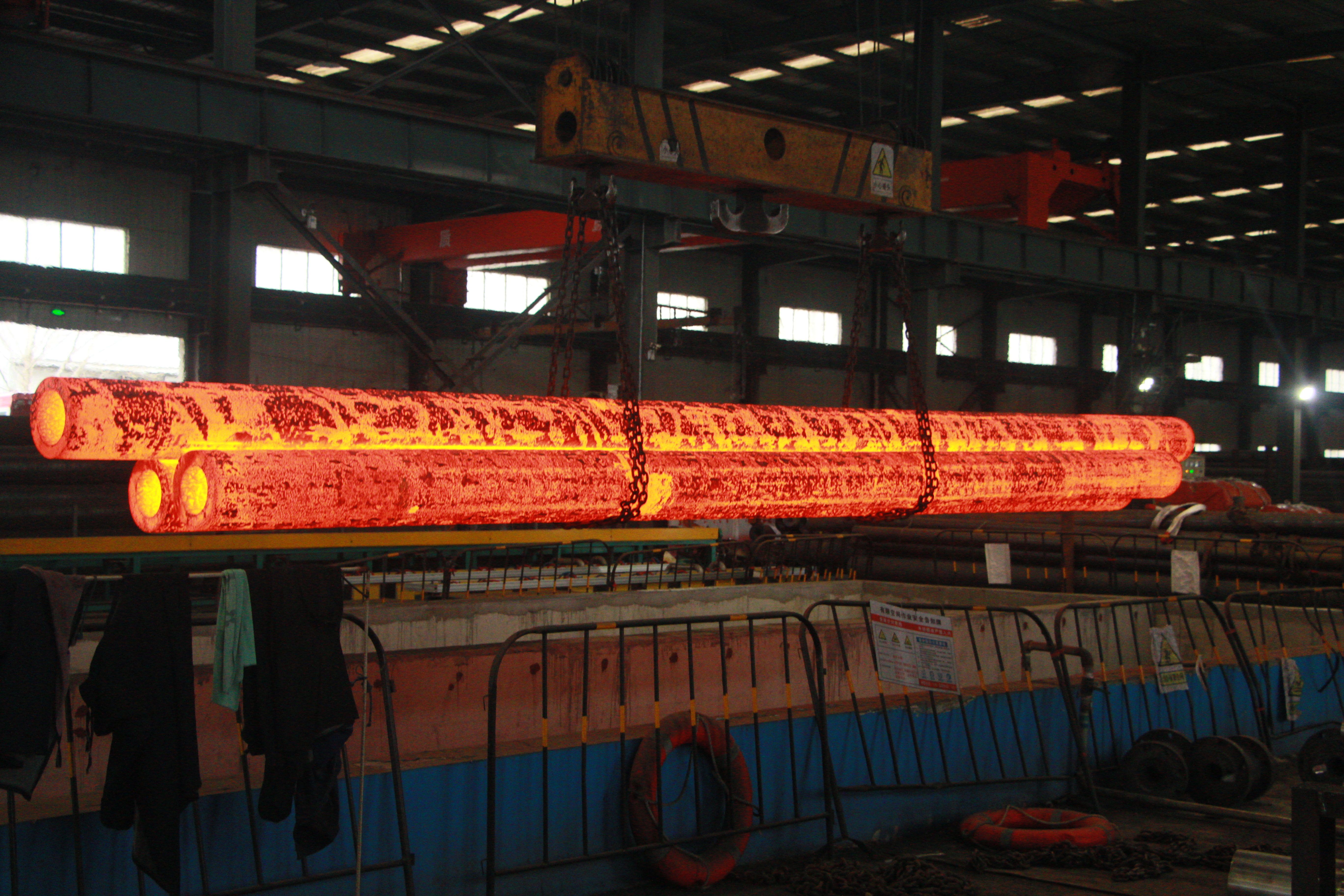
If material decides what the cylinder can withstand, tolerance decides how long it performs. Three numbers carry most of the weight in a custom heavy duty hydraulic cylinder: the hole diameter tolerance class, the arithmetic roughness of the honed bore, and the wall thickness tolerance of the tube machined into it.
Tuoda Machinery machines cylinder bores to ISO H8/H9 hole diameter tolerances and finishes honed surfaces to an arithmetic roughness of Ra ≤ 0.4 μm. H8 is the tighter of the two bore classes and H9 the wider, which is why the drawing should state which class the application requires instead of leaving the fit to a supplier default. Bore class and finish work together: the tolerance class controls the geometry of the fit, while Ra ≤ 0.4 μm controls the surface the seal actually runs against.
| Parameter | Specification | What it controls | Why the buyer should fix it on the drawing |
|---|---|---|---|
| Cylinder bore tolerance | ISO H8 / H9 hole diameter tolerances | The fit between bore and piston, and the concentricity of running surfaces | Prevents an unspecified default being applied to a sealing system designed around a defined fit |
| Surface arithmetic roughness | Ra ≤ 0.4 μm | The contact surface for dynamic sealing | Bore finish is a direct input to seal life, friction and leakage behaviour |
| Tube outside diameter | 20–800 mm | The size envelope available for custom builds | Confirms that large bore duty can be built from tube stock |
| Wall thickness | 3–50 mm | Section available for pressure duty and stiffness | Links the pressure class to a realistic wall section before design is frozen |
| Wall thickness tolerance | ±10% | Variation in wall section along the tube | Sets the machining allowance available for honing to the specified bore class |
| Tube length | 6 m, 5.8 m, 12 m, 6–12 m | Cut lengths, stroke envelopes and material yield | Long stroke heavy duty cylinders depend on how tube length is planned against stroke |
| Pressure class | 31.5–63 MPa high pressure; above 63 MPa ultra-high pressure | The operating pressure band the cylinder is designed for | Pressure class drives wall thickness, sealing concept and test requirements together |
These tolerances are not abstract. Tuoda Machinery manufactures hydraulic cylinders in-house using metal-to-metal sealing, high-performance polyurethane seals, forged valve bodies, thick-walled seamless steel pipe tubing and overpressure protection devices — a sealing concept that only works if the bore geometry and the surface finish behind it are specified and inspected rather than assumed.
The tube supply chain supporting those tolerances is specified as well. The company's steel pipe products are manufactured in compliance with international standards including ASTM and CE, adhering to EN10210, EN10305, API 5L, A335, A333 and A106, with precision honing, surface treatment and heat treatment applied where duty requires. Deep-hole machining is handled internally on T2120, T2125 and T2135 series deep hole drilling and boring machines, which are used for workpieces such as hydraulic cylinders and pneumatic cylinders and support drilling, boring and roller burnishing.
Step-by-Step: Specifying a Custom Heavy Duty Cylinder
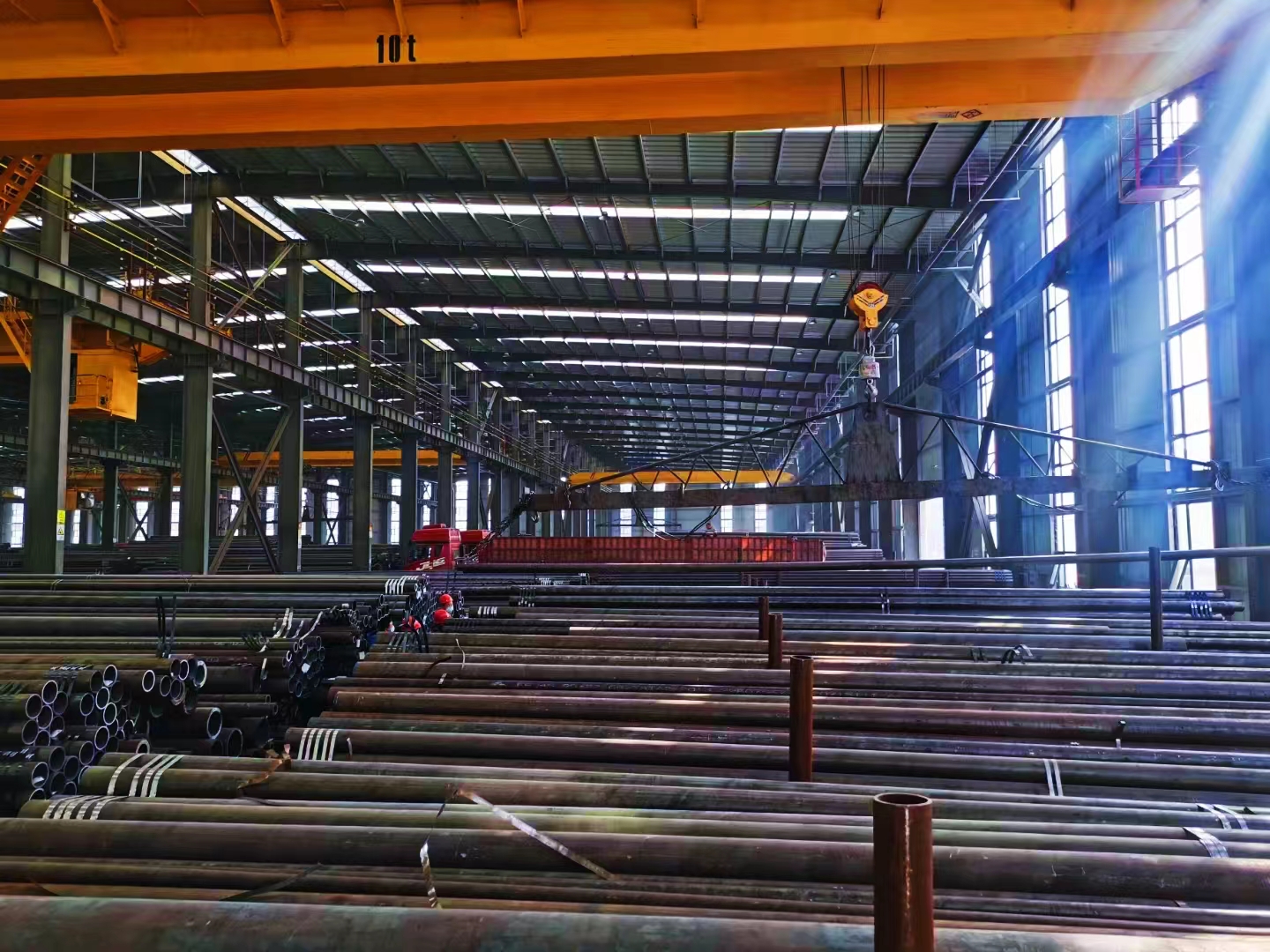
The sequence below mirrors the workflow Tuoda Machinery runs from application analysis through to delivery. Following it in order prevents the most common failure in custom cylinder procurement: material and finish choices made after the drawing is already frozen.
- Define the duty envelope. Record load, stroke, cycle frequency, ambient temperature and corrosion exposure. This converts an application into numeric constraints and determines whether the build sits in the 31.5–63 MPa high-pressure class or above 63 MPa.
- Fix bore, stroke and mounting interface. Where the cylinder must interchange with an existing machine, state the applicable mounting standard — ISO 6022 (250 bar series) or ISO 6020 (160 bar series) for industrial heavy-duty cylinders.
- Select outside diameter and wall thickness. Work within the 20–800 mm outside diameter range and the 3–50 mm wall thickness range, and confirm the wall section still leaves honing allowance under the ±10% wall thickness tolerance.
- Choose the material grade. Use the preference shortlist: ST52 or S355 for general barrels, E355 for honed barrels, C45 or SAE1045 for stronger rod and shaft components, 42CrMo4 for the most highly stressed parts. State the grade — never leave “heavy duty steel” on a drawing.
- Set the bore tolerance class. Choose H8 or H9 and write it down; this class defines the fit the piston and sealing system are designed around.
- Set the surface roughness. Specify Ra ≤ 0.4 μm for honed bore surfaces wherever dynamic sealing is involved.
- Define the sealing and protection concept. Agree the sealing approach — metal-to-metal sealing and high-performance polyurethane seals are used in Tuoda Machinery high-pressure and ultra-high-pressure cylinders — together with overpressure protection where the system requires it.
- Submit the drawing for verification. The custom workflow starts with application analysis and drawing verification before material selection is confirmed, which is where an over-tight or under-specified tolerance is caught at the lowest cost.
- Confirm manufacturing and honing steps. Barrel production, machining, heat treatment where required and honing are sequenced against the specified bore class and finish.
- Close the loop with inspection, testing and delivery. Pressure testing serves as the quality control step, and delivery is planned against the agreed schedule — 30–45 days for tube supply and 45–60 days for custom cylinder production.
Use Cases: Where Material and Tolerance Choices Are Proven
The clearest evidence for specification discipline is a unit that stays in service. In Vietnam, a heavy machinery OEM installed one unit for a straightening machine application. Over a project duration exceeding 10 years, it achieved stable operation, energy savings, reduced maintenance costs and zero major failures, with stability under extreme conditions, long lifespan and low maintenance cited as the key highlights.
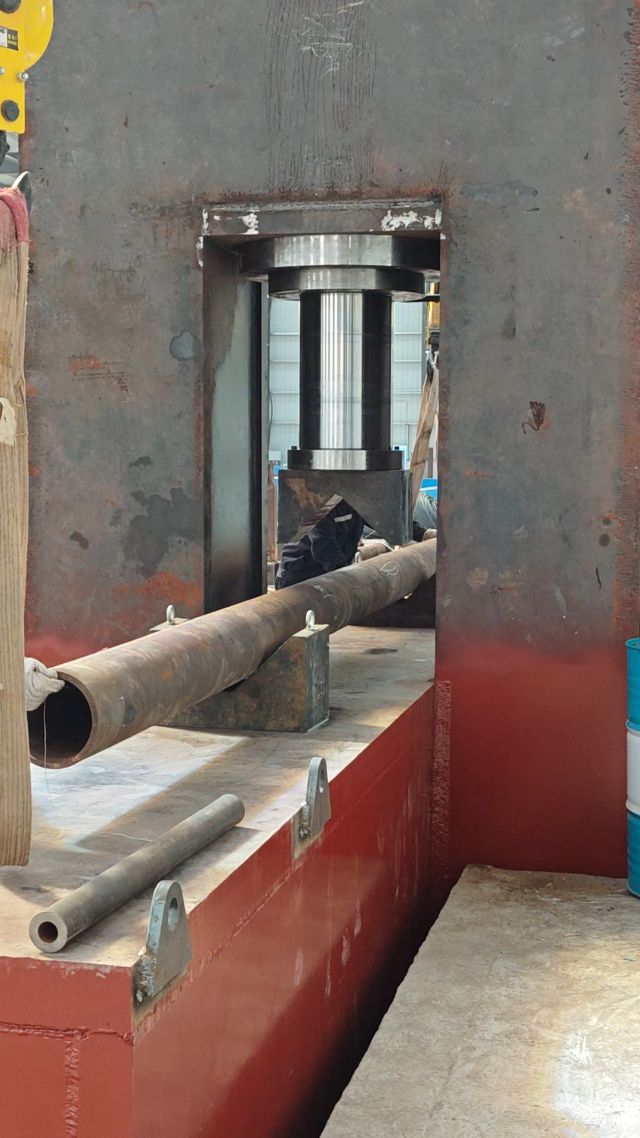
That profile — long service interval, low maintenance, no major failure — is what a correctly matched material and tolerance combination is meant to produce. It is also why the same specification logic applies across the applications these high-pressure cylinders are built for: hydraulic excavators, crushers, four-column hydraulic presses, marine steering gear and anchor winches, plus ultra-high-pressure duty in high-pressure water jet cutting machines, recoil systems and material pressure-testing apparatus.
On the demand side, those cylinders serve engineering machinery, the automotive industry and general manufacturing, with export markets including India, Turkey, Vietnam, Indonesia, Canada, Germany, the United Kingdom and Sweden. Each market brings its own documentation habits — one more reason to state grades by the designation the receiving engineering team recognises. C45 and SAE1045, for example, describe the same medium-carbon family under different naming conventions.
Comparison: Pressure Classes, Standards and Tolerance Impact
Two comparisons settle most custom cylinder briefs: which pressure class the application falls into, and which mounting standard governs interchangeability. Both are specification thresholds rather than preferences, and both interact directly with the material and tolerance choices described above.
| Comparison point | High pressure class | Ultra-high pressure class |
|---|---|---|
| Pressure range | 31.5–63 MPa | Above 63 MPa |
| Typical equipment | Hydraulic excavators, crushers, four-column hydraulic presses, marine steering gear, anchor winches | High-pressure water jet cutting machines, recoil systems, material pressure-testing apparatus |
| Material implication | Structural and medium-carbon grades from the standard palette, matched to wall section | Thick-walled seamless steel pipe tubing with higher-strength grade selection and tighter production control |
| Tolerance implication | Bore class H8/H9 with honed finish Ra ≤ 0.4 μm | Same bore and finish discipline, with sealing concept and overpressure protection reviewed together |
| Standard | Pressure series | Scope | Why it belongs on the drawing |
|---|---|---|---|
| ISO 6022 | 250 bar series | Mounting dimensions and interchangeability for heavy-duty hydraulic cylinders | Defines the interface for higher-pressure industrial duty |
| ISO 6020 | 160 bar series | Mounting dimensions and interchangeability for heavy-duty hydraulic cylinders | Defines the interface for standard industrial duty where the 250 bar series is not required |
Standard information per ISO/TC 131 Fluid Power Systems.
FAQ: Custom Heavy Duty Hydraulic Cylinder Materials and Tolerances
Which standards should govern a custom heavy duty hydraulic cylinder?
Mounting dimensions and interchangeability for heavy-duty industrial cylinders are governed by ISO 6022 (250 bar series) and ISO 6020 (160 bar series), issued through ISO/TC 131 Fluid Power Systems. On the material side, Tuoda Machinery steel pipe products are manufactured in compliance with international standards including ASTM and CE, adhering to EN10210, EN10305, API 5L, A335, A333 and A106. On the machining side, bore geometry is specified to ISO H8/H9 hole diameter tolerances and honed surfaces to an arithmetic roughness of Ra ≤ 0.4 μm, so the finished cylinder can be documented against both the mounting standard and the bore specification.
What can actually be customized — materials, dimensions and pressure ratings?
The standard material list covers ST52, S355, E355, C45, SAE1045 and 42CrMo4, with other grades quoted on request. Dimensions are built within an outside diameter range of 20–800 mm, wall thickness of 3–50 mm with ±10% tolerance, and tube lengths of 6 m, 5.8 m, 12 m or 6–12 m. Pressure coverage runs from 31.5–63 MPa for high-pressure cylinders to above 63 MPa for ultra-high-pressure designs. Beyond material and size, customization scope includes application, bore, stroke, pressure, load, system solution and logo printing, supported by in-house deep-hole machining on T2120, T2125 and T2135 series machines.
Where does the cost of a custom heavy duty cylinder concentrate?
Cost follows specification complexity rather than cylinder size alone. The main drivers are the material grade selected, the wall thickness required by the pressure class, the bore tolerance class and surface finish specified, and the number of processing steps the drawing requires — deep-hole machining, heat treatment, honing, sealing assembly and pressure testing. Over-specifying tolerance beyond the application adds processing time without adding service life, which is why the specification sequence starts with the duty envelope rather than with a target grade. Because price depends on these variables, Tuoda Machinery issues quotations against a defined drawing and application analysis rather than from a catalogue line.
Can materials and tolerances be validated before series production?
Yes. The minimum order quantity is 1 unit and the production mode is OEM/Custom, so a single-piece or small-batch build is a normal route for validating material selection and bore specification before committing to series volumes. Pressure testing is applied as the quality control step for custom cylinders, and the workflow supports inspection and testing between manufacturing and delivery. For buyers replacing an existing cylinder, the same route allows the mounting interface and bore specification to be verified on a first unit.
What lead time applies, and what is the next step?
Custom hydraulic cylinder production is scheduled at 45–60 days, while steel tube supply is delivered at 30–45 days; scheduling against those windows begins once the drawing and grade selection are confirmed. Buyers who want to move from evaluation to a concrete quotation can send application details, bore and stroke, pressure class and material preference to Tuoda Machinery, or review the full product and capability range in the company brochure before the first technical call. Contact: Olivia, olivia@sdtuoda.com, tel / WhatsApp +86 13290268388.
Conclusion: Specify the Grade, Then the Tolerance, Then Build
Material and tolerance are the two decisions that survive every other choice in a custom heavy duty hydraulic cylinder. Six standard grades — ST52, S355, E355, C45, SAE1045 and 42CrMo4 — cover the range from general fabricated barrels to the most highly stressed rods and pins. ISO H8/H9 bore tolerances, Ra ≤ 0.4 μm honed surfaces and a ±10% wall thickness tolerance inside a 20–800 mm outside diameter range define the machining envelope those grades are delivered in.
Put the five specification items on one drawing — material grade, bore tolerance class, surface roughness, pressure class and mounting standard — and the rest of the project becomes engineering rather than rework. The Vietnam straightening machine installation is a reminder of what that discipline buys: more than 10 years of stable operation with zero major failures and low maintenance.
Next step: send your duty envelope, get a specification back
Tuoda Machinery accepts custom heavy duty hydraulic cylinder builds from a single unit, with material selection, drawing verification, honing and pressure testing handled in one facility in Liaocheng, Shandong.
Download the product and capability brochure: Tuoda Machinery brochure (PDF)
Website: www.sdtdsteel.com | Email: olivia@sdtuoda.com | Tel / WhatsApp: +86 13290268388
Have Questions or Need More Details?
Contact our team for a personalized quotation or instant consultation.
Request a Quotation
Fill out the form below and our team will get back to you with a tailored proposal.
WhatsApp Direct Chat
Prefer to chat in real-time? Message us on WhatsApp for instant assistance & quick answers.
- Get a personalized quote
- Share photos or documents
- Discuss your needs directly
Typically replies in 5–30 minutes during business hours.