Long-Term Heavy Duty Hydraulic Cylinder Partnerships: FAQ on After-Sales, Lead Times & Support
Long-Term Heavy Duty Hydraulic Cylinder Partnerships: FAQ on After-Sales, Lead Times & Support
Most heavy duty hydraulic cylinder orders start small and turn into long relationships. A single unit goes into a straightening machine, an excavator, a crusher or a four-column press — and once it performs, the buyer stops evaluating the product and starts evaluating the supplier. Can the same cylinder be repeated next quarter? Will spare parts still be available years from now? What is the real lead time when a maintenance window is fixed? How is payment handled, and what gets inspected before the container leaves the factory?
This article answers those questions in the order buyers usually raise them: compliance and testing, customization capability, commercial terms, sample validation, and finally lead time and after-sales support. The answers below are based on the operating and commercial data of Tuoda Machinery — the brand of Shandong Tuoda Machinery Equipment Co., Ltd., a hydraulic cylinder and seamless steel tube manufacturer based in Liaocheng, Shandong, China.
Quick answers for buyers vetting a long-term cylinder partner
- Minimum order quantity: 1 unit
- Typical production lead time: 45–60 days
- Payment terms: T/T or L/C
- Trade terms: FOB / CIF / CFR / EXW / DDP
- Acceptance: pre-shipment test
- Quality control: pressure testing
- After-sales: repair, spare parts, and a service network
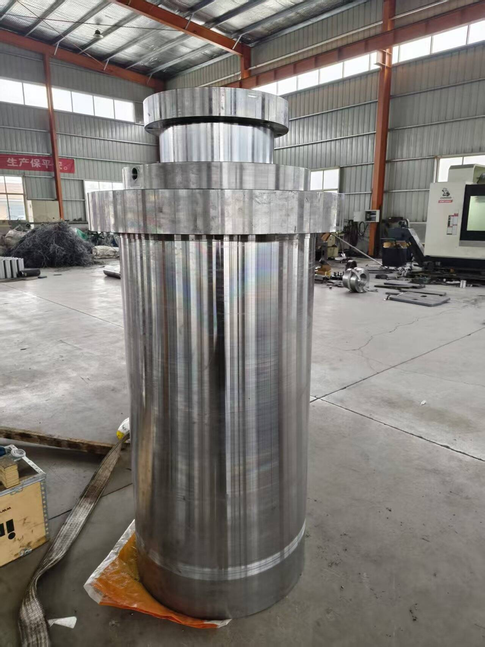
Why Long-Term Cylinder Supply Is Harder Than It Looks
A hydraulic cylinder is not a one-time purchase. It is a wear component that sits inside a machine for years, under high cyclic load, and it is usually replaced on a maintenance schedule rather than a whim. That changes what buyers actually need from a supplier: not a single successful delivery, but a repeatable one.
The failure modes in long-term cylinder sourcing are rarely about the first order. They appear on the second, third and fourth batch:
- Specification drift between production runs. If bore tolerance, surface roughness or mounting geometry shifts slightly between batches, a cylinder that fitted perfectly last year may no longer drop into the same machine without rework.
- Spare part continuity. A cylinder may run for a decade. Seals, rod ends, glands and mounting components must remain obtainable across that period, which depends on whether the original manufacturer still holds the drawings.
- Lead time that does not match the maintenance window. A quoted lead time is only useful if it is repeatable and if the buyer knows when the clock starts — at order confirmation, at drawing approval, or at deposit.
- Commercial and logistics ambiguity. Payment method, trade term, and the point at which risk transfers are decided before production, not after. Unclear terms are a common source of delay on repeat orders.
- Acceptance without evidence. If nothing is tested and documented before shipment, a defect is discovered on the customer's site instead of on the factory floor — the most expensive place to find it.
- Support that ends at the invoice. Long-cycle equipment needs repair capability, spare parts supply and technical contact long after the warranty conversation is over.
In other words, the procurement problem shifts from “which cylinder do we buy” to “which supplier can we keep buying from.” That is the problem this article addresses.
Industry Background: What the Market Data Says About Supply Risk
The demand-side context explains why continuity has become a mainstream concern rather than a niche one.
The global hydraulic cylinder market was valued at USD 15.7 billion in 2024 and is projected to reach USD 24.7 billion by 2034, according to Global Market Insights. Within that market, double-acting hydraulic cylinders dominated the industry with a 70% market share in 2024, favoured for precision-driven heavy-duty construction and robotics.
Demand is heavily concentrated in mobile equipment. Mobile hydraulics — including construction and mining equipment — accounted for over 58% of the total hydraulics market share in 2024, based on Grand View Research data. At the large end of the range, large bore hydraulic cylinders (bore size above 150 mm) held approximately 27.4% of market revenue in 2025, driven by demand for large mining excavators and tunnel boring machines, according to Dataintelo.
Two practical conclusions follow for buyers. First, the cylinders that carry the highest consequence of failure — large bore, high-pressure, mobile equipment units — are exactly the ones with the strongest demand pressure on lead times. Second, interchangeability matters. Heavy-duty hydraulic cylinders for industrial applications are governed by ISO 6022 (250 bar series) and ISO 6020 (160 bar series) for mounting dimensions and interchangeability, which is why drawings, tolerances and mounting interfaces need to stay stable across a supply relationship, not just within one order.
How Tuoda Machinery Supports Long-Term Cylinder Partnerships
Tuoda Machinery, the brand of Shandong Tuoda Machinery Equipment Co., Ltd., is a manufacturer of heavy duty hydraulic cylinders and seamless steel tube products based in Liaocheng, Shandong, China. The company operates a 30,000 m² facility with approximately 150 employees, including a 3-engineer R&D team, and an annual cylinder production capacity of about 1,200 units. Roughly 70% of output is exported, with the EU, Asia and South America as the main markets; export destinations recorded for the cylinder business include India, Turkey, Vietnam, Indonesia, Canada, Germany, the United Kingdom and Sweden.
Manufacturing depth that keeps repeat orders consistent
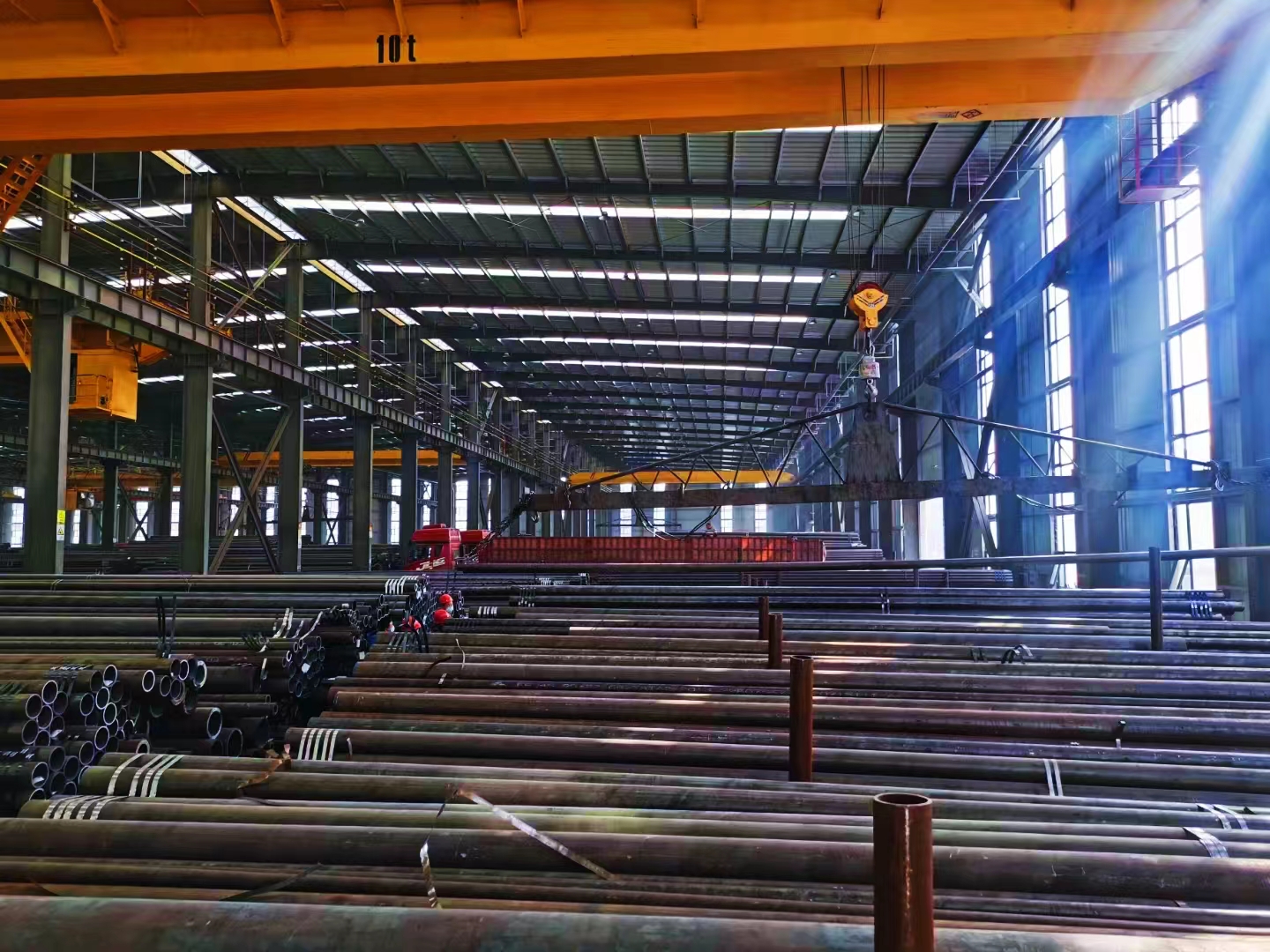
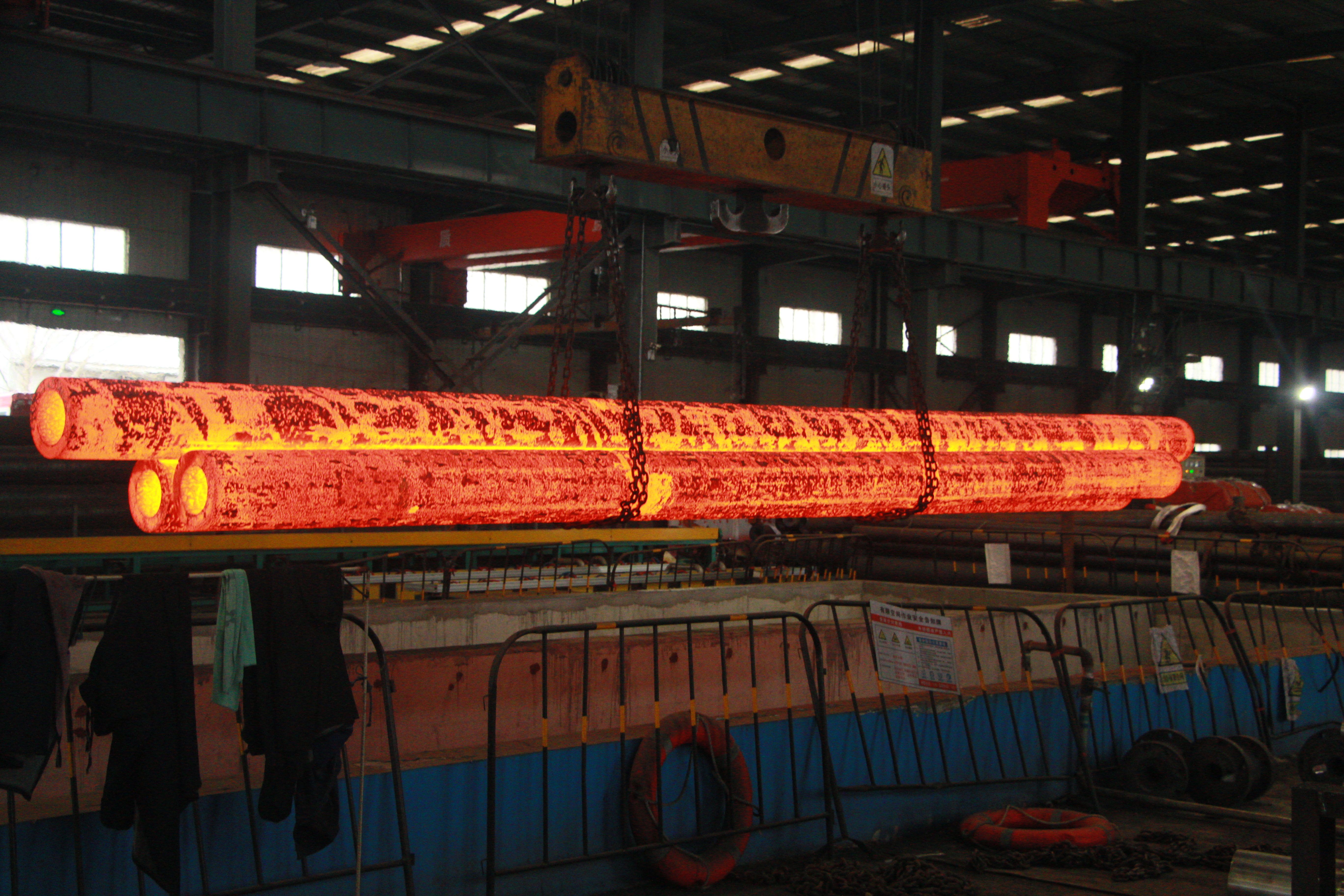
The company's origin is in steel pipe deep processing rather than assembly. It produces carbon seamless steel tube and round bars and carries out pipe deep processing, heat treatment and precision honing in-house before cylinder manufacturing begins. Steel pipe products are manufactured in compliance with international standards including ASTM and CE, adhering to specifications such as EN10210, EN10305, API 5L, A335, A333 and A106.
For buyers, vertical control of the tubing stage is the mechanism behind batch-to-batch consistency: wall thickness, material grade and internal surface quality are set upstream of cylinder assembly rather than purchased on the open market with variable specification. Cylinder materials include ST52, S355, E355, C45, SAE1045 and 42CrMo4, and can be customised.
Cylinder types and pressure classes
Tuoda Machinery manufactures piston cylinders, plunger cylinders, telescopic (multi-stage) cylinders and rotary (oscillating) cylinders. Two pressure bands are offered:
- High-pressure hydraulic cylinders (31.5 – 63 MPa): intended for heavy-duty equipment such as hydraulic excavators, crushers, four-column hydraulic presses, marine steering gear and anchor winches.
- Ultra-high-pressure hydraulic cylinders (above 63 MPa): intended for specialised equipment including high-pressure water jet cutting machines, artillery recoil systems and material pressure-testing apparatus.
Precision, sealing and dimensional range
Key technologies applied to these cylinders include metal-to-metal sealing, high-performance polyurethane seals, forged valve bodies, thick-walled seamless steel pipe tubing and overpressure protection devices. Documented dimensional and finish data for the hydraulic cylinder series includes:
- ISO hole diameter tolerances: H8 / H9
- Arithmetic roughness: Ra ≤ 0.4 μm
- Outer diameter range: 20 – 800 mm
- Wall thickness range: 3 – 50 mm
- Length options: 6 m / 5.8 m / 12 m / 6–12 m, and customised lengths
- Weight tolerance: ±10%
Supporting the cylinder line, the factory also builds T2120, T2125 and T2135 series deep hole drilling and boring machines for machining cylindrical workpieces such as hydraulic cylinders and pneumatic cylinders — equipment used on through-holes, blind holes and stepped holes, with drilling, boring and roller burnishing capability.
Step by Step: From First Inquiry to Repeat Order
For a buyer moving from evaluation into execution, the partnership runs through a predictable sequence. Each stage below corresponds to a point where terms are fixed rather than negotiated later.
- Application and drawing review. The buyer provides the application, load, stroke, bore, pressure and mounting requirement. Tuoda Machinery reviews the application and verifies drawings before quoting. Customisation scope at this stage covers application, size, bore, stroke, pressure, load, system solution, cylinders and logo printing.
- Quotation and commercial terms. Commercial terms are confirmed in writing: minimum order quantity, unit price basis, payment method (T/T or L/C) and trade term (FOB, CIF, CFR, EXW or DDP).
- Sample or first-unit validation. Because the minimum order quantity is 1 unit, a buyer can validate a single cylinder against the real application before committing to a programme, rather than ordering a batch on the strength of a catalogue drawing.
- Production scheduling. Monthly capacity is flexible and is adjusted according to order requirements. Typical production lead time is quoted at 45–60 days; the specification sheet for the heavy duty cylinder series references delivery windows of 30–45 days. Buyers should confirm the delivery date for the specific configuration at quotation stage.
- Manufacturing. Tube processing, heat treatment and honing precede machining and assembly of the cylinder, with the dimensional tolerances listed above applied at the bore and surface-finish stages.
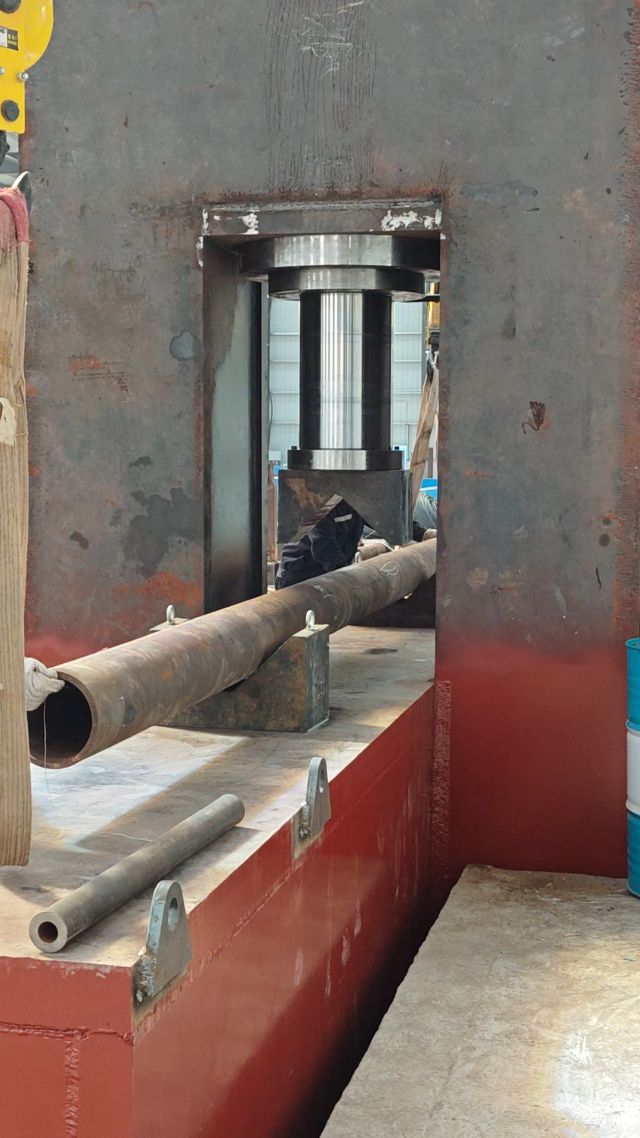
- Pressure testing and quality control. Pressure testing is performed as part of the manufacturer's quality control procedure, alongside overpressure protection provisions built into the cylinder design.
- Pre-shipment acceptance. Acceptance is based on a pre-shipment test. This places verification on the factory floor, before the goods move, instead of at the destination port or the customer's site.
- Shipping and documentation. Goods move under the agreed trade term, with the buyer's nominated forwarder or the supplier's logistics arrangement depending on whether FOB, CIF, CFR, EXW or DDP applies.
- Commissioning and after-sales. After-sales services include repair, spare parts and a service network, which is the part of the relationship that determines whether the second and third orders proceed smoothly.
Use Cases: Where Long-Term Supply Discipline Shows Up
The value of a repeatable supply relationship depends on the application. In practice, Tuoda Machinery cylinders are specified across several duty profiles:
- Construction machinery. Hydraulic excavators and crushers operating in the 31.5 – 63 MPa high-pressure band, where boom and bucket duty cycles load the cylinder continuously.
- Mining equipment. Large bore and long stroke cylinders used on heavy mobile plant — the segment Dataintelo associates with 27.4% of 2025 market revenue, driven substantially by large mining excavators and tunnel boring machines.
- Industrial presses. Four-column hydraulic presses requiring stable force output across repeated cycles.
- Marine and lifting equipment. Marine steering gear and anchor winches, where corrosion resistance and sealing integrity matter as much as force.
- Ultra-high-pressure speciality equipment. High-pressure water jet cutting machines, recoil systems and material pressure-testing apparatus above 63 MPa.
Field case: a decade-long straightening machine application
A Heavy Machinery OEM in Vietnam installed one unit of the manufacturer's hydraulic cylinder product for a straightening machine application. The project ran for over 10 years, achieving stable operation, energy savings and reduced maintenance costs, with zero major failures. The reported highlights were stability under extreme conditions, long lifespan, low maintenance and reduced cost.
Read against the procurement questions above, the case illustrates three things a buyer should look for in a partner evaluation: that single-unit orders are accepted and supported, that the same cylinder design remains serviceable over a multi-year horizon, and that maintenance cost — not purchase price — is where the total cost of a cylinder is decided.
Comparison: Cylinder Configurations and Commercial Terms
Two reference tables help buyers match a configuration to an application and compare commercial terms at a glance.
| Cylinder configuration | Pressure class | Typical use |
|---|---|---|
| Piston cylinder | High-pressure, 31.5 – 63 MPa | Excavators, crushers, four-column hydraulic presses |
| Plunger cylinder | High-pressure, 31.5 – 63 MPa | Heavy lifting and pressing duty |
| Telescopic (multi-stage) cylinder | High-pressure, 31.5 – 63 MPa | Long stroke requirements in confined mounting space |
| Rotary (oscillating) cylinder | High-pressure, 31.5 – 63 MPa | Marine steering gear, anchor winches |
| Ultra-high-pressure cylinder | Above 63 MPa | Water jet cutting, recoil systems, pressure-testing apparatus |
Configuration set and pressure bands as documented for the Tuoda Machinery hydraulic cylinder range. Material options include ST52, S355, E355, C45, SAE1045 and 42CrMo4.
| Commercial question | Documented answer | Why it matters for a long-term programme |
|---|---|---|
| Order quantity | MOQ 1 unit | Allows first-unit validation before committing to volume |
| Production lead time | 45–60 days typical; 30–45 days referenced for the cylinder series | Supports maintenance-window planning on repeat orders |
| Monthly capacity | Flexible, adjusted to order requirements | Allows ramp-up without changing supplier |
| Payment | T/T or L/C | Removes payment ambiguity before production starts |
| Trade terms | FOB / CIF / CFR / EXW / DDP | Lets buyers match terms to their own logistics capability |
| Acceptance | Pre-shipment test | Moves verification to the factory, before shipment |
| Quality control | Pressure testing | Confirms each unit against its pressure duty |
| After-sales | Repair, spare parts, service network | Sustains the cylinder over its full service life |
Commercial terms as published for Tuoda Machinery heavy duty hydraulic cylinder supply.
FAQ: Long-Term Heavy Duty Hydraulic Cylinder Partnerships
What standards apply to heavy duty hydraulic cylinders, and what is tested before shipment?
Heavy-duty hydraulic cylinders for industrial applications are governed by ISO 6022 (250 bar series) and ISO 6020 (160 bar series) for mounting dimensions and interchangeability. At Tuoda Machinery, pressure testing is performed as part of quality control, and acceptance is based on a pre-shipment test carried out before the goods are dispatched. The steel pipe used in production is manufactured in compliance with international standards including ASTM and CE, adhering to specifications such as EN10210, EN10305, API 5L, A335, A333 and A106.
What exactly can be customised on a heavy duty hydraulic cylinder?
Tuoda Machinery provides OEM and custom production services. Customisation covers application, size, bore, stroke, pressure, load, system solution, cylinders and logo printing. Dimensional data for the cylinder series includes ISO hole tolerances of H8 / H9, arithmetic roughness of Ra ≤ 0.4 μm, an outer diameter range of 20 – 800 mm, wall thickness of 3 – 50 mm, and length options of 6 m, 5.8 m, 12 m, 6–12 m or customised. Material options include ST52, S355, E355, C45, SAE1045 and 42CrMo4.
What is the minimum order quantity for heavy duty hydraulic cylinders?
The minimum order quantity is 1 unit. This is significant for buyers in the evaluation stage: a single cylinder can be ordered, installed and tested in the real application before a larger programme is committed. Custom configurations — including non-standard bore, stroke, mounting or material — are handled through the same order path.
How does production capacity support a long-term supply programme?
Tuoda Machinery operates a 30,000 m² facility with approximately 150 employees, a 3-engineer R&D team and an annual cylinder output of about 1,200 units. Monthly capacity is flexible and can be adjusted according to order requirements. Roughly 70% of production is exported to the EU, Asia and South America, with recorded cylinder export destinations including India, Turkey, Vietnam, Indonesia, Canada, Germany, the United Kingdom and Sweden.
What payment methods are accepted?
Payment is accepted by T/T or L/C. Because payment method, trade term and delivery date are confirmed together at quotation stage, buyers know the cash-flow and risk position before production begins rather than negotiating it after the order is placed.
Which trade terms are available for shipping?
FOB, CIF, CFR, EXW and DDP are all available. The choice determines where risk and logistics responsibility transfer, so it is normally matched to the buyer's own freight capability and import arrangements rather than selected by default.
What is the typical delivery time for a heavy duty hydraulic cylinder?
The typical production lead time is 45–60 days. The specification sheet for the heavy duty cylinder series also references delivery windows of 30–45 days. Because lead time depends on configuration, current scheduling and the point at which production starts, buyers should confirm the delivery date for the specific cylinder at quotation stage, particularly where a fixed maintenance window applies.
How is a custom cylinder validated before volume ordering?
Validation runs through the standard order path: application and drawing review, quotation, then a single-unit order at the MOQ of 1 unit. The unit is produced using the same materials and tolerances as series production, pressure tested as part of quality control, and released against a pre-shipment test. Once the first unit performs in service, the same drawing becomes the reference for repeat orders.
What after-sales support is provided after delivery?
After-sales services include repair, spare parts and a service network. In long-cycle equipment this is the part that determines whether the second and third orders proceed smoothly, since a cylinder remains in service for years after installation. The published field case — a Heavy Machinery OEM in Vietnam running a straightening machine cylinder for over 10 years with zero major failures, energy savings and reduced maintenance costs — reflects that lifecycle rather than a single delivery.
How does a buyer start a supply relationship or request a quotation?
Buyers can start with an application description and the relevant drawings. Contact Olivia at olivia@sdtuoda.com, by telephone or WhatsApp at +86 13290268388, or through the company website at www.sdtdsteel.com. The full product and capability documentation is available in the Tuoda Machinery brochure.
Conclusion: What a Long-Term Cylinder Partner Should Be Able to Answer
A heavy duty hydraulic cylinder partnership is not decided by a catalogue. It is decided by whether the supplier can answer a small set of operational questions without ambiguity: what is tested and against which standard, what can be customised, what the minimum order is, how payment and shipping are handled, how long production actually takes, and what happens in year five when the cylinder needs repair or a replacement seal.
Measured against that list, Tuoda Machinery documents a minimum order quantity of 1 unit, a typical production lead time of 45–60 days, T/T or L/C payment, FOB / CIF / CFR / EXW / DDP trade terms, pre-shipment acceptance testing, pressure testing as a quality control step, and after-sales support covering repair, spare parts and a service network — backed by a 30,000 m² facility, approximately 150 employees, a 3-engineer R&D team, an annual output of about 1,200 units and roughly 70% of production exported to the EU, Asia and South America.
For buyers in the evaluation and execution stage, the practical next step is a single-unit order against a real application. One cylinder, built to the final drawing and tested before shipment, answers more questions about a long-term supplier than any specification sheet can.
Next Step: Review the Capability Data, Then Order One Unit
Send your application details and drawings to Olivia at olivia@sdtuoda.com or WhatsApp +86 13290268388. The complete product and manufacturing documentation — including cylinder configurations, materials and dimensional data — is available in the Tuoda Machinery brochure.
Download the brochure: Tuoda Machinery Product & Capability Brochure (PDF)
Shandong Tuoda Machinery Equipment Co., Ltd. — No. 853 South Liaoniu Road, Dongchangfu District, Shandong, China. Website: www.sdtdsteel.com
Have Questions or Need More Details?
Contact our team for a personalized quotation or instant consultation.
Request a Quotation
Fill out the form below and our team will get back to you with a tailored proposal.
WhatsApp Direct Chat
Prefer to chat in real-time? Message us on WhatsApp for instant assistance & quick answers.
- Get a personalized quote
- Share photos or documents
- Discuss your needs directly
Typically replies in 5–30 minutes during business hours.