Decoding Heavy Duty Hydraulic Cylinder Parameters: How Production Process Impacts Performance
Decoding Heavy Duty Hydraulic Cylinder Parameters: How Production Process Impacts Performance
When procuring heavy duty hydraulic cylinders, international buyers often face a maze of technical specifications—bore, stroke, pressure rating, material grades, surface finishes. Understanding what these parameters really mean and how they are influenced by the manufacturing process is the key to selecting a cylinder that delivers long-term reliability under extreme conditions. This guide explains the critical technical parameters of high-pressure heavy duty hydraulic cylinders, reveals how production quality directly affects performance, and provides a practical framework for evaluating suppliers.
What Are Heavy Duty Hydraulic Cylinders?
A heavy duty hydraulic cylinder is a linear actuator designed to convert hydraulic energy into mechanical force for applications requiring extremely high loads, pressures, and reliability. Unlike standard cylinders, these units are built with thicker walls, stronger materials, and advanced sealing systems to withstand harsh environments—from construction sites to mining operations and industrial presses.
Key characteristics that define a heavy duty hydraulic cylinder include:
- Large bore (≥36 inches) and long stroke (≥40 feet) capabilities
- High operating pressure up to 10,000 psi (690 bar)
- Double-acting design for controlled extension and retraction
- Wear-resistant and corrosion-resistant materials
- Ability to handle extreme temperatures, dust, moisture, and impact loads
Why Technical Parameters Matter: The Link to Real-World Performance
Every specification on a datasheet tells a story about how the cylinder was designed and manufactured. Here we decode the most critical parameters and explain their practical significance.
1. Bore Diameter and Wall Thickness
The bore diameter directly determines the theoretical force output—larger bore equals higher force at the same pressure. However, the wall thickness must be adequate to contain the pressure without yielding or bursting. For large bore heavy duty hydraulic cylinders, wall thickness is often 3–50 mm, and the outer diameter can range from 20–800 mm (per Tuoda Machinery's standard specifications). The ratio of wall thickness to bore is a key indicator of the cylinder's safety margin.
2. Pressure Rating (Working and Burst)
High-pressure heavy duty hydraulic cylinders are commonly rated at 31.5–63 MPa (4,570–9,140 psi), with ultra-high-pressure versions exceeding 63 MPa. The true capability depends on material strength, weld quality, end cap design, and seal integrity. Always verify the rated working pressure and the burst pressure—a safety factor of 2.5–3x is standard in heavy-duty designs.
3. Stroke Length and Overall Length
Long stroke heavy duty hydraulic cylinders (≥12 m) present challenges in manufacturing, such as maintaining straightness and preventing buckling under load. The column strength of the piston rod and the support of the guide bush become critical. Suppliers like Tuoda Machinery offer lengths from 6 m, 5.8 m, 12 m, or 6–12 m, with weight tolerance of ±10% and delivery in 30–45 days.
4. Surface Finish and Tolerances
The internal bore finish is a hidden but vital parameter. Tuoda Machinery specifies an arithmetic roughness of Ra ≤ 0.4 μm and hole diameter tolerance H8/H9 per ISO standards. This level of smoothness ensures low friction, long seal life, and minimal internal leakage. Achieving these tolerances requires precision honing and careful quality control.
5. Material Selection
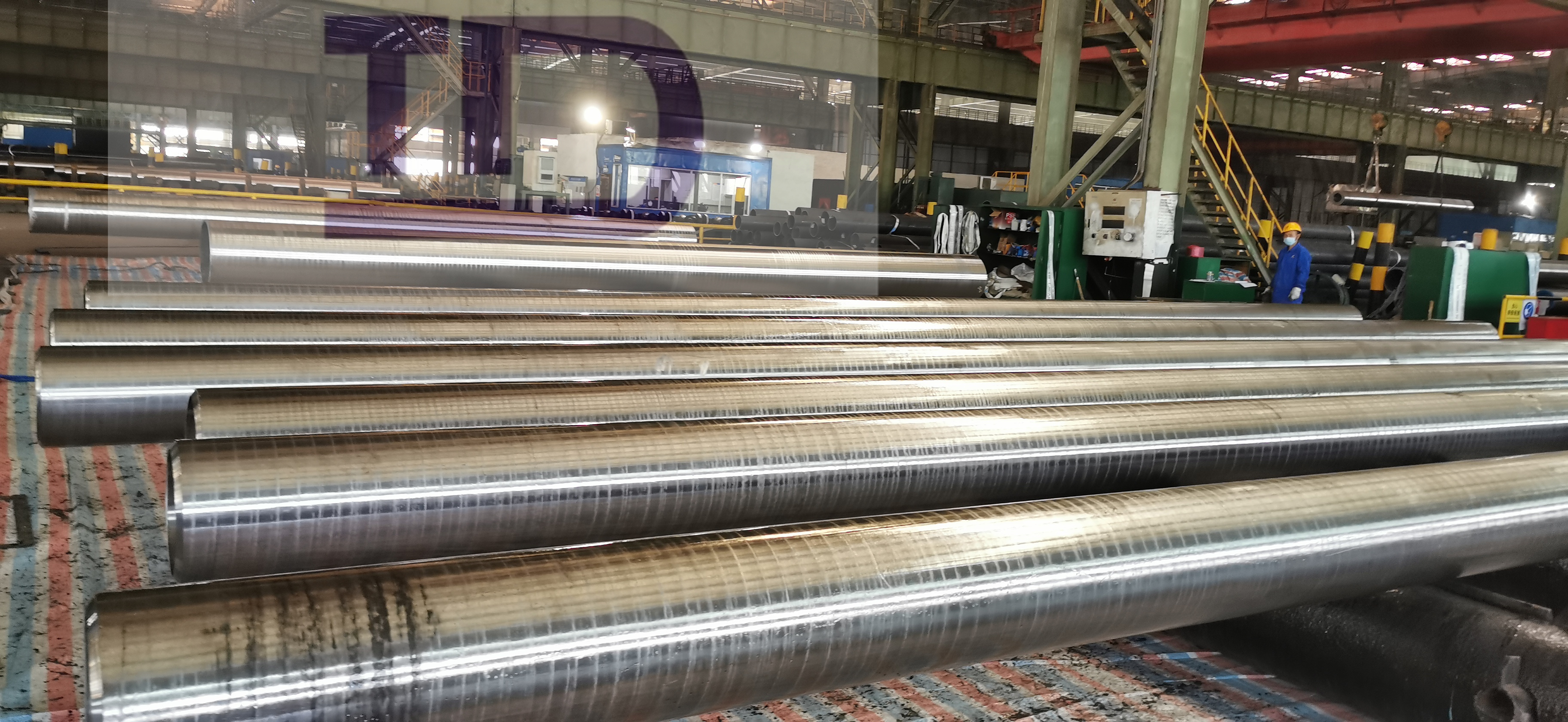
Materials must balance strength, weldability, and corrosion resistance. Common choices for heavy duty hydraulic cylinders include ST52, S355, E355, C45, SAE1045, and 42CrMo4 alloys. Custom size heavy duty hydraulic cylinders often use 42CrMo4 for high-stress piston rods and ST52 for barrels. The raw material—seamless steel pipe—is sourced with outer diameter 10–1080 mm and wall thickness 2–110 mm in hot-rolled, cold-drawn, or quenched and tempered conditions.
| Parameter | Specification | Impact on Performance |
|---|---|---|
| Outer Diameter Range | 20 – 800 mm | Determines force capacity and compatibility |
| Wall Thickness | 3 – 50 mm | Pressure containment and durability |
| Stroke Length | 6 m, 5.8 m, 12 m, 6–12 m | Workspace reach and stability |
| ISO Hole Diameter Tolerance | H8 / H9 | Seal fit and leakage control |
| Arithmetic Roughness (Ra) | ≤ 0.4 μm | Friction reduction, seal life |
| Weight Tolerance | ±10% | Consistency in manufacturing |
| Delivery Time | 30 – 45 days (customizable) | Project schedule reliability |
How Production Process Defines Quality
Technical parameters are only as good as the manufacturing process that delivers them. Here are the key production steps that dictate the quality of a heavy duty hydraulic cylinder.
Raw Material Verification
High-quality seamless steel tube is the foundation. Manufacturers should source materials conforming to ASTM A106, EN10210, or API 5L, with certificates of traceability. Tuoda Machinery integrates its own steel pipe processing, providing full control from hot-rolled tube to final cylinder assembly.
Cutting and Pre-Machining
The tube is cut to precise lengths. Ends are faced and chamfered. For custom mounting heavy duty hydraulic cylinders, flanges, trunnions, or clevises are welded or machined. Weld quality is critical—improper heat input can distort the bore and cause leakage.
Honing and Surface Finishing
The internal bore is honed to achieve the specified H8/H9 tolerance and Ra ≤ 0.4 μm finish. Honing also corrects any ovality or taper. The process uses advanced deep-hole drilling and boring machines (e.g., T2120, T2125, T2135 series) that ensure roundness and straightness over the full stroke length.
Heat Treatment
Piston rods made of 42CrMo4 or SAE1045 are induction-hardened or through-hardened to achieve surface hardness of 50–60 HRC. This provides wear resistance against wiper seals and environmental abrasives. The barrel may undergo stress-relieving heat treatment to maintain dimensional stability.
Sealing System Assembly
High efficiency heavy duty hydraulic cylinders use premium polyurethane seals or metal-to-metal sealing for high-pressure applications. Seal installation must be performed in a clean environment to prevent contamination. The choice of seal material (e.g., polyurethane, PTFE, nitrile) depends on temperature, pressure, and fluid compatibility.
Testing and Quality Control
Every heavy duty hydraulic cylinder should undergo pressure testing at 1.5x rated pressure, leak testing, and stroke cycling. Tuoda Machinery implements multiple quality inspections before shipment, including dimensional checks, surface finish verification, and functional testing. Pre-shipment test reports provide buyers with documented proof of compliance.
Real-World Application: Case Study from Vietnam
A heavy machinery OEM in Vietnam needed a custom hydraulic cylinder for their straightening machine—a high-force, continuous-duty application. They approached Tuoda Machinery with a requirement for a double-acting heavy duty hydraulic cylinder capable of withstanding impact loads and dusty conditions.
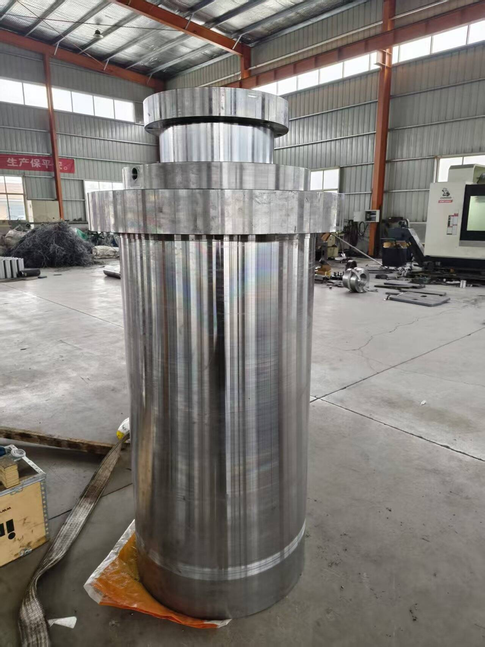
Tuoda supplied one unit of an ultra-high pressure hydraulic cylinder (63 MPa class) made of 42CrMo4 piston rod and ST52 barrel, with a honed bore finish of Ra 0.4 μm. The cylinder was equipped with polyurethane wiper seals and metal-to-metal bearing rings. After installation, the machine has operated stably for over 10 years with zero major failures. The end customer reported reduced maintenance costs, energy savings, and improved production uptime. The longevity of this cylinder demonstrates how careful material selection and precise manufacturing translate directly into lower total cost of ownership.
How to Choose the Right Heavy Duty Hydraulic Cylinder
When evaluating heavy duty hydraulic cylinder suppliers, focus on these decision criteria:
- Technical competence: Can the supplier provide detailed tolerance and surface finish data? Do they offer custom size heavy duty hydraulic cylinders and non-standard heavy duty hydraulic cylinders?
- Material traceability: Are raw material certificates available? Do they use verified seamless steel tubes from reputable mills?
- Manufacturing capability: Do they perform in-house honing, heat treatment, and pressure testing? Tuoda Machinery operates a 30,000 m² facility with deep-hole drilling and boring machines for precision barrel machining.
- Lead time and flexibility: Many projects require heavy duty hydraulic cylinder replace standard cylinders with different mounting styles. Look for MOQ as low as 1 unit and delivery schedules of 30–45 days.
- Reference projects: Ask for case studies. The Vietnam straightening machine project shows long-term reliability in extreme conditions.
Common Buyer Concerns and Solutions
How do I know if I need a heavy duty hydraulic cylinder instead of a standard one?
If your application involves pressures > 5000 psi, bore size > 8 inches, stroke > 10 feet, frequent cycling, or harsh environments (dust, moisture, impact), you need a heavy duty design. The higher initial cost is offset by longer service life and lower maintenance. Refer to the comparison: heavy duty hydraulic cylinder vs standard cylinder—heavy duty units have thicker walls, better materials, and higher safety margins.
What causes oil leakage in heavy duty cylinders, and how can I prevent it?
Oil leakage is often due to worn seals, damaged rod surfaces, or bore out-of-roundness. Choose cylinders with polished rods (Ra ≤ 0.4 μm), robust wiper seals, and corrosion-resistant heavy duty hydraulic cylinder options. Regular inspection of seal condition and rod scratching can prevent premature failure.
Can I replace a single-acting cylinder with a double-acting heavy duty hydraulic cylinder?
Yes, many field upgrades replace single-acting cylinders with double-acting heavy duty hydraulic cylinders for better control and force in both directions. Your supplier should evaluate porting, mounting, and system pressure compatibility. Hydraulic cylinder replace single acting to double acting is a common retrofit in press and lifting equipment.
How important is surface finish for seal life?
Extremely important. A rough bore (Ra > 0.8 μm) accelerates seal wear and causes internal bypass leakage. The ISO H8/H9 tolerance with Ra ≤ 0.4 μm ensures a proper seal interface even under high pressure and temperature variations. Insist on manufacturer's actual measurement reports.
Conclusion
Understanding heavy duty hydraulic cylinder technical parameters and the production processes that deliver them is essential for any procurement professional. Parameters like bore size, working pressure, material grade, and surface finish are not just numbers—they are indicators of the cylinder's ability to survive in your specific application. A supplier like Tuoda Machinery that controls the entire value chain—from seamless steel pipe to precision honing and final testing—can provide cylinders that meet the most demanding requirements. For high-load upgrade heavy duty hydraulic cylinder projects, heavy duty hydraulic cylinder solving oil leakage issues, or any extreme-duty need, invest the time to decode the specs and verify the process. Your equipment's uptime depends on it.
Get detailed specifications, material grades, and custom options for heavy duty hydraulic cylinders from Tuoda Machinery.
📄 Download Brochure (PDF)
© 2026 Shandong Tuoda Machinery Equipment Manufacturing Co., Ltd. | Liaocheng, Shandong, China | Contact: Olivia at olivia@sdtuoda.com | +86 13290268388
Have Questions or Need More Details?
Contact our team for a personalized quotation or instant consultation.
Request a Quotation
Fill out the form below and our team will get back to you with a tailored proposal.
WhatsApp Direct Chat
Prefer to chat in real-time? Message us on WhatsApp for instant assistance & quick answers.
- Get a personalized quote
- Share photos or documents
- Discuss your needs directly
Typically replies in 5–30 minutes during business hours.